

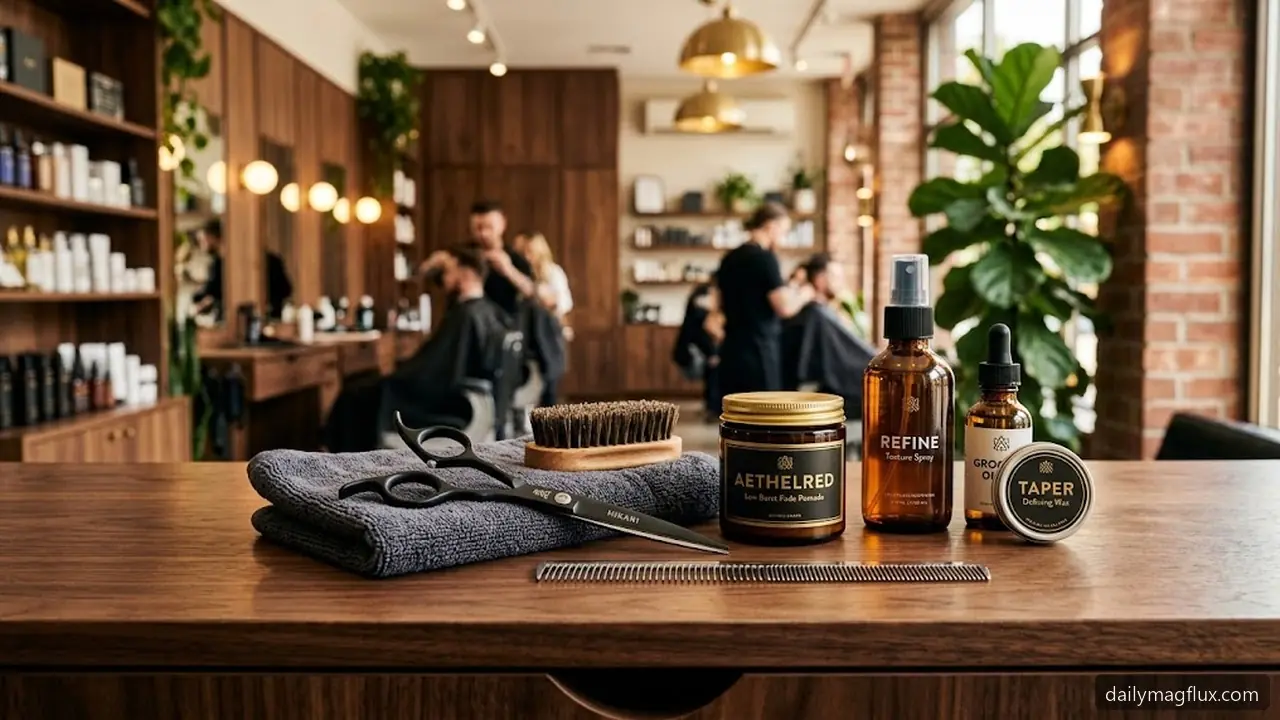
A Taper Low Burst Fade is a men’s cut that keeps length on top and fades the sides low. The top stays long enough to style, while the sides drop to a short guard. Around each ear, the fade curves back instead of climbing straight up. The finish looks clean, with a soft line left at the nape.
It flatters oval, square and diamond faces, because the tight arc slims wide cheeks. Round faces need height on top, so ask for two to three inches there. Curly and coily hair holds the arc well, since the pattern follows the curve. Book a touch-up every two to three weeks if the sides go to skin.
Quick Answer
The Taper Low Burst Fade is a low fade that arcs around the ears and leaves length on top. It suits oval, square and diamond faces with wavy or curly hair. Barbers start the sides at a #0 to #0.5 and blend up to a #2. Plan on a touch-up every two to three weeks to keep the shape sharp.
What Is a Taper Low Burst Fade?
This cut is a low fade that curves around the ear rather than running straight up. Your barber keeps weight behind the ear and leaves the top long. That arc is the single detail that separates it from a plain low fade. The back stays fuller, so the profile looks rounded instead of squared off.
The fade starts just above the ear and stays below the temple line. Below that line, the hair drops to a #0, a #0.5, or bare skin. Above it, the length climbs quickly into the top and crown. Nothing gets cut higher than the parietal ridge, which keeps the shape low.
A standard low fade runs straight up from the ear to the temple. The burst version curves backward instead, hugging the ear in a round arc. A taper only shortens the sideburns and nape, so it leaves far more hair. This cut sits between the two, tight at the ear but full at the back.
Men ask for it because the top stays long enough to style. The tight sides keep the shape neat through a long work week. Curly and coily hair keeps the burst visible without any extra product. Straight hair gets a sharper line, which reads as deliberate and clean.
Most barbers open the sides with a #0 or a #0.5 near the ear. They then blend upward through a #1 and finish around a #2. The top is cut with scissors, usually between two and four inches. A guard number never describes the top once it passes one inch.
The barber shapes the arc with the corner of the clipper, not the flat blade. Small wrist movements keep the curve smooth behind the ear. Blend lines show most on dark, thick hair and least on light or fine hair. That matters when you judge whether the fade looks clean in photos.
Low, mid and high describe how far up the head the fade climbs. Burst describes the shape, so a burst fade can sit low or high. A drop fade also describes shape, but its line curves down behind the ear. Ask for the height and the shape separately, or you may get the wrong cut.
Check the arc in a hand mirror before you leave the chair. The curve should look round from the side and even from the back. Both ears need the same height, or the cut will read as lopsided. A typical session varies by barber and by the detail you ask for.
Taper, Low Fade, Burst Fade, and Similar Cuts Compared
These terms get mixed up constantly, and barbers hear the confusion every day. Each term describes a different job, and the job decides where the line sits. Knowing which term covers which job keeps you and your barber aligned. The differences below decide how the finished cut looks and how fast it grows out.
Taper
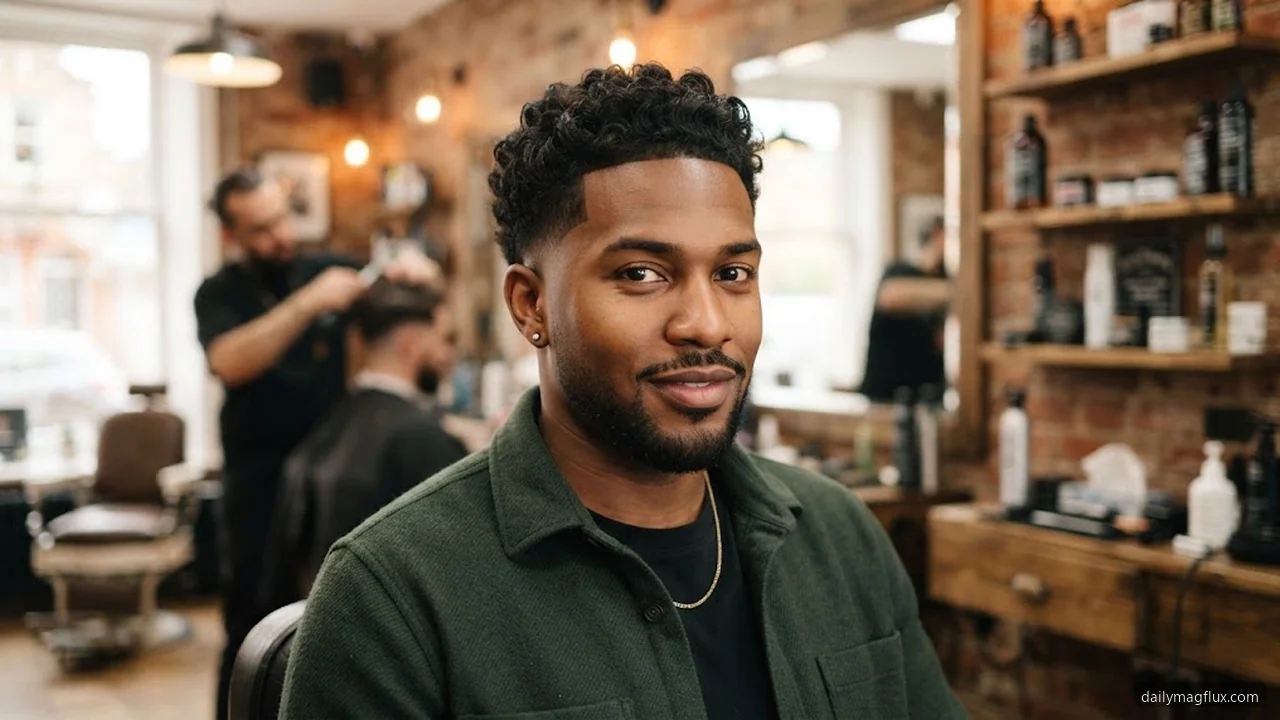
A taper shortens the sideburns and the nape while the rest of the hair keeps its length. Your barber blends those two areas into the surrounding hair, so no hard line shows. It is the lightest of these cuts and the easiest to grow out.
Most tapers run from a #1 at the sideburn up to a #3 or #4 above the ear. A taper suits men who need a tidy shape but must keep length for work. It grows out in three to four weeks without looking messy.
Low Fade

A low fade starts just above the ear and the neckline, then blends upward. Because it sits low, it leaves more hair on the sides than a mid or high fade. That makes it a safer first fade for men who are unsure.
The sides usually drop to a #0.5 or a #1 before the blend begins. A low fade keeps its shape for two to three weeks, then softens at the edges. Men with round faces get width from the sides, so they should keep them tighter.
Burst Fade
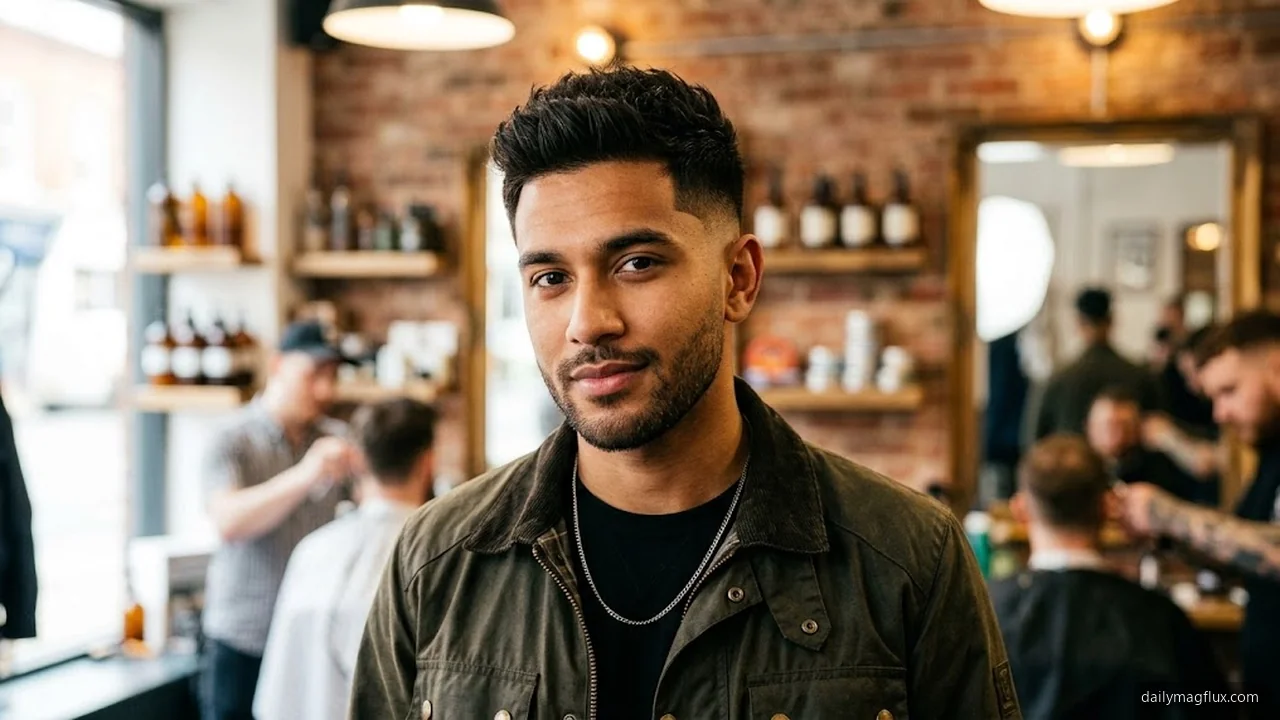
A burst fade arcs around the ear like a horseshoe and leaves the back longer. The tightest point sits right at the ear, then the line climbs and fades into the top. Because the back keeps weight, the shape reads as a rounded silhouette from behind.
Burst is a shape, not a height, so you can wear it low, mid or high. The low version keeps everything below the temple, which suits almost any workplace. A high version climbs to the parietal ridge and needs more frequent trims.
A drop fade looks similar, but its line curves down behind the ear instead of around it. That small difference changes how the back reads, so photos help your barber. Ask for a burst when you want the arc to circle the ear.
The burst shape suits men with thick or curly hair best, because the weight at the back balances volume. Fine, straight hair can wear it too, but the arc shows less and needs more product. Square and oval faces carry the tight sides without any problem.
Barbers cut the arc with a #0.5 or a #1, then blend up to a #2. Because the shape is tight, a burst fade loses its edge in about two weeks. Book a trim every two to three weeks to keep the line crisp.
Burst Fade with Mohawk
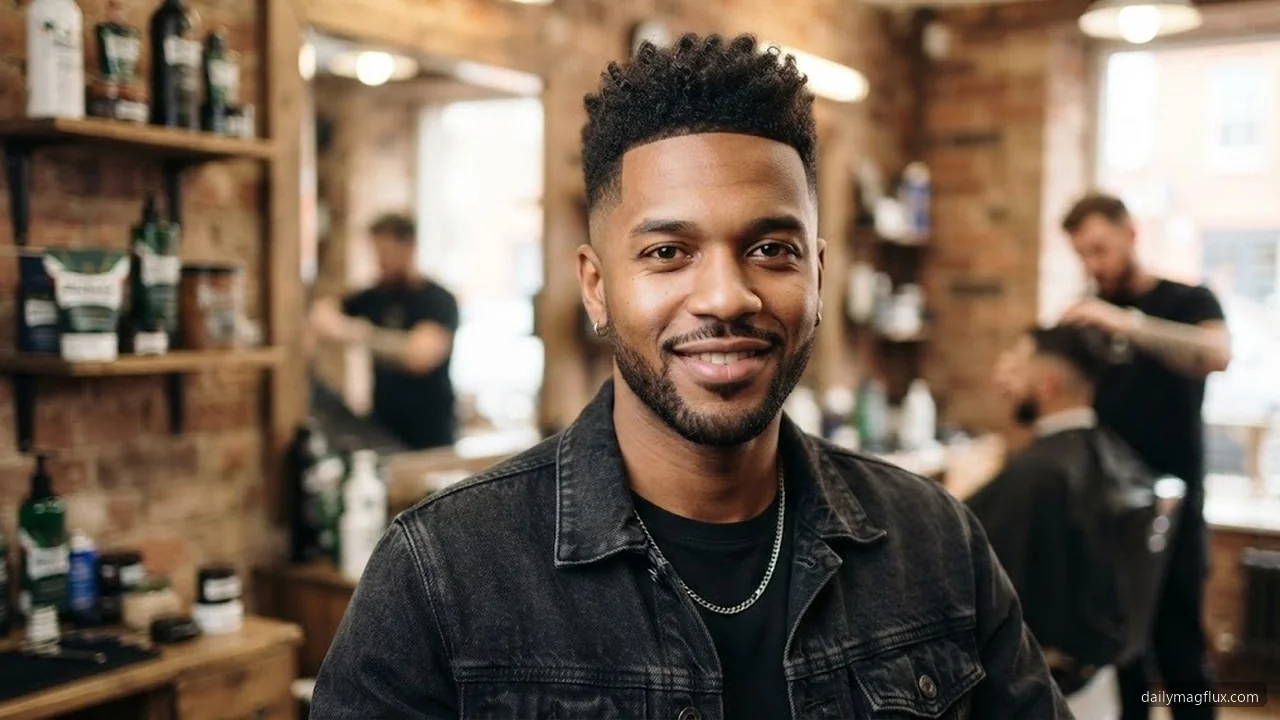
The mohawk version keeps a strip of hair from the front hairline to the crown. Sides drop to skin, and the burst fade handles the area around each ear. From the back the strip narrows and the arc frames it. That connection keeps the strip looking like part of the cut rather than an add-on.
A mohawk burst fade suits men with a strong jaw and a defined cheekbone, since the strip adds height. It works on straight, wavy and curly hair, but coily hair needs a wider strip to hold shape. Keep the strip two to three inches tall and style it with a dime-sized amount of matte paste.
This is the highest-maintenance version, because the shaved sides show regrowth within days. Plan on a shop visit every two weeks if you want the strip edges clean. Between visits, a light trimmer pass along the shaved area keeps it from looking patchy.
Low Burst Fade with Curly Top
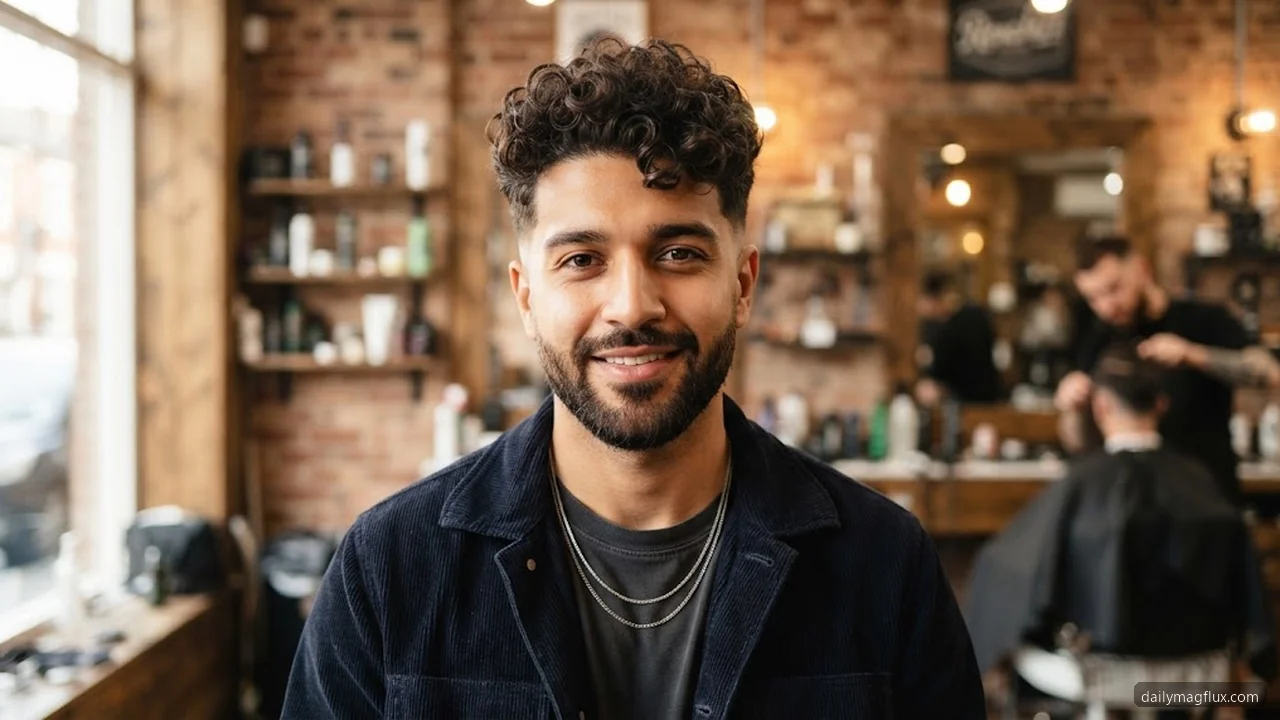
This version pairs the same tight arc with a top full of 3A to 3C curls. The barber cuts the top dry or damp, never with a guard, because the length runs past an inch. You get a rounded shape with movement on top and clean sides.
Curly hair holds the burst line longer than straight hair, so the shape survives a busy week. Ask for three inches on top and let the barber layer it to avoid a helmet shape. A pea-sized amount of curl cream defines the top without leaving it greasy.
Rinse the top with conditioner every few days, then scrunch it while it is still wet. Diffuse on low heat if you want the curls tighter and more defined. The sides need a trim every two to three weeks, and the top can wait six to eight. Wide-tooth combs separate the curls better than a brush ever will.
Low Burst Fade with Full Beard

The beard version connects the sideburn into a full beard, so the whole lower face reads as one shape. Its arc still hugs the ear, but the sideburn line is left slightly longer to meet the beard. From the side, the transition looks continuous instead of stepped.
This pairing suits men with a heart shape, because the beard adds weight to a narrow chin. Ask the barber to leave a #1 at the sideburn and taper it into the beard line. A beard trim every three weeks keeps the two shapes working together.
Beard oil goes on the skin under the jaw, where dryness shows first. Comb the beard downward and let the fade dry without product, since shine ruins the contrast. Book the fade at two to three weeks and the beard at three to four. A few drops of beard oil are enough for a full beard, and more just looks wet.
Who a Low Burst Taper Suits
No single face or hair type owns this cut, since the low arc flatters plenty of men. The subsections below sort the honest verdicts by face shape and by texture. Read the one that matches your face and hair, then skip the rest. Every verdict names the reason behind it, so you can judge it against your own mirror.
Best Face Shapes for This Cut
Square and oval faces carry the tight arc with no trouble at all. A square jaw gets a clean frame when the sides stay close near the ear. Texture on top softens those hard angles, so ask for a layered top rather than a flat one.
Diamond faces have wide cheekbones and a narrower forehead, so tight temples look wrong. Keeping a little weight at the temple balances the cheekbones nicely. Round faces need height on top and tight sides, which this cut already gives. Skip volume at the sides, since round faces widen fast there.
Triangle faces should skip anything very tight at the sides, because that widens the jaw. A #1 at the ear with fuller upper sides keeps the balance in check. Oblong faces skip tall height and keep fullness at the sides instead. Heart faces suit a medium top and a side sweep, never very tall volume.
| Face Shape | Why It Works | Best Placement |
|---|---|---|
| Oval | Balanced length and width means the low arc sits naturally, with no feature fighting it. | Keep the arc at a #0.5 and hold two to three inches on top for balance. |
| Square | The tight sides sharpen an angular jaw instead of hiding it, and the arc frames it neatly. | Drop to a #0.5 at the ear, blend to a #1.5 by the temple, and keep the fringe textured. |
| Diamond | Fullness at the temple stops wide cheekbones from dominating the whole profile. | Keep a #1 at the temple, drop to a #0.5 at the ear, and leave three inches on top. |
| Round | Height on top adds length, while tight sides stop the face reading wider than it is. | Use a #0 at the ear with a #1 above it, and ask for three inches on top with lift. |
| Triangle | Fuller upper sides balance a jaw that measures wider than the forehead. | Stop the arc at a #1 near the ear, and keep the upper sides thick rather than tight. |
Best Hair Types and Textures
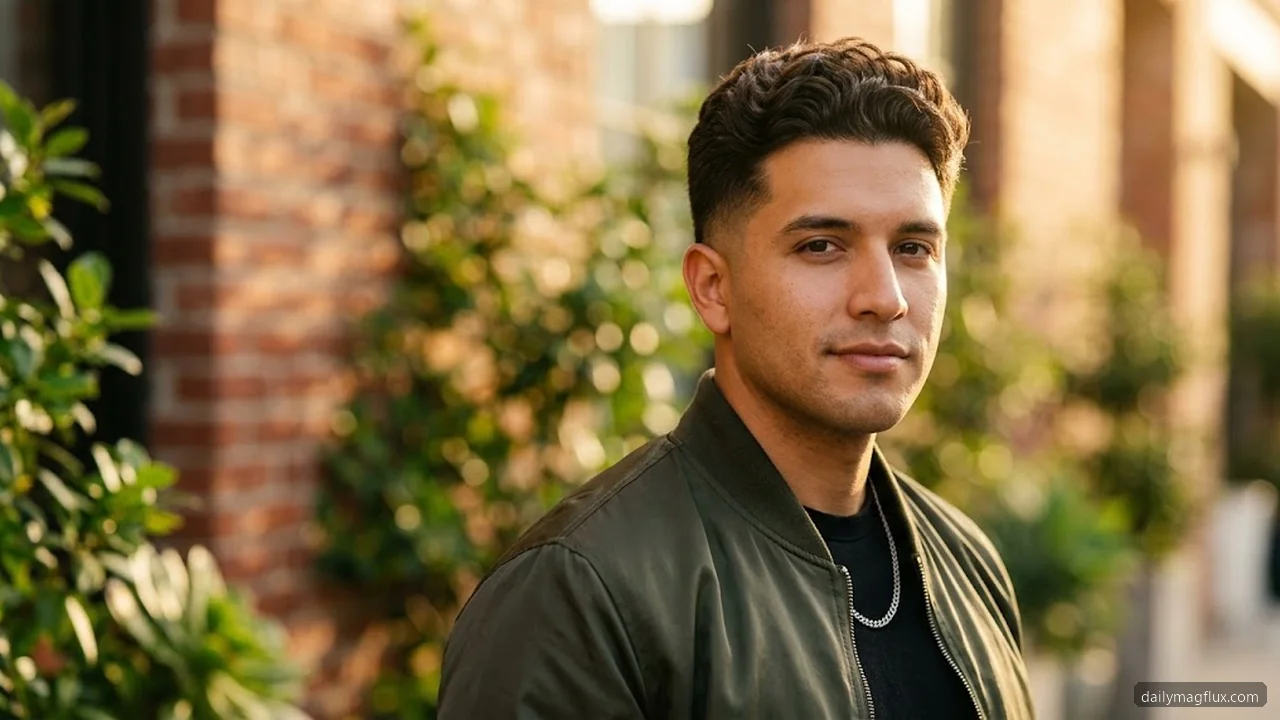
Most textures can wear this cut, but the pattern decides how sharply the arc reads. Curls and coils hold the curve on their own, while straight hair needs a sharper blend. Density matters too, since dark, thick hair shows every clipper mark and light, fine hair hides them.
Fine, straight hair looks best with a slightly higher blend so no hard line shows. Thick hair can take a tighter arc, because the weight at the back holds the shape. Whatever your pattern, the top needs layering so it moves instead of sitting flat.
- Straight: This texture reads cleanest with a sharp blend, so ask for a #1 at the temple.
- Wavy: 2A to 2C waves add movement on top, and the low arc stops the sides puffing out.
- Curly: 3A to 3C curls dry unevenly, so mist the top with water before you add product.
- Coily: 4A to 4C coils hold the arc for three weeks, so this cut costs less to keep sharp.
- Locs: Keep the arc tight around each ear and let the locs fall over it for framing.
Best Styles to Ask For
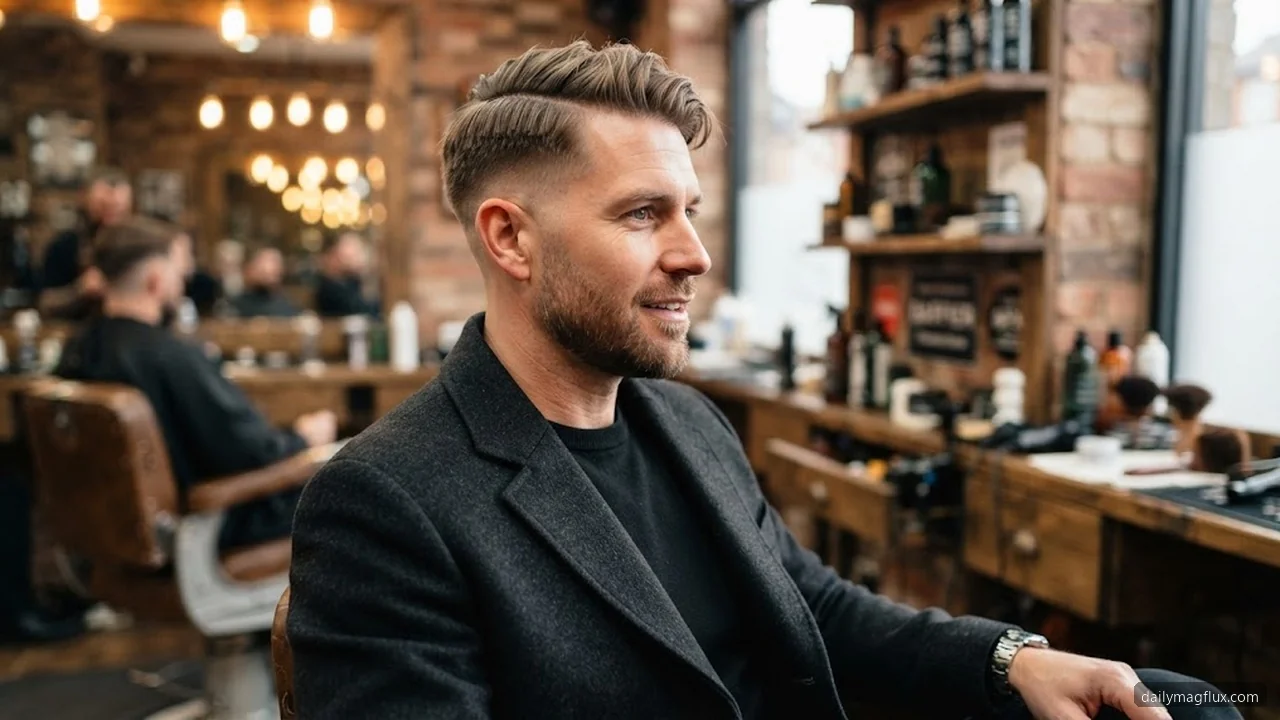
Every version below keeps the same low arc, so the choice comes down to the top. The top decides how the cut reads in photos and how much upkeep it needs. Pick the top length that matches your morning routine, not the one in the picture. A style you cannot finish in five minutes will sit unstyled by Wednesday. See American Academy of Dermatology hair care guidelines for more.
Guard numbers on the sides stay in a narrow range, because the arc is meant to sit low. Most barbers open with a #0.5 at the ear and close near a #2 at the temple. Skin versions use a foil shaver for a smooth finish, which then needs a trim every two weeks.
Top length runs from a short buzz to four inches, depending on your texture. Anything over an inch is cut with scissors, never with a guard. That rule stops a barber from calling two inches a #4 on top. Bring a photo that shows the top length clearly, since words get lost.
- Classic Taper Low Burst Fade: Ask for a #0.5 at the ear blending to a #2. With two inches on top.
- Burst Fade with Curly Top: Ask for the arc to follow the hairline behind the ear. Leave the temple soft instead of tight.
- Low Burst Fade with Beard: Set the cheek line one finger above the jaw. Stop the fade where the beard starts.
- Textured Crop with Burst Fade: Keep the top near two. Inches and point-cut the fringe for texture with no weight line.
- Mohawk Burst Fade: Let the strip narrow toward the crown. Ask for a soft edge instead of a hard line.
- Tapered Afro with Burst Fade: Leave two and a half inches on top for roundness. Let the barber set the arc with a comb.
- Short Buzz with Burst: A #1 all over with a skin arc at each ear suits men who hate styling.
- Long Top with Burst: Four inches on top with a low arc works in offices when you comb it back.
How to Ask Your Barber for It
Words and photos both matter, because the arc is easy to miss if you only describe height. The script below covers the sides, the top and the neckline in one go. The photo list tells you which angles carry the details your barber needs. Use both, and the cut comes out right the first time. See Healthline hair health and wellness resources for more.
A Script That Works
Say this, and most barbers will know exactly where to start. “Low burst fade, #0.5 at the ear blending to a #2. Keep the back fuller.” Then add: “Two inches on top, cut with scissors. Leave the neckline natural.” Point at your ear while you speak.
What to Show Your Barber
Bring four photos: front, both sides and the back, because each angle shows a different part of the arc. A front shot shows the top length and how the fringe sits. The side shot proves where the fade starts and how high it climbs. The back shot shows whether the neckline is squared or left natural.
Match the photo’s hair type to yours before you hand over your phone. A tight coil arc will not look the same on fine, straight hair, and the guard numbers differ. If your hair is thinner than the photo, ask for a slightly longer arc so no scalp shows. Say it out loud, since your barber can adjust the blend to suit you.
Keeping a Low Burst Taper Sharp
A low arc grows out fast, even though the top can wait much longer. The plan below splits the visits so you are not paying for a full cut every time. Learning two cleanup moves at home stretches the weeks between trims. Follow the timeline and the shape holds until your next booking.
Touch-Up Timeline

Book a touch-up every two to three weeks if the arc goes down to skin. The regrowth shows first right above the ear, where the line was tightest. A #0.5 arc buys you an extra few days before it looks fuzzy.
The top can stretch four to eight weeks, since half an inch of growth barely changes the shape. Trim the top only when it stops holding the style you like. Two shorter appointments beat one long session for keeping the arc crisp.
Neckline and Sideburn Cleanup
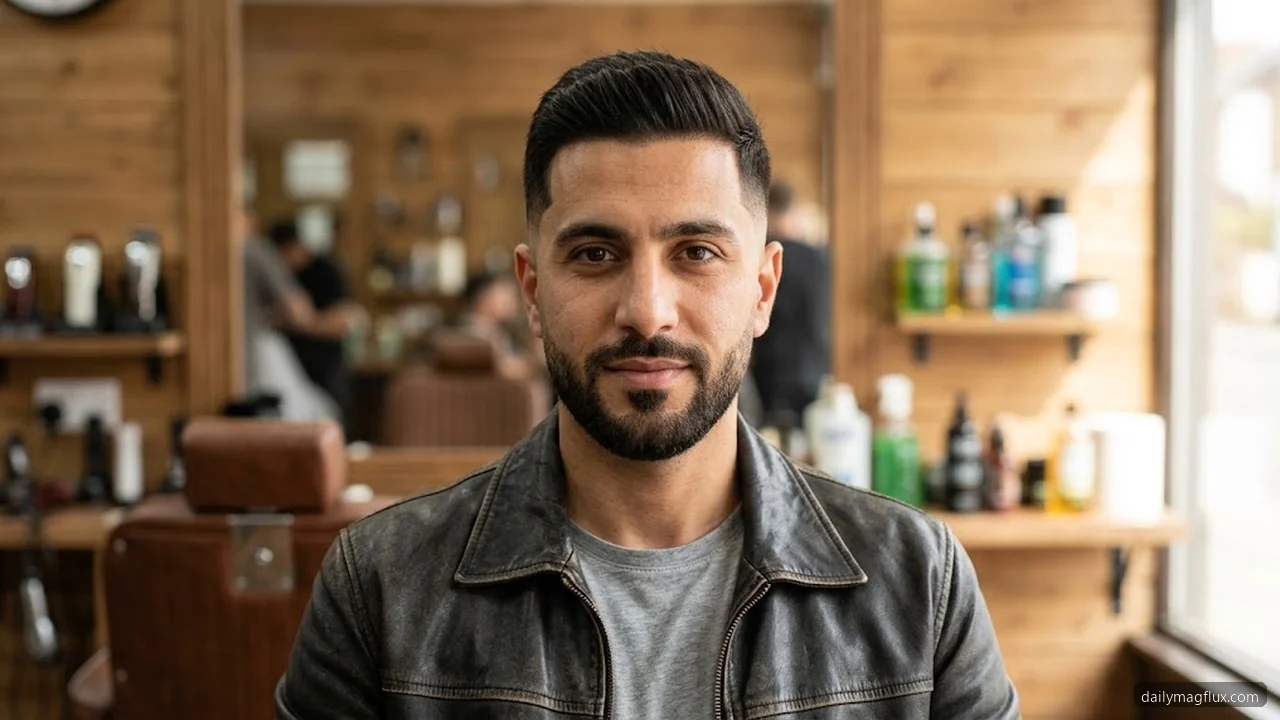
Do the neckline yourself with a trimmer set to a #1, following the natural hairline. Clean the sideburns upward in short strokes, because one long pass digs a notch. Stop below the arc, since trimming into the fade leaves a gap no barber can blend easily. Work in front of a mirror with good light, and check the back with a hand mirror.
Mistakes That Ruin the Cut
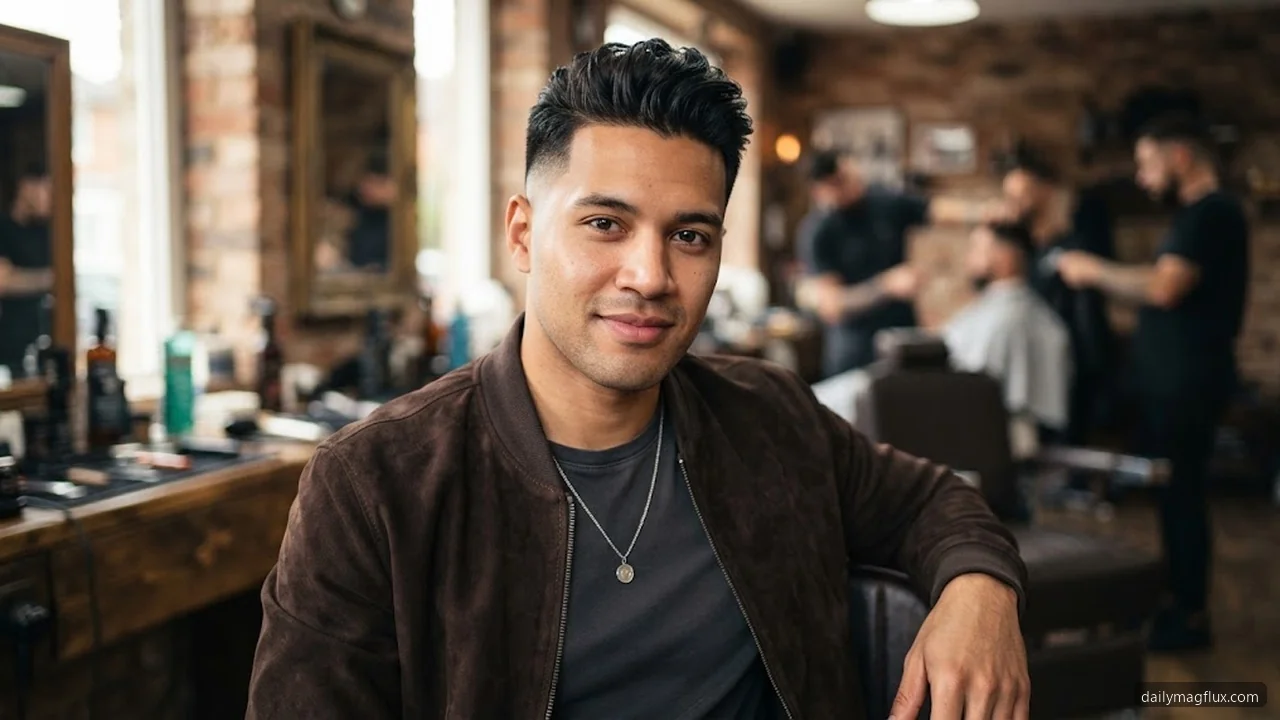
Most bad versions of this cut come from one of four small errors, and each is easy to avoid. A burst that climbs too high stops being a low fade and starts looking like a mohawk. A curve cut straight across the ear loses the round shape that defines the style. The neckline and the top length cause the rest of the trouble.
- Over-fading the burst: Taking the arc above the temple turns this into a high fade with faster regrowth.
- Missing the curve: A straight clipper line behind the ear flattens the profile, so follow the ear’s curve.
- Uneven neckline: One side cut higher than the other shows on dark, thick hair, so check both sides.
- Wrong top length: A top too short for the arc looks unbalanced, so keep two to three inches.
Styling It at Home
Start with damp hair rather than soaking wet, because the top holds shape better that way. Towel it until it stops dripping, then comb the sides flat against your head. A few sprays of sea salt spray add grip before you reach for any cream.
Work a pea-sized amount of matte clay between your palms until it disappears. Rake your fingers from the front hairline back toward the crown, then lift the roots. Pinch the fringe into loose pieces so the top does not sit flat. Matte clay keeps the shine off, which suits the tight sides.
Curly tops need a different routine, so skip the clay and reach for curl cream instead. Apply a dime-sized amount while the hair is still wet, then scrunch upward with both hands. Let it air dry, or diffuse on low heat if you want tighter coils. Do not touch the curls while they dry, or frizz takes over.
Keep the sides flat by pressing them down with your palm after the top is set. A light mist of hairspray holds the finished shape through a long day. Between washes, rinse the top with water and reapply product once it dries. Two minutes of work is all this cut needs each morning.
How It Compares With a Blowout Taper
The two cuts split on where the fade line travels, not on how short it goes. A blowout taper climbs straight to the temple and flares wide before it blends. This low arc hugs the ear and curves backward, leaving weight behind it. That single path decides how the whole profile reads from the side.
Blowout tapers read tall and narrow, because the tight sides push every ounce of volume up. The low burst reads rounder and lower, with the mass sitting near the crown. From the back, a blowout looks pared down while the burst keeps a fuller shape. Photographs show that gap clearly, so study both angles before you book.
Thin hair gains lift from a blowout taper that a low arc simply cannot give. Thick and coily hair holds the low burst without product, which saves you minutes each day. Fine, straight hair needs a higher blend on either cut so no line shows. Wavy hair sits between the two, since it lifts a little on its own.
Blowout tapers need a round brush, a blow dryer and a few sprays of sea salt spray. This cut finishes with a pea-sized amount of matte clay and your fingers. Pick the blowout if you want height and will style it every morning. Pick the low arc if you want a tidy cut that takes two minutes.
Is It Okay for School, Work, or Formal Settings?
Most schools and workplaces accept this cut without a second look, because the sides stay neat. The arc sits below the temple, so nothing reads as extreme in an office. Check your school’s rule on shaved sides if the arc goes to skin.
For weddings and formal events, comb the top back and keep the product matte. Shine reads casual in photos, so swap pomade for clay on the day. Ask your barber for the trim two or three days before, not on the morning itself.
Final Take
- Where to start: Book a #0.5 arc with two inches left on top. Then, judge the shape after three days of settling.
- Typical cost: Expect a mid-range to premium price for the first cut. A lower fee for a short touch-up in most shops.
- Coily tops: Comb the sides down with a soft brush. Because a stiff one scratches the tapered skin and leaves marks.
- Straight tops: Dry the top forward and let the fringe sit heavy. This softens the front line and hides the blend.
- Beard pairing: Trim the beard shorter at the cheek and fuller at the chin. So, the two shapes balance instead of competing.
- Growing it out: When you stop the fades, the arc fills in first. The top blends within about three months of growth.
- Barber choice: Pick a barber who cuts fades daily, since the curve around the ear needs a steady hand.
- Products to skip: Heavy pomade flattens the top and adds shine, which fights the matte finish of the tight sides.
- Seasonal note: Hats and helmets flatten the top. So, restyle it with damp fingers once you take them off and let it dry.
- Faces to skip: Oblong faces should keep fullness at the sides. Since a tight low arc adds no length to the face.
Want More Taper Fade Guides?
Plenty of other taper shapes work on the same top, and each one suits a different face. A mid taper suits round faces that need height, while a low taper keeps things subtle. Tapers also grow out slower than skin fades, which saves you shop visits. Tell your barber which one you want before the clippers start moving.
Frequently Asked Questions
How do I ask for a Taper Low Burst Fade?
Say the height and the shape together, then point at your ear. Ask for a #0.5 arc at the ear blending up to a #2. Add two inches on top, cut with scissors, and a natural neckline. The word burst tells your barber to curve the line around the ear.
What guard number should my barber use for a low burst fade?
Most barbers open at a #0.5 right at the ear and blend up to a #2. Skin versions use a #0 or a foil shaver instead. The exact number depends on your hair’s density, since fine hair shows more of the line. Bring a photo of the arc you want before the clippers start.
How often does a taper low burst fade need a touch-up?
Plan on a trim every two to three weeks if the arc goes to skin. A #0.5 arc buys you closer to three weeks before the regrowth shows. The top can wait four to eight weeks, since growth barely changes it. Regrowth shows first right above the ear, where the line was tightest.
Can I wear a taper low burst fade with curly hair?
Curls take this cut well, because the pattern follows the arc around the ear. Curls in the 3A to 3C range hold the shape for about three weeks. Ask for two to three inches on top and let the barber cut it dry. A pea-sized amount of curl cream defines the top with no shine.
What is the difference between a taper low burst fade and a blowout taper?
A blowout taper runs a high fade with a long, swept top. This cut keeps its arc below the temple, so the back stays full. A blowout suits round faces that need height, while a low arc flatters diamond ones. A blowout also loses its edge in two weeks, and a low arc lasts about three.
Conclusion
Book this cut if you want tidy sides without losing length on top. Start with a #0.5 arc and two inches on top, then adjust once you see how it grows. Diamond, square and round faces get the most from it, along with curly and coily hair. The Taper Low Burst Fade rewards a barber who works slowly around each ear.
Say the height and the shape when you sit down, and bring photos from three angles. Come back every two to three weeks if the arc reaches skin, or three if it stops at a #0.5. Two minutes of clay each morning keeps the top looking finished. Your barber will thank you for the clear instructions.

Harrison Jax is a hairstylist and fashion writer with 10+ years in the industry, holding a Certified Cosmetologist license and a Diploma in Fashion Styling from the London College of Style. He’s contributed grooming and trend guides to GQ India and Vogue Blogs, and currently leads DailyMagFlux’s hair and fashion coverage, blending runway insight with practical, everyday styling advice.