

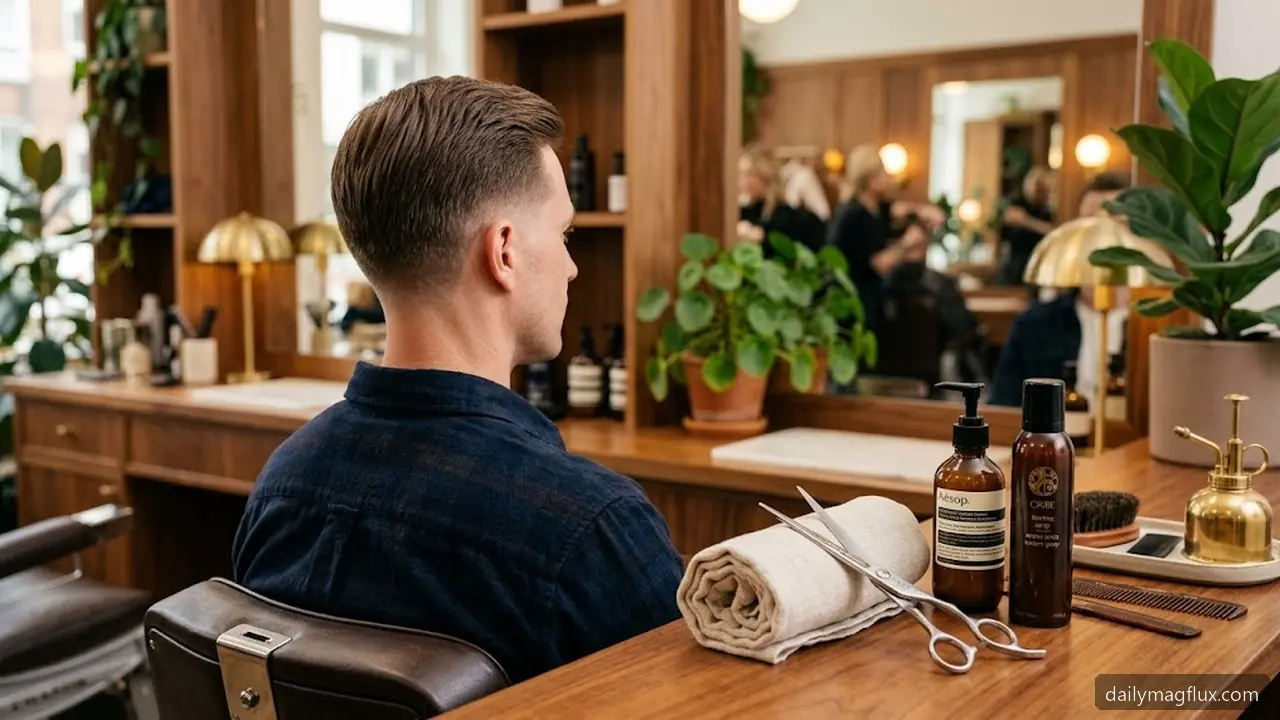
A Low Taper Fade Haircut for Straight Hair keeps the sides short near the ear and nape. It leaves real length on top, so you keep something to style. The taper begins just above the sideburns and stays low near the ear. Straight strands drop cleanly into that shape, which keeps the finish looking sharp.
The cut works best on oval, square and heart faces that carry some top length. Fine straight hair can look thin on the sides, so a #1.5 guard works better there. Ask for a natural neckline if your hair grows in whorls or cowlicks. Book a touch-up every three to four weeks to keep the taper crisp.
Quick Answer
A Low Taper Fade Haircut for Straight Hair shortens only the sideburns and nape, leaving the top long. It suits oval, square and heart faces with straight or wavy strands. Ask for a #1 blending into a #3, with two to three inches on top. Book a touch-up every three to four weeks to keep it clean.
What is a low taper fade?
The low taper fade is a cut that shortens the sideburns and the nape only. Your barber works a #0.5 or #1 near the hairline and blends it upward. The rest of the sides keep their length, so nothing looks bald. This is what separates a taper from a full fade at the sides.
The taper zone runs from the sideburn up to about an inch above the ear. Behind, it follows the neckline and stops where the hair turns thicker. A low version keeps that zone small, roughly the bottom inch of the sides. Higher tapers push the same blend up to the temple line.
A full fade carries the short hair all the way up the sides and back. The taper stops low and leaves weight above it, which reads softer. Straight hair shows that difference clearly, because the blend line stays visible. Men pick the taper when they want a neat edge without shaved sides.
Most guys ask for this cut because it grows out well between visits. The sides stay tidy for a few weeks while the top keeps its length. It also fits workplaces that allow longer hair but not messy edges. You get a sharp finish without committing to short sides.
Guard numbers matter here: a #0.5 or #1 at the bottom blends into a #2 or #3 above. Your barber shapes the neckline with a trimmer or a straight razor. The top gets cut with scissors once it passes one inch. A #3 guard leaves only 3/8 inch, so it never belongs on a long top.
Why straight hair suits this cut
Straight hair holds a taper line better than curls or coils ever do. Flat strands sit against the head, so the blend reads as a clean gradient. Curly hair hides that same line under bulk, movement and shrinkage. That is why straight hair low taper fade requests stay so common in the chair.
Type 1 straight hair and 2A waves both work well with this shape. The taper removes weight at the sides, which stops flat hair from looking wide. Fine density needs a longer bottom guard, like a #1.5, to avoid showing scalp. Dense straight hair can take a tighter bottom and still look full.
Thick straight hair gives your barber more room to stretch the blend. A wider gradient from #1 to #3 looks smoother on dense strands. Light or fine hair shows fewer clipper marks, so small mistakes hide easily. Dark, thick hair shows every blend line, which demands a steady hand.
Straight hair takes styling product without fighting back, which saves time. Cream, clay and paste spread evenly and dry where you place them. Curly textures need heavier creams to stop frizz, which flattens a taper. You can restyle straight hair with damp fingers and no re-wash.
One trade-off: straight hair shows the grow-out sooner than wavy hair does. The taper edge blurs once the sideburn hair adds a quarter inch. Wavy hair masks that stage for another week or two. Plan your barber visits around that faster visible clock.
Low taper fade vs low fade vs taper
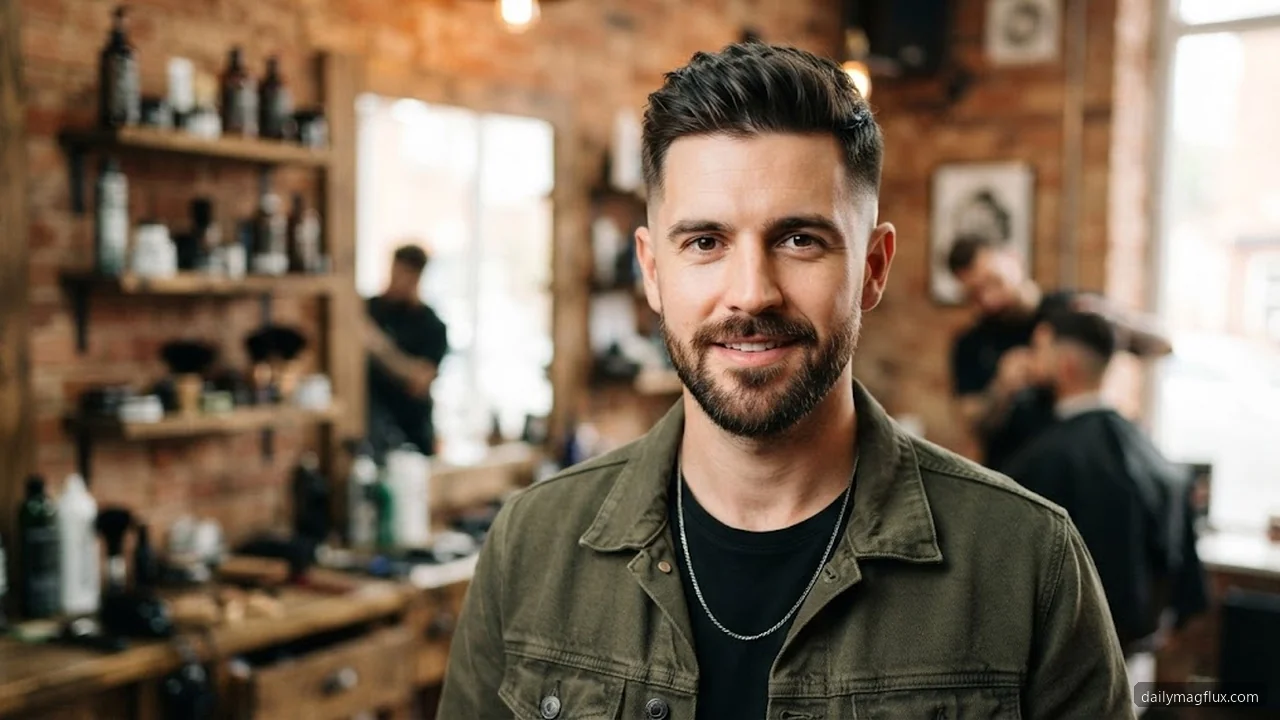
A taper shortens only the sideburns and nape, while a fade covers the whole side and back. A low fade does that blending at a low height, near or just above the ear. The low taper fade combines both ideas, so the tight work stays low and small. Knowing which one you want saves an awkward conversation in the chair.
- Low taper fade: a taper blending the sideburns and nape down to a #0.5. Meanwhile, the sides above the ear stay longer.
- Low fade: the fade starts just above the ear and rises only an inch or two. So, the back stays fuller.
- Taper: it only tidies the sideburns and neckline, so the sides keep their weight for three to four weeks.
- Burst fade: the fade arcs around the ear and leaves the back longer. This suits men who want a shaped nape.
Pick the taper if you want a tidy edge and you visit your barber every month. Pick a low fade if you like short sides that stay sharp for two to three weeks. The taper needs the least upkeep of the three, while the fade shapes the head more. None of the three changes how fast your hair grows each month.
Low Taper Fade Haircut for Straight Hair: Top Styles and Variations
Four straight-hair styles carry this taper well, and the right one depends on how you wear your top. Some need a blow dryer and a round brush, while others dry in place with almost no effort. Your face shape, density and daily routine decide which one you book. Every option here has its own guard numbers, top length and upkeep rhythm. See American Academy of Dermatology hair care guidelines for more.
Classic Natural Low Taper
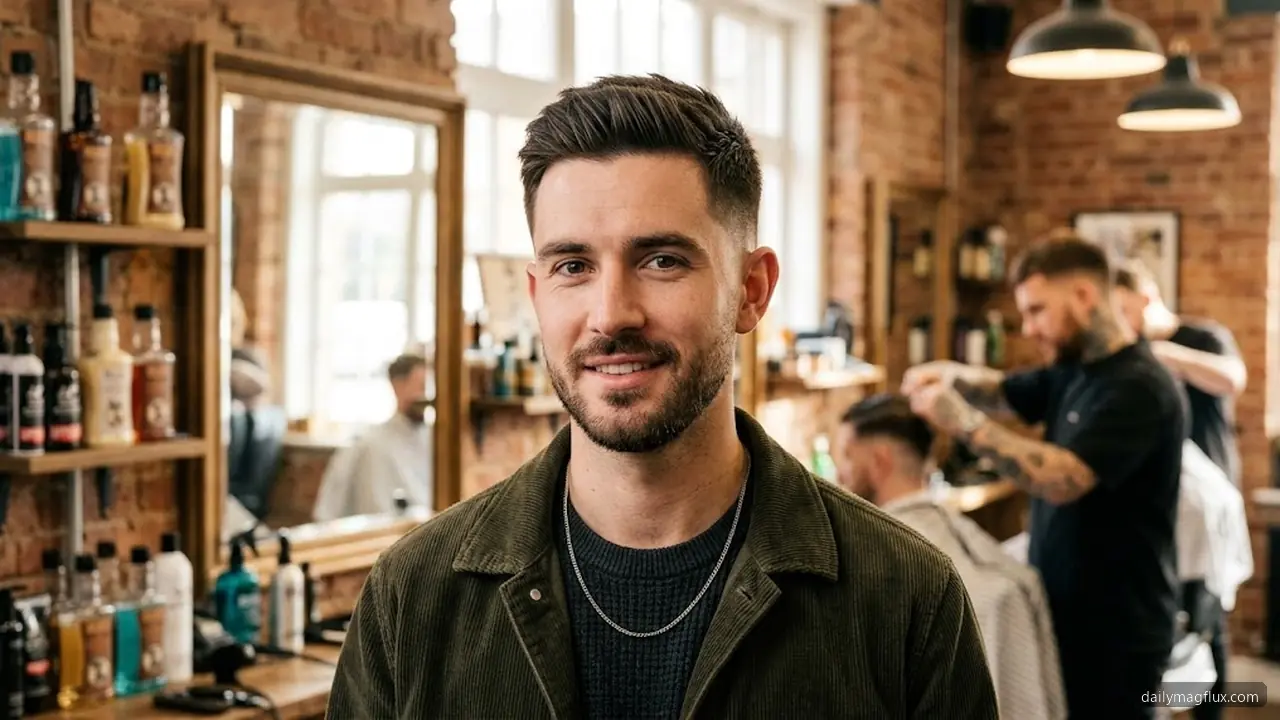
The classic natural low taper leaves your top at about an inch and a half to two inches. Your barber cuts that length with scissors and lets it fall where it wants. The sides above the ear stay at a #2, which keeps some shape around the head. At the sideburns and nape, the blend drops to a #0.5.
Best for: oval and square faces with medium-density straight hair that behaves without much help. The natural finish softens a strong jaw without adding fake volume anywhere. Wash-and-wear guys suit it, because damp hair dries into place on its own. A dime-sized amount of light styling cream keeps stray flyaways down.
What sets this cut apart is direction, because the top falls forward and to one side. The finish reads tidy at the edges and relaxed across the crown. Ask for a natural neckline instead of a squared one at the back. Straight hair shows that nape line, so a soft finish hides early grow-out.
Upkeep: book a touch-up every three to four weeks, since a taper keeps its shape for about a month. The nape hairs grow in first and blur the neckline before the sides look untidy. Trimming that line at home with a trimmer buys you an extra week. Shampoo two or three times a week so the top keeps some natural oil.
Textured Straight Quiff Low Taper
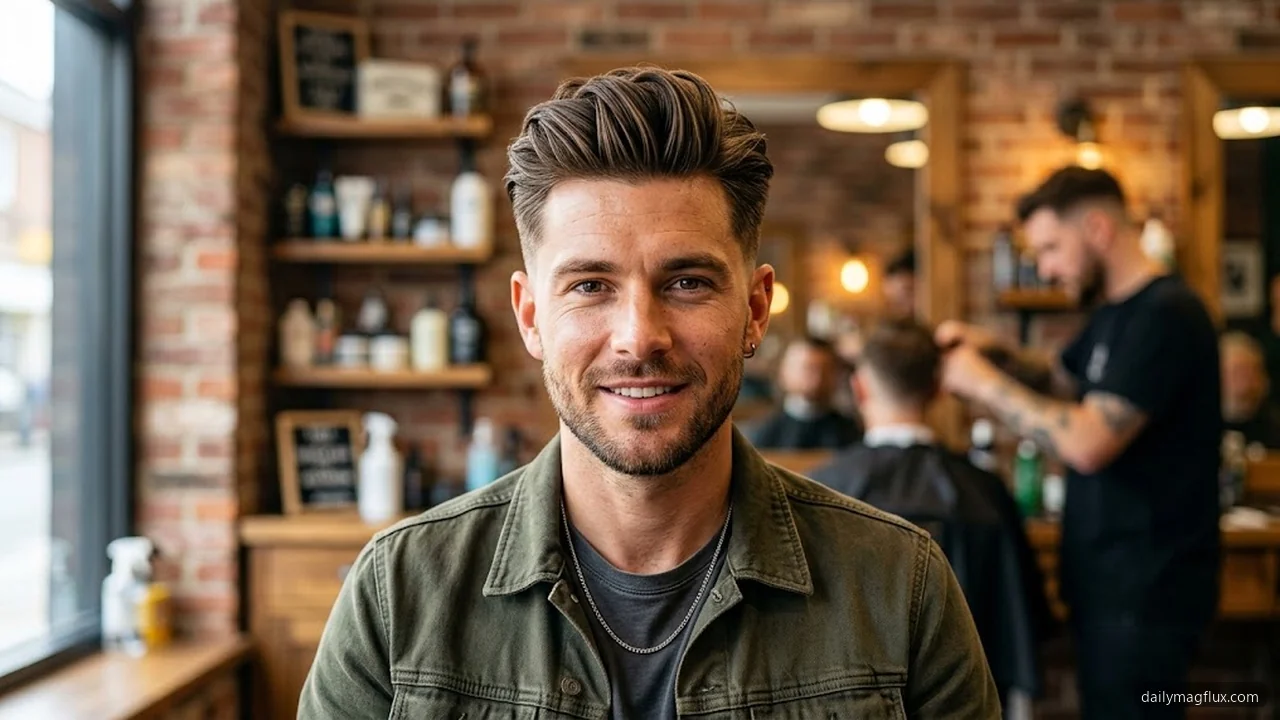
The textured quiff pushes the front up and back, so the crown looks taller than it is. Your barber point-cuts the top to about two and a half to three inches for movement. The sides sit at a #1.5 above the ear, tighter than the classic version. Behind, the taper fades to a #1 at the nape and stays low.
Best for: round and heart faces that gain from height through the front, paired with fine to medium straight hair. Round faces get the vertical lift they need without extra width at the sides. Heart faces should keep the quiff moderate, because very tall volume overpowers a narrow chin. Fine strands hold the shape once sea salt spray adds grit.
Style it on damp hair with four or five sprays of sea salt spray worked from root to tip. Blow dry upward with a vent brush, then finish with a pea-sized amount of matte clay. The clay adds texture without shine, which keeps the quiff looking dry rather than greasy. Pinch the front tips between your fingers for a broken, piecey edge.
Upkeep: expect a visit every three to four weeks, because the #1.5 sides lose their snap first. The quiff itself keeps its length for two months or more with regular trims at the front. Dry shampoo on day three lifts the roots without adding weight. Skip heavy pomade here, since it drags a quiff flat within an hour.
Side-Part Comb-Over Low Taper
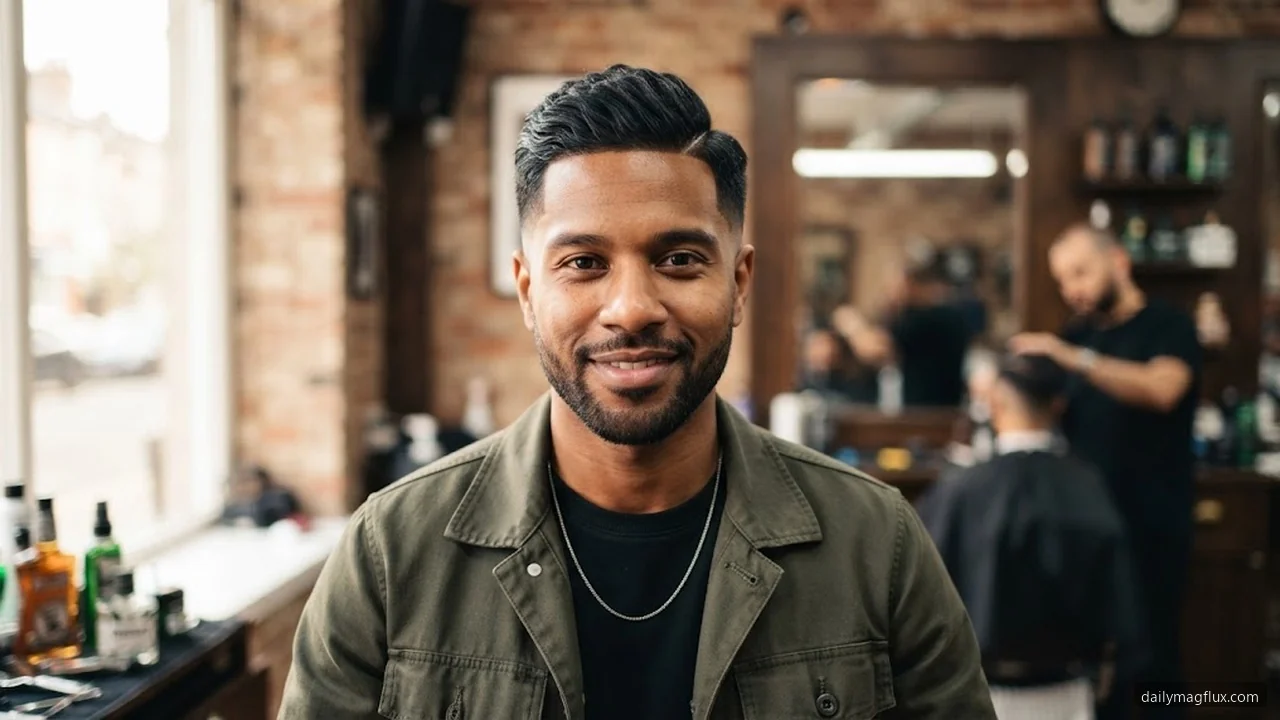
The side-part comb-over sweeps three inches of hair from a clean part across the head. From the side, a smooth diagonal line covers the top corner of the head. The back keeps the same length as the top, so the silhouette stays rounded. Tapering happens low, at a #0.5 to #1 near the sideburns and nape.
Best for: oblong and diamond faces with thick straight hair that holds a combed line. Oblong faces keep fullness at the sides here, which stops the head from looking long. Diamond faces gain width at the forehead and temples where the sweep sits. Thin or very fine hair should skip it, because the part exposes the scalp.
Ask for a #2 on the sides above the ear and a #0.5 taper at the nape. The top runs about three inches and gets cut with scissors, never with a guard. Your barber should leave the part line soft rather than shaved, so it does not look like a scar. A hard razor part shows on dark hair and grows out badly.
Upkeep: a touch-up every four weeks keeps the part sharp and the sides tidy. Comb the hair into place with a dime-sized amount of pomade while it is damp. Pomade gives shine and slick control, which suits this polished look better than clay does. Wash it out at night so the scalp does not clog.
Brushed-Up Crop Low Taper
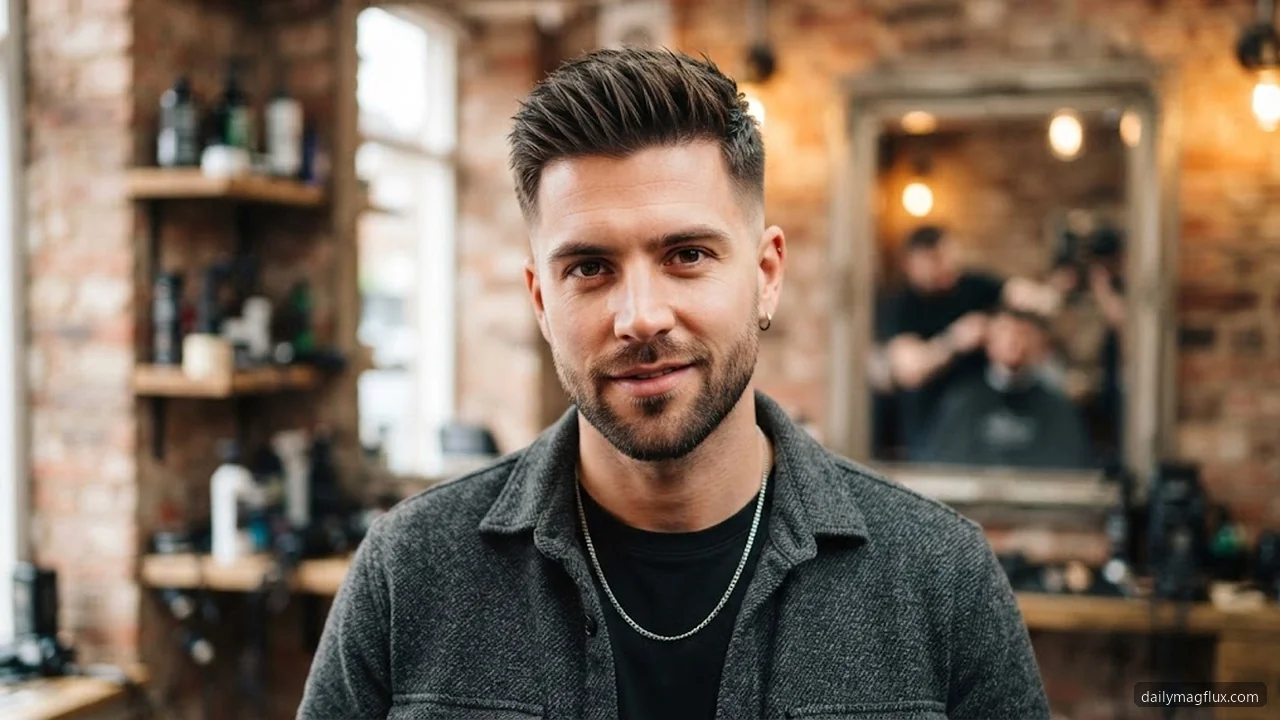
The brushed-up crop keeps the top short at about two inches and pushes it straight up. The fringe gets cut blunt and short, so it stands instead of falling forward. Sides run at a #1 above the ear, tighter than the quiff version. The taper drops to a #0.5 at the sideburns. The back blends to a #0 near the neckline for a sharp edge.
Best for: oval and round faces with thick straight hair that stands up on its own. Triangle faces need volume on top and at the upper sides to balance a wider jaw. Oval faces carry the tight sides easily because their proportions stay balanced. Fine hair can work here too, if texture powder adds grip at the roots.
Dry the hair upward with a vent brush before you add anything. Sprinkle texture powder into the roots, then work it in with your fingers for lift. A pea-sized amount of matte clay shapes the front edge and holds it through the day. Keep the sides flat with a light pass of the palm, not more product.
Upkeep: because the taper stays low at the sideburns, this one needs a touch-up every three to four weeks. The blunt fringe also shows uneven growth faster than a textured top does. Between visits, keep the neckline tidy with a trimmer on a #0 guard. A weekly deep clean removes the powder and clay buildup at the roots.
Best Face Shapes and Hair Types for a Low Taper Fade
Face shape decides how much height and width the taper should leave around your head. A low taper suits most men, because the tight part sits low and the top does the work. The five shapes listed here need slightly different guard numbers and top lengths. Oval is the easiest, since balanced proportions carry almost any version. See Healthline hair health and wellness resources for more.
A round face needs height on top and tighter sides, so keep the taper low and skip side volume. Ask for a #1 above the ear and a textured top of two to three inches. Square faces already have strong angles, and texture on top softens them nicely. Mid-length scissor work with a #2 side keeps the jaw from looking heavy.
An oblong face should skip tall height and keep some fullness at the sides or a fringe. A low taper with two inches on top and a soft fringe shortens the face visually. Heart shapes suit a fringe, a side sweep or medium length, and should skip very tall volume. A comb-over with a low taper balances a wide forehead against a narrow chin.
A diamond face has wide cheekbones with a narrower forehead and chin, so it suits fullness at the top. Keep the temples soft rather than very tight, because tight temples emphasize the cheekbones. Triangle faces carry a jaw wider than the forehead and need volume up top. Very tight sides widen the jaw, so leave a #2 there instead of a skin fade.
| Face Shape | Best Taper Approach | Barber Detail |
|---|---|---|
| Round | Textured quiff on top with a low taper | #1 above the ear, 2 to 3 inches on top, no side volume |
| Square | Mid-length textured top with a low taper | #2 on the sides, soft blend at the sideburns, natural nape |
| Oblong | Low taper with a soft fringe | 2 inches on top, keep weight at the temples, skip tall height |
| Heart | Side sweep or fringe with a low taper | #1.5 sides, 2.5 inches on top, moderate front volume |
| Diamond | Fullness at the forehead with a low taper | Leave the temples at #2, taper to a #0.5 at the nape |
Density matters as much as shape, because straight hair shows every blend line. Thick, dark hair needs a slower gradient from #1 to #3 to avoid hard clipper marks. Fine or light hair hides those lines more easily and can take a longer bottom guard. Curly hair, by contrast, blurs the taper and loses the crisp edge.
How to ask your barber for a clean low taper fade
Bring a photo and two guard numbers, and your barber will cut the shape you want. Say what you want at the sideburns, the nape and the top separately. Vague requests such as “just a taper” leave too much to guesswork. Tell your barber: “Low taper, #0.5 at the sideburns blending up to a #2.”
Photos work better than words, so bring three: front, side and back. The side shot shows your barber how high the taper should sit. A back view explains the neckline you want, whether natural or squared. Keep the picture on your phone at full brightness for the chair.
Short, medium, and long variations
Top length is the dial you turn, because the taper itself stays low in all three versions. Short keeps the crown close to the head, while long leaves you something to comb. Medium sits between the two and suits most men who want options. Choose the length by how much time you will spend styling each morning.
- Short: keep the top at one inch and cut it with a #8 guard. This leaves plenty of texture for a brushed-up crop with no comb needed.
- Medium: leave about two inches on top and ask for scissor work. Because straight hair at that length holds a soft side sweep without much product.
- Long: run the top to three or four inches and keep the taper low. So, the sides stay neat while the top moves freely, which suits a slick-back finish.
- Grown-out: at week six the taper blurs into a soft shag. A small trim at the nape restores the shape without touching the top or sides.
Length also decides your product, because one inch of hair needs more grip than four. Short tops want texture powder and clay, while longer tops take cream or pomade. Grow-out speed stays the same either way, at about half an inch a month. Pick the length you can restyle in five minutes on a busy morning.
How to style it
Start with damp hair, because straight strands set the shape they dry in. Towel it until it stops dripping, then comb it into your rough direction. A pea-sized amount of styling cream belongs on damp hair, not dry hair. Work it from the back of the crown toward the front hairline.
Blow dry upward with a vent brush if you want lift through the front. Keep the nozzle pointed along the hair, so the cuticle lies flat and shiny. The sides need almost no attention, since the taper stays short there. Dry the top last, when the rest of the head is already set.
Best products for straight hair
- Styling cream: a pea-sized amount adds light control on damp hair and keeps straight strands smooth. This suits the classic natural low taper best without any crunch.
- Sea salt spray: four or five sprays at the roots build grit and lift. So, a quiff holds its height without a heavy base product, which fine hair loves.
- Matte clay: warm a dime-sized amount and work it through dry hair for texture and hold with no shine. This suits the brushed-up crop on short tops.
- Pomade: a dime-sized scoop gives shine and slick control for a side-part comb-over. It washes out with one shampoo so the part stays crisp.
- Texture powder: sprinkle it into the roots of a dry top. Because the powder adds grip and volume without the wet look of a cream or any greasy feel.
- Heat protectant: a few sprays before you blow dry shield straight strands from hot air. This keeps fine hair from drying out or splitting over time.
How to maintain it at home
The nape hairs grow in first, so your neckline looks fuzzy around week three. Sideburn length follows close behind, which blurs the blend at the bottom. The top keeps its shape far longer and rarely needs a trim between visits. Check the back in a hand mirror every Sunday to spot the change.
Trim the nape at home with a #1 guard and a light, upward flick of the wrist. Never press the trimmer flat against the neckline, because that carves a hard line. Work in short passes and check the result in a second mirror. Stop while the line still looks soft rather than perfectly sharp.
Common mistakes to avoid
Most bad tapers come from seven small habits, and all of them are easy to fix. The wrong guard number, a rushed neckline or too much product ruins a clean cut. Straight hair forgives far less than curls do, because every line stays visible. Watch out for these seven common problems before you book your next appointment.
- Over-lighting the taper: asking for a skin fade at the sideburns turns the taper into a low fade. This needs a touch-up every two weeks instead.
- Skipping the neckline: the nape grows fastest. So, a taper without a tidied neckline looks untidy within a week or two. Even when the sides still look sharp.
- Using too much product: more than a dime-sized amount of clay weighs straight hair. Down and leaves a greasy shine by the afternoon on even the thickest tops.
- Cutting the top too short: a #3 on top leaves 3/8 inch. This kills the comb-over and forces a spiky finish you did not ask for when you sat down.
- Ignoring growth patterns: a cowlick at the crown will lift the top. So, tell your barber and let them leave extra length there to work with.
- Missing touch-ups: stretching visits past five weeks lets the sideburn hair blend into the top. This flattens the whole shape and hides the taper.
- Chasing someone else’s hair: photos from a different density or curl pattern never translate exactly. So, match the picture to your own hair type first before you book.
Want more taper fade guides?
Taper cuts come in several heights and shapes, and each one suits a different head. A mid taper starts at the temple line, while a high taper sits near the parietal ridge. Drop and burst shapes change the line behind the ear, not the height. Knowing the right names makes your next request much easier for your barber to follow.
Frequently Asked Questions
What is a low taper fade haircut for straight hair?
It is a cut that shortens only the sideburns and nape, leaving the top long. Straight strands hold the blend line, so the finish looks crisp and clean. Your barber tapers from a #0.5 at the bottom up to a #2 or #3. The top runs two inches or more and is cut with scissors.
What guard number should I ask for on a low taper fade?
Ask for a #0.5 or #1 at the sideburns, blending into a #2 above the ear. Fine straight hair does better at a #1.5, which hides the scalp. Thick hair can take the #0.5 because the extra density covers the skin. Say the numbers out loud, since words like “short” mean different things.
Does a low taper fade work with fine straight hair?
Yes, provided your barber keeps the bottom guard longer and the blend wider. A #1.5 at the sideburns adds visual weight to thin, fine sides. Fine hair also dries fast, so the taper keeps its shape with little effort. Ask for soft scissor work on top rather than a blunt cut.
How often should I get a low taper fade touched up?
Plan on every three to four weeks, because the nape and sideburns blur first. Hair grows about half an inch a month, and the taper edge shows that growth. A home trimmer pass on the nape can buy you one extra week. Stretch to five weeks and the taper starts looking like a grown-out shag.
Can I style a low taper fade with a middle part?
Yes, once the top reaches about two and a half inches of length. A middle part needs weight on both sides, so a short top will not split cleanly. Dry the hair with a comb along the centre line, then smooth it down. Matte clay holds the part without the wet look of pomade.
Conclusion
Book this cut if you want tidy edges without shaved sides or daily styling. Start with the classic natural version, since it suits most straight hair and needs little product. Round and heart faces should lean toward the textured quiff version instead. Anyone with fine hair should ask for the longer #1.5 blend at the sideburns.
Tell your barber the two numbers, the taper height and the top length you want. Ask for a soft neckline if your hair grows in whorls at the back. Book your next visit three to four weeks out, before the shape fades. A Low Taper Fade Haircut for Straight Hair rewards that small bit of routine.

Harrison Jax is a hairstylist and fashion writer with 10+ years in the industry, holding a Certified Cosmetologist license and a Diploma in Fashion Styling from the London College of Style. He’s contributed grooming and trend guides to GQ India and Vogue Blogs, and currently leads DailyMagFlux’s hair and fashion coverage, blending runway insight with practical, everyday styling advice.