

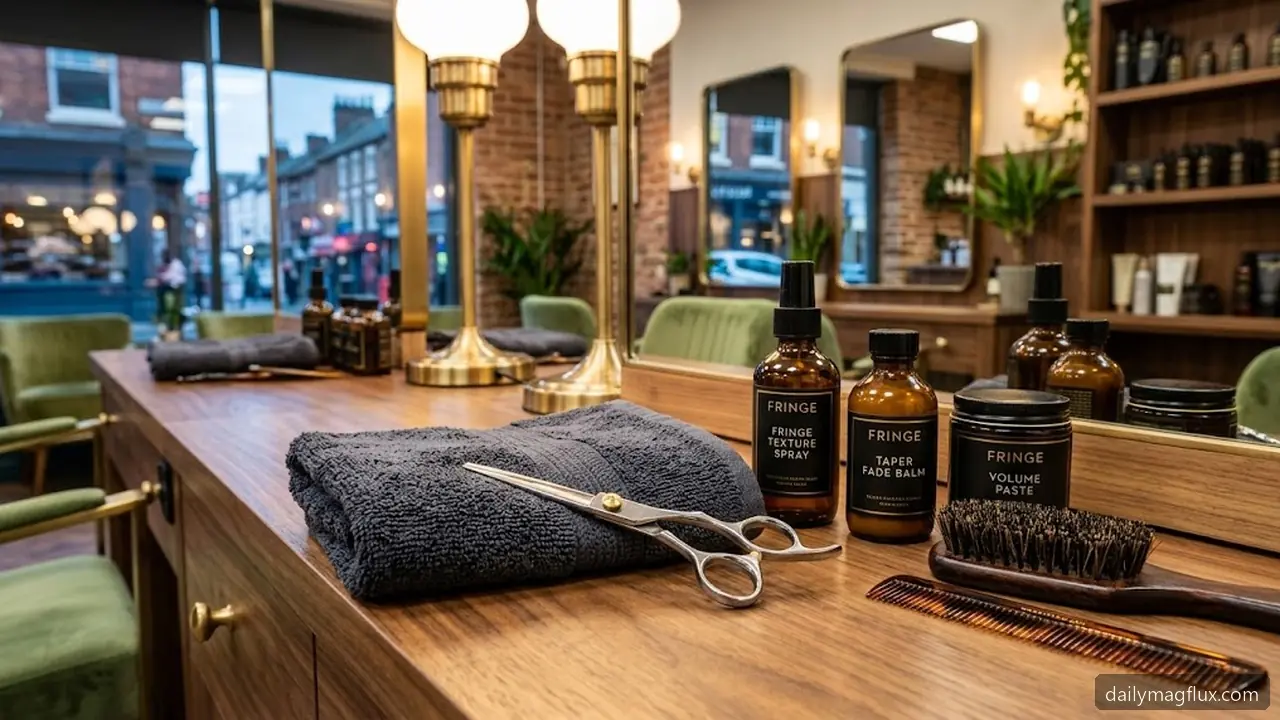
A Textured Fringe With Low Taper Fade pairs piecey forehead length with short, blended sides. The fringe falls forward over your brows, while the taper hugs ear and nape. Most versions leave two to four inches on top and taper the sides. The finish stays soft and dry rather than slick, which reads casual, not polished.
It flatters square and heart faces because the forward fringe shortens a long forehead. Round faces need height on top, so ask for texture rather than extra length. Straight, wavy and curly hair all work, but fine hair needs a lighter product load. Book a touch-up every three to four weeks, since the taper grows out first.
Quick Answer
A Textured Fringe With Low Taper Fade is a choppy forward fringe over short tapered sides. It suits straight, wavy and curly hair, and most face shapes except very round ones. Ask for two to four inches on top with a #2 taper at the sides. Book a trim every three to four weeks to keep the shape sharp.
What a Textured Fringe With Low Taper Fade Actually Is
The top is scissor-cut into a fringe, so no guard touches that length. Your barber point-cuts the ends to break up the weight and create separate pieces. Those pieces fall forward across the forehead instead of sweeping back off the face. A low taper starts just above the ear and stops at the neckline.
Only the sideburns and the nape get shortened, which keeps bulk through the sides. That is the difference between a taper and a full fade, and it matters. A fade blends the entire side and back down to skin or a #0. The taper leaves visible length above the ear, so the silhouette stays softer.
Guard numbers describe the sides, the back, or a buzzed top under one inch. A #1 guard leaves one eighth of an inch, and a #2 leaves a quarter inch. Anything longer than an inch on top gets measured in inches, not guards. So say three inches on top, never a number three on top.
Its closest cousin is the textured crop, which also uses a short taper. A crop keeps the fringe close to the head, cut short and flat across. This cut lets the front hang longer and sit forward with visible movement. The extra length is what gives you texture instead of a blunt line.
A forward fringe covers a receding hairline, a frequent reason for the cut. Others want the messy, undone look that photographs well without much effort. The taper also grows out cleanly, so the shape holds between appointments. It reads relaxed at work and still looks deliberate on a night out.
Your barber blends the taper upward with a clipper-over-comb or freehand technique. The blend line sits low, near the ear, so nothing reads as a hard line. A natural neckline keeps soft edges instead of a squared-off finish. Blend lines show most on dark, thick hair and least on light or fine hair.
A low taper keeps the cut conservative, which suits offices and schools. If you want sharper contrast, a mid fade starts at the temple line instead. A high fade begins near the parietal ridge and needs trims every two to three weeks. The low version costs you less time in the chair across a year.
Why the Cut Is Everywhere in 2026
Barbers see the same request all day, because the cut solves a common problem. Length on top without the maintenance of a slicked style is a common goal. A fringe gives that length a place to sit, so it never looks shapeless. It also hides a cowlick at the front hairline that fights every other style.
Hair grows about half an inch a month, and a textured fringe absorbs that growth. Extra length just means longer pieces to push around, not a broken shape. That makes the three-week mark far more forgiving than it is on a skin fade. You can stretch a taper to four weeks and still look tidy.
Product habits changed too, and a dry, matte finish is now common. That suits this cut, which looks best when the hair stays touchable. A fringe also works with a beard, which keeps the whole look balanced. Barbers pair it with a sharp line-up for contrast or a soft edge for ease.
Who It Suits
This cut suits most men who want length up front and short sides. It works on straight hair, waves, curls and coils with different finishing products. Skip it if you dislike hair on your forehead or you sweat heavily at work. Very round faces should choose a taller top instead of extra fringe weight.
Think about density first, since fine hair behaves differently from thick hair. A strong front hairline takes a heavier fringe, while a thinning one needs lighter layers. Lifestyle matters too, because a fringe needs a quick rinse and blow-dry most mornings. Bring a photo that matches your own hair type, not just the shape you like.
Best Face Shapes
A fringe changes the face by covering the top third of the forehead. That shortens a long face and softens a wide one at the same time. The low taper keeps the sides neat without adding width at the temples. Together they balance most shapes, which is why the cut travels so well. See American Academy of Dermatology hair care guidelines for more.
Diamond faces need fullness at the forehead and temples, so keep the fringe wide. Triangle faces look better with volume on top and softer upper sides. Oblong faces should skip tall height and keep a heavier fringe instead. Your barber can shift the balance with a small change in fringe length.
| Face Shape | Why It Works | Barber Adjustment |
|---|---|---|
| Oval | Balanced length and width wears most fringes well | Keep the fringe natural and skip added volume |
| Square | Broad forehead and strong jaw take forward texture | Soften the fringe ends and thin the sides slightly |
| Round | Round faces need height on top, not extra fringe weight | Build texture on top and keep the sides tight |
| Heart | A wide forehead and narrow chin suit a forward fringe | Widen the fringe across the brow and keep ears tight |
| Oblong | A heavier fringe shortens a face that reads long | Cut the fringe longer and avoid lifting the front |
Best Hair Types
Texture is the deciding factor, because the same cut behaves differently on each head. Pattern, density and strand thickness all change how the fringe falls. Your barber adjusts the cut, the product and the drying method to match yours. Read the group that matches your hair and ignore the rest of them. See Healthline hair health and wellness resources for more.
Straight Hair
Straight hair shows every cut line, so a choppy fringe needs real point-cutting. Ask for a slight graduation through the front so the fringe sits away from the skin. Fine straight hair collapses without a little texture powder worked into the roots. Sea salt spray on damp hair gives straight strands the grit they lack.
Wavy Hair
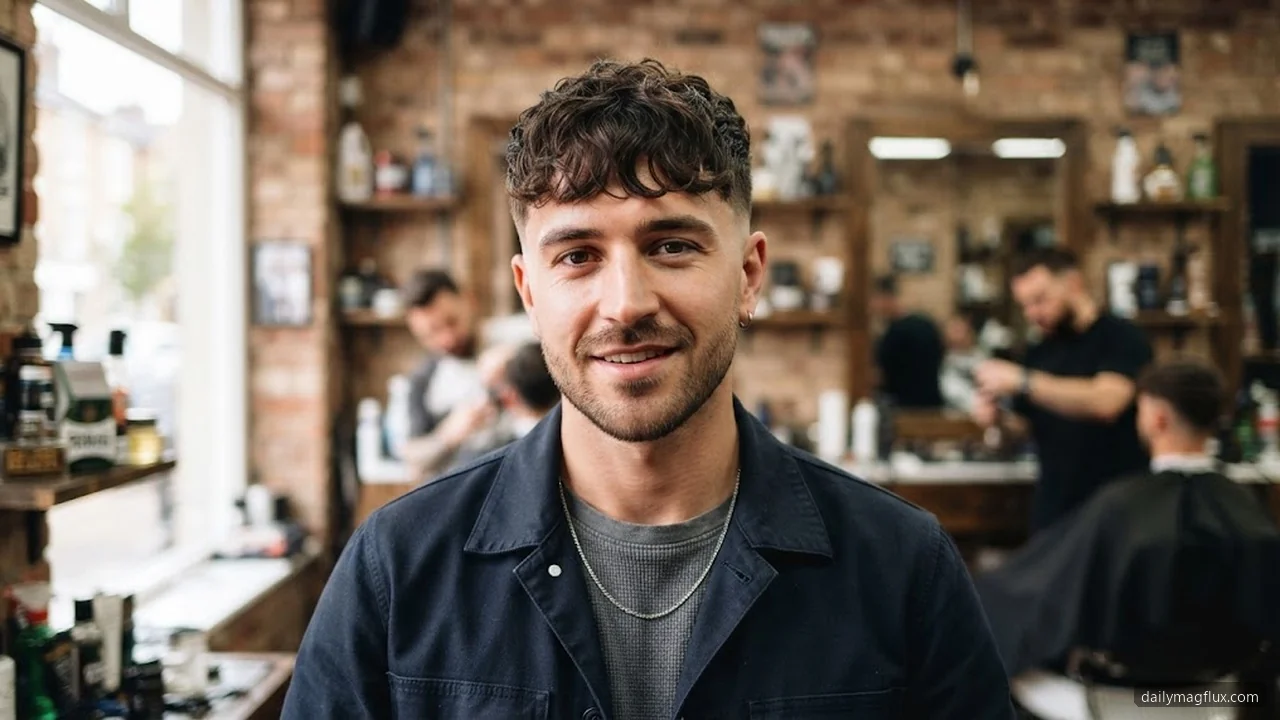
Waves 2A to 2C do most of the work, because the pattern already breaks up the fringe. Dry the fringe with your fingers instead of a brush to keep those bends intact. A dime-sized amount of curl cream defines the wave without any crunch. Cut the fringe a touch longer, since waves pull up as the hair dries.
Thick Hair
Thick hair holds a shape well, but it can turn a fringe into a solid slab. Your barber should thin the ends and slide-cut the fringe for separation. A #3 or #4 on the sides stops the taper from looking pinched against the bulk. Matte clay in a pea-sized amount keeps heavy hair in place all day.
Fine or Thin Hair
Fine hair needs the opposite approach, because extra weight drags the fringe flat. Keep the top around two inches and ask for plenty of point-cutting through the ends. Dry the fringe upward with a small brush to build lift at the root. Skip heavy pomade entirely, since it clumps fine strands into thin, greasy strings.
Curly Hair
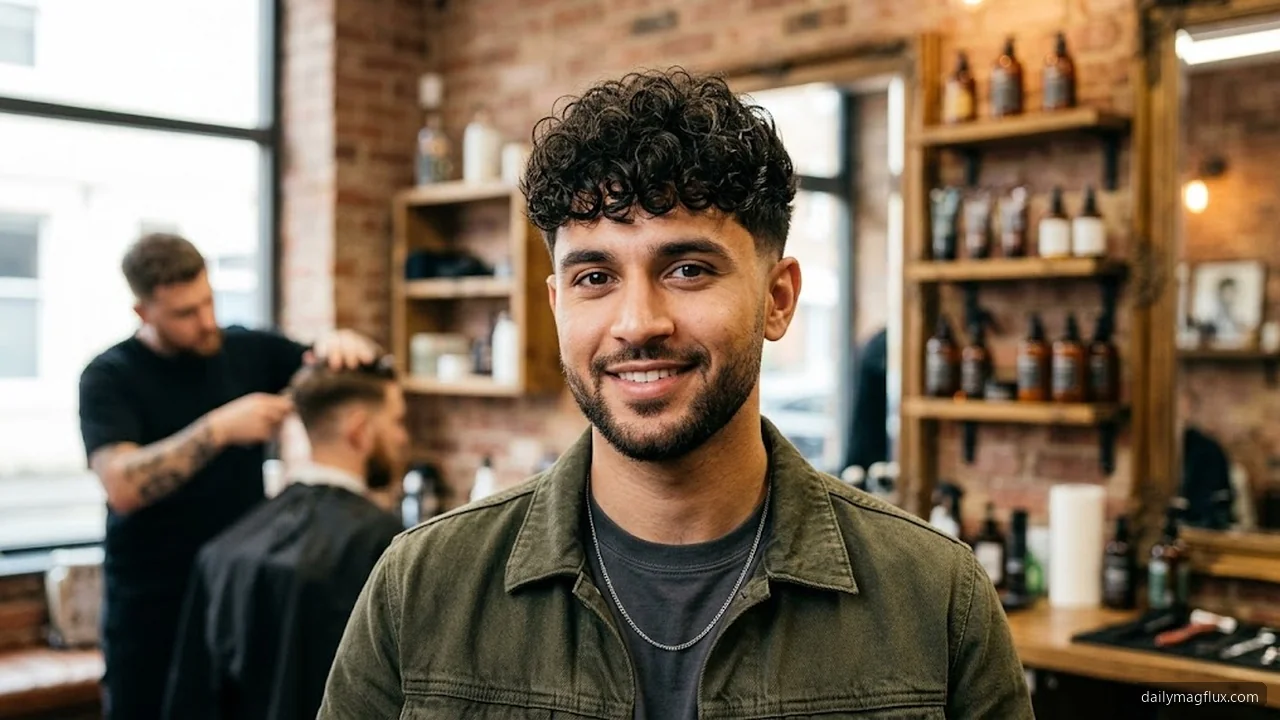
Coils from 4A to 4C and curls from 3A to 3C wear this cut well when left longer. A dry cut shows your barber exactly how much each curl shrinks. Take the sides down with a #2 and blend into the curl pattern softly. Dark, thick hair shows blend lines most; light or fine hair shows them least.
Apply curl cream to soaking wet hair and scrunch the fringe upward. Let it air dry when you can, because diffusers stretch the pattern. Refresh with water and a light gel on day two instead of re-washing. Curly fringes need a trim every four weeks to stop the shape dropping.
The Main Variations
The cut changes character with the fringe length and the density of the hair. Shorter fringes read tidy, while longer ones read relaxed and undone. Fine hair needs a lighter version of the same shape to keep any lift. Pick the variation that matches how much time you will spend styling it.
Short Fringe with Low Taper
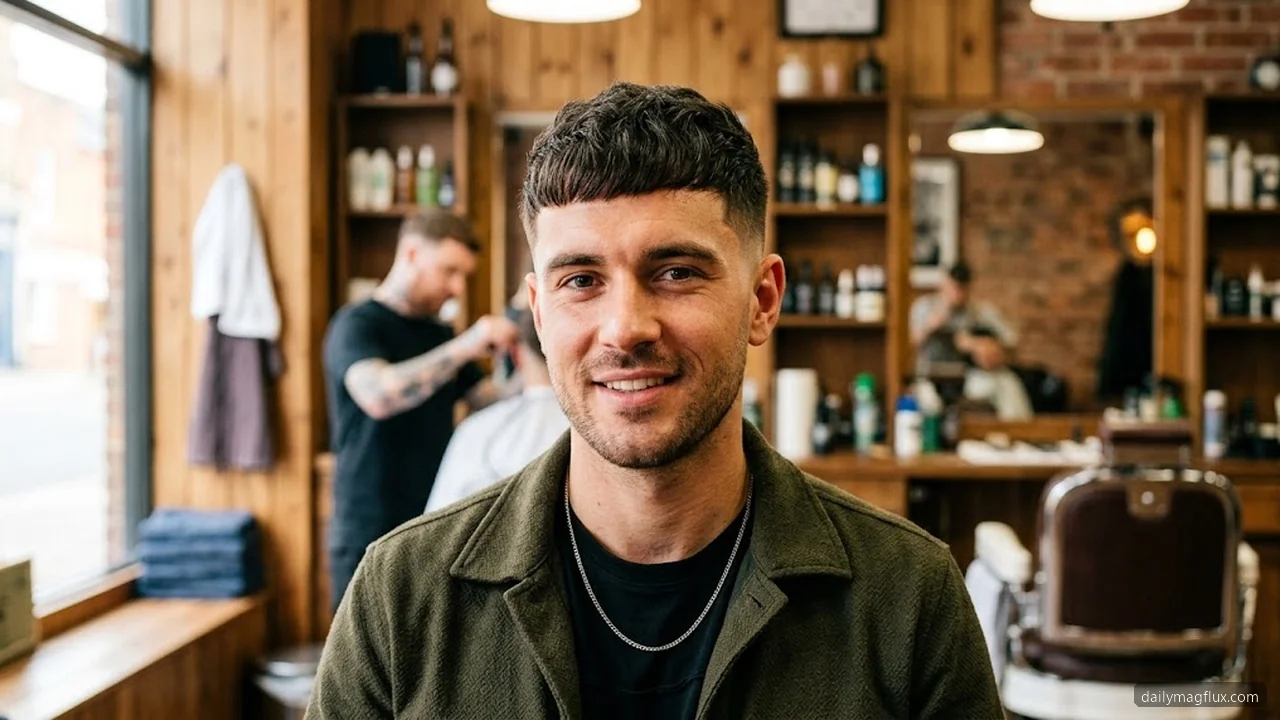
This version keeps the fringe above the brows, cut to roughly two inches. The sides take a #2 taper that stays low, hugging the ear and nape. From the back you see a clean, rounded neckline with no hard line. It differs from a crop because the front still carries visible texture.
It suits square and heart faces, plus anyone who hates hair in their eyes. Straight and wavy hair handle this length best, since curls spring upward. Work a pea-sized amount of matte clay through dry hair from back to front. Pinch the fringe tips for thirty seconds to separate the pieces.
Expect a touch-up every three weeks, because the taper line grows out first. Between visits, dampen the fringe and reshape it with your fingers each morning. Skip this version if your hairline is thinning badly at the front. A longer fringe covers more ground and hides uneven density better.
Long Messy Fringe with Low Taper
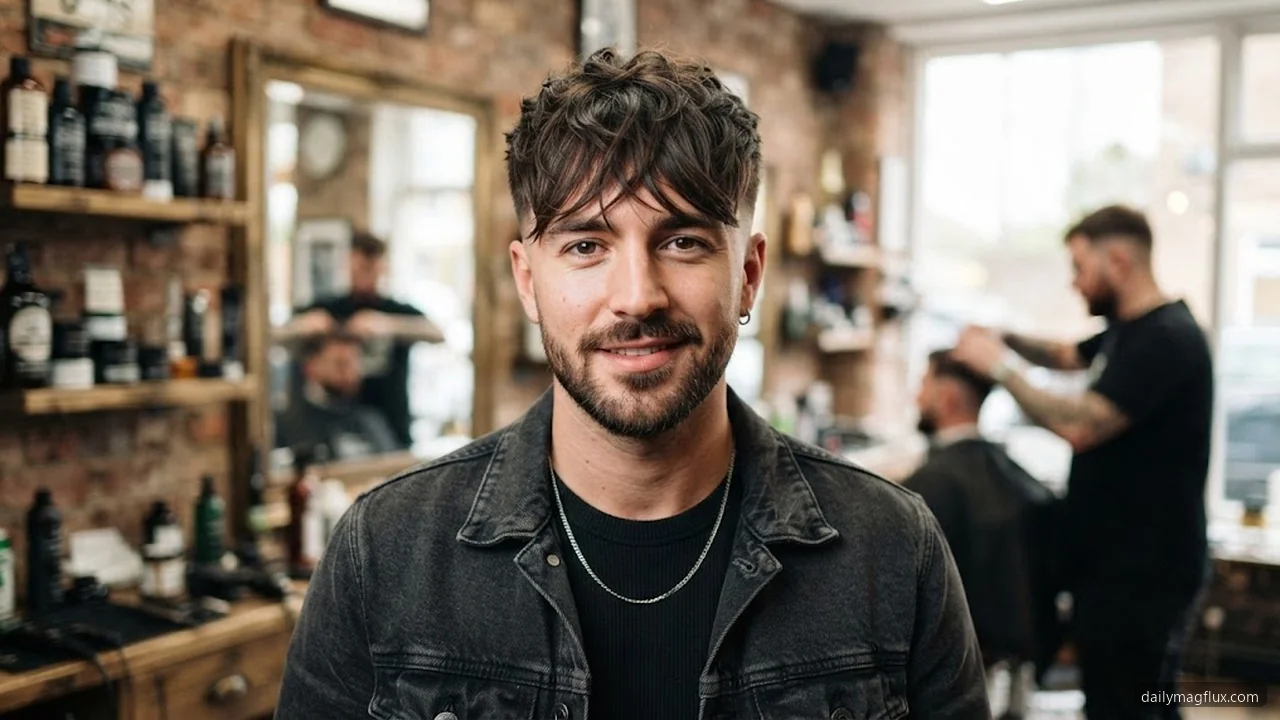
Here the fringe runs three to four inches and falls past the brow line. The taper stays low at a #1.5, so the sides look short but never bald. From the side you see weight through the front and a soft ear line. This is the version that reads most casual and needs the most texture.
It suits oblong and diamond faces, since the length adds softness up front. Thick and wavy hair wear it best, because the weight holds the shape. Spray sea salt spray into damp hair, then rough-dry it with your hands. Finish with texture powder at the roots for lift that lasts the day.
Come back every four weeks, since the sides grow into a fuzzy outline. Fine hair should avoid this version, because the length falls flat quickly. A round face needs more height up top instead of a heavy, low fringe. Ask for a blunt-ish cut across the fringe first, then soften with point-cutting.
Fine-Hair Textured Fringe with Low Taper

This build keeps the top near two and a half inches for maximum movement. The taper runs at a #1 on the sides and stays tight around the ear. The fringe is cut with a slight diagonal so it sweeps across the forehead. It looks lighter than the other versions, with more air between the pieces.
It suits oval and heart faces that want movement without added weight. Fine and thin hair is the whole point, since heavier versions fall flat. Mist damp hair with sea salt spray, then lift the roots with a round brush. A dusting of texture powder at the crown keeps the volume from collapsing.
Book a trim every four weeks, because fine hair loses its shape quietly. Use a clarifying shampoo weekly, since product buildup flattens fine strands. Skip matte clay here, because the weight pulls the fringe straight down. Coarse hair can wear this cut too, but it needs thinning at the ends.
How to Ask Your Barber
Open the consultation by naming your top length in inches, not in guard numbers. Say “three inches on top with a low taper. A #2 on the sides.” Show one front photo and one side photo so your barber reads the fringe direction. Tell them how many minutes you will spend styling, because that changes the cut.
Add that you want the taper low, starting just above the ear and stopping at the nape. Ask for a natural neckline instead of a squared one, which keeps the back soft. For a sharper look, request a line-up along the hairline but leave the temples alone. Say “keep weight in the sides above the ear” so the silhouette never looks pinched.
Ask your barber to point-cut the fringe rather than cut it straight across. Say “leave it choppy and uneven at the ends. So, I can push it around.” If you wear a forward swept fringe, tell them which way it falls naturally. Ask them to slide-cut the top, which removes bulk without shortening the length.
Watch for a barber who thins the fringe with thinning shears, which makes it fuzzy. Stop them if they start cutting the fringe short, because it takes months to grow back. Ask them not to take the taper above the temple, since that turns it into a high fade. Check that they dry and style it at the end, so you can copy the finish.
Bring photos that match your own hair type, not just the shape you like. A thick-haired photo on fine hair will sit flat within an hour of leaving. Save a front, side, back and crown shot so nothing gets missed. Point at the picture and say “this length on top, this height on the sides.”
How to Style It at Home
Start with damp hair, because texture holds better in hair that is not bone dry. Mist four or five sprays of sea salt spray through the fringe and top. Rough-dry with your fingers, lifting the roots instead of pressing them flat. Keep the dryer on medium heat and move it constantly to avoid frying the ends.
Dry the fringe forward and slightly across, which trains it to fall the right way. Use a small round brush at the root for thirty seconds to build height. Aim the airflow against the direction of growth for extra lift at the crown. Stop when the hair is ninety percent dry, since the last bit sets the shape.
Warm a pea-sized amount of matte clay between your palms until it disappears. Work it through the top from the back of the crown toward the fringe. Pinch small sections of fringe between your thumb and finger to separate them. Add a light dusting of texture powder at the roots if the top falls flat.
Curly hair needs a different routine, so scrunch curl cream into soaking wet hair. Fine hair should skip clay entirely and rely on spray plus powder for lift. On day two, dampen the fringe with water and reshape it with your fingers. Wash twice a week at most, because daily washing strips the natural oils.
Best Products
Product choice decides whether the fringe looks piecey or flat, so match it to your hair. Fine hair needs light formulas that add grit without any weight. Thick and curly hair can carry creams and clays with more body. Buy one product at a time and test it for a full week.
- Sea salt spray: It adds grit and volume to damp hair. Four to five sprays through the top is plenty for a full day.
- Matte clay: A pea-sized amount gives texture and hold with no shine. This suits thick or wavy hair that needs control.
- Texture powder: A light dusting lifts fine, flat hair at the root without any wet look. It lasts until you wash it out.
- Lightweight cream: A dime-sized amount defines curls and tames frizz on. 3A to 4C hair when you work it into wet strands.
Maintenance and Trim Schedule
Book your next appointment three to four weeks out, because the taper grows out first. A low taper holds its shape longer than a skin fade, which needs two to three weeks. Hair grows about half an inch a month, and no cut changes that rate. Stretch to four weeks only if you can live with a softer ear line.
The taper line above the ear fuzzes out before the fringe looks long. The neckline also loses its shape first, especially on thick, dark hair. Blend lines show most on dark, thick hair and least on light or fine hair. Ask for a neck tidy between cuts if you want the back to stay clean.
Common Mistakes to Avoid
Most bad versions of this cut come from one small mistake in the chair or at home. The fixes are simple once you know what to watch for. Read these before your next appointment and check them again while styling.
- Cutting the fringe too short: Fringe hair takes months to recover. So, ask for it left longer than the photo and let your barber trim in small passes.
- Skipping the reference photo: A photo settles the length debate in seconds. So, bring front and side shots that match your own hair type and density.
- Overloading fine hair: Fine hair collapses under heavy clay. So, use spray and powder instead and keep any cream to a dime-sized amount.
- Letting the taper grow out: The taper loses its line in about three weeks. So, book ahead rather than waiting until the sides look fuzzy.
- Using too much product: A pea-sized amount of clay is enough for most hair. So, start small and add more only if the fringe drops.
- Ignoring face shape: A heavy fringe shortens a long face but widens a round one. So, match the fringe weight to your own shape.
Fix the small things first and the cut holds its shape far longer. Ask your barber to show you the product amounts they use. Then copy that at home instead of guessing from a jar.
Want More Taper Fade Guides?
Before you commit, compare a low taper against a mid fade to see which height suits you. A burst fade arcs around the ear and keeps the back longer, which changes the silhouette. Curly versions need a dry cut and a longer fringe to allow for shrinkage. Ask your barber which height fits your hairline and growth pattern.
Frequently Asked Questions
What is a Textured Fringe With Low Taper Fade?
A Textured Fringe With Low Taper Fade is a choppy front length over short tapered sides. The fringe sits forward across the brow in uneven pieces. The taper stays low at the ear and nape, which keeps the sides soft. It suits straight, wavy and curly hair that wants easy movement.
How long does this textured fringe low taper fade last?
The shape looks sharp for three to four weeks before the taper softens. After that the sides read fuzzy, but the fringe still looks fine. Book a trim at the three-week mark to keep the shape sharp. You can stretch to four weeks if you keep the neckline tidy.
What guard number should I ask for on a low taper fade?
Ask for a #2 at the taper point, blended down to a #1 near the ear. Fine or light hair can take a #1.5 instead. Thick, dark hair shows every clipper mark, so request a softer blend. Never use a guard number for top length over one inch.
Can curly hair wear this cut?
Yes, coils from 4A to 4C and curls from 3A to 3C wear it well when left longer. Curls shrink as they dry, so a dry cut shows your barber the true length. Use curl cream on soaking wet hair to define the fringe. Expect a trim every four weeks to keep the shape.
How often should I trim this low taper fade fringe?
Trim the taper every three to four weeks to keep the sides sharp. The fringe itself needs a light dusting every four to six weeks. Hair grows about half an inch a month, so timing stays predictable. Book your next visit before you leave the chair.
Conclusion
Book this cut if you want length up front with short, tidy sides. Square and heart faces get the most from a forward fringe. Fine hair should start with the lighter build and a tight #1 taper. Thick or wavy hair can carry the long messy version instead.
Tell your barber: “three inches on top, low taper, #2 at the sides. Keep the fringe choppy.” Ask for a natural neckline and a soft ear line. Then return every three to four weeks to hold the shape. A Textured Fringe With Low Taper Fade rewards that routine.

Harrison Jax is a hairstylist and fashion writer with 10+ years in the industry, holding a Certified Cosmetologist license and a Diploma in Fashion Styling from the London College of Style. He’s contributed grooming and trend guides to GQ India and Vogue Blogs, and currently leads DailyMagFlux’s hair and fashion coverage, blending runway insight with practical, everyday styling advice.