

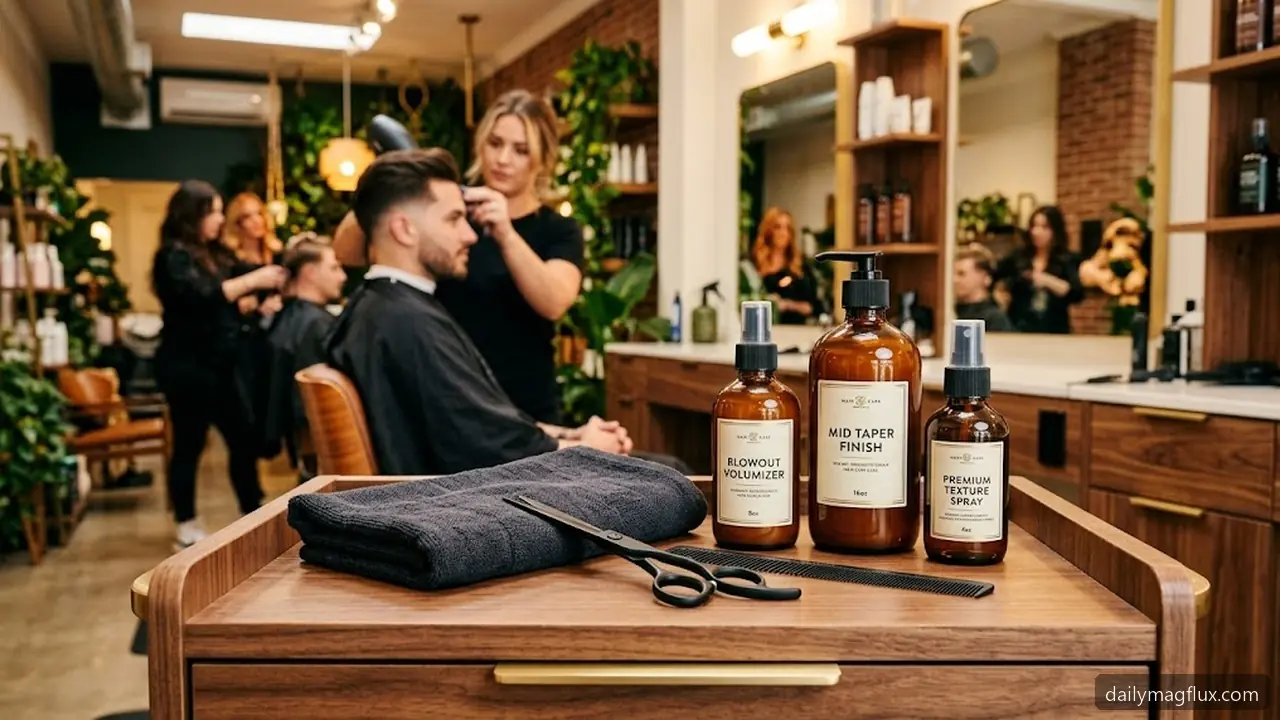
A Mid Taper Fade Blowout is a men’s cut with a mid taper fade and loose volume on top. The taper starts at the temple line and stays level behind your ear. Above it, the hair stays three to four inches long and gets blown up. The finish reads soft and dry instead of slick, with no gel shine.
It suits oval, square and heart faces because tapered sides control width. Round faces need extra height on top and a tighter taper at the temples. Most barbers run a #1 to #3 guard on the sides and leave 3 inches on top. Book a touch-up every three weeks to keep the fade edges sharp.
Quick Answer
A Mid Taper Fade Blowout blends a mid-height taper fade with lifted, textured length on top. It suits oval, square and heart faces with straight, wavy or curly hair. Sides run from a #1 to a #3 guard, and the top keeps three to four inches. Plan on a touch-up every three weeks, because the taper grows out fast.
What Is a Taper Fade Blowout?
A taper fade blowout pairs a taper at the sideburns and nape with a blown-up top. The taper only touches the sideburns and the neckline, so length stays behind the ear. Its closest cousin is a full fade, which cuts the entire side and back down to skin.
Ask for this cut when you want height and movement without a slick, wet finish. The top usually sits between three and four inches, blown dry with a round brush. Men with a cowlick or a widow’s peak often pick it, because the lift hides both.
Why This Cut Is So Popular in 2026
Blowout haircuts for men in 2026 lean toward soft, airy texture instead of hard gel sets. The mid taper keeps sides tidy for work, while the top stays loose for weekends. It also grows out well, because the taper line hides a few extra weeks of length. Barbers see it requested most by men who want one cut for office and gym.
Best Mid Taper Fade Blowout Styles
Every variation below keeps a mid-height fade, but the shape and top change. Straight hair holds a round-brush blowout, while curls need a diffuser and cream. Pick by how much time you will spend styling on a normal weekday morning. Face shape decides the height, and lifestyle decides how sharp the sides stay.
Some versions stay soft and brushed up, while others use a hard part for structure. Your curl pattern and your patience for styling decide which one you book. Guys who hate product should start with the loosest, most natural option. Anyone chasing sharp edges should ask for a tighter taper and more hold.
Classic Blowout
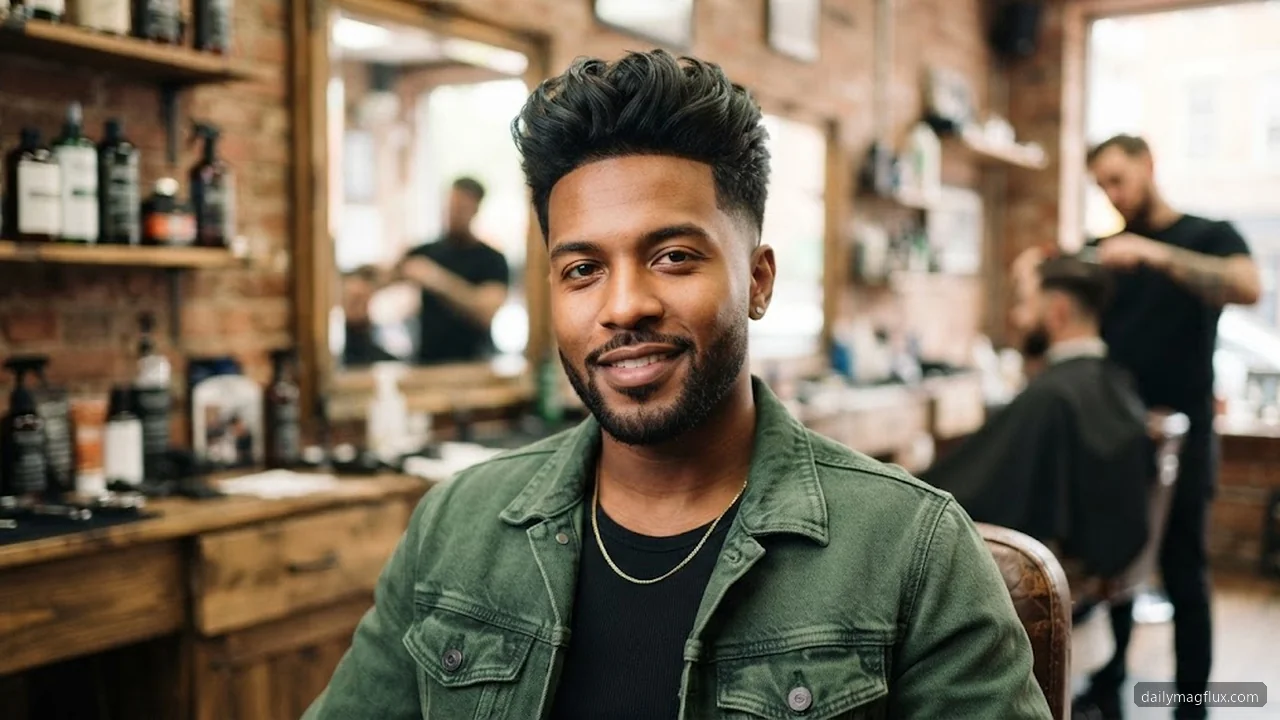
The classic version lifts the front into a soft, rounded wave above the forehead. From the side, the taper fades cleanly from the temple down behind the ear. The back stays short and flat, which separates it from a full skin fade.
It suits oval, square and round faces, and straight or wavy hair holds the shape best. Ask for a #2 guard on the sides and four inches left on top. Sides fade from a #2 near the part down to a #1 at the sideburn.
Blow dry the top upward with a round brush, working from the back forward. A dime-sized amount of matte paste adds hold without any shine or stiffness. Book a touch-up every three weeks, since a mid taper shows growth quickly.
Texture-Specific Blowout
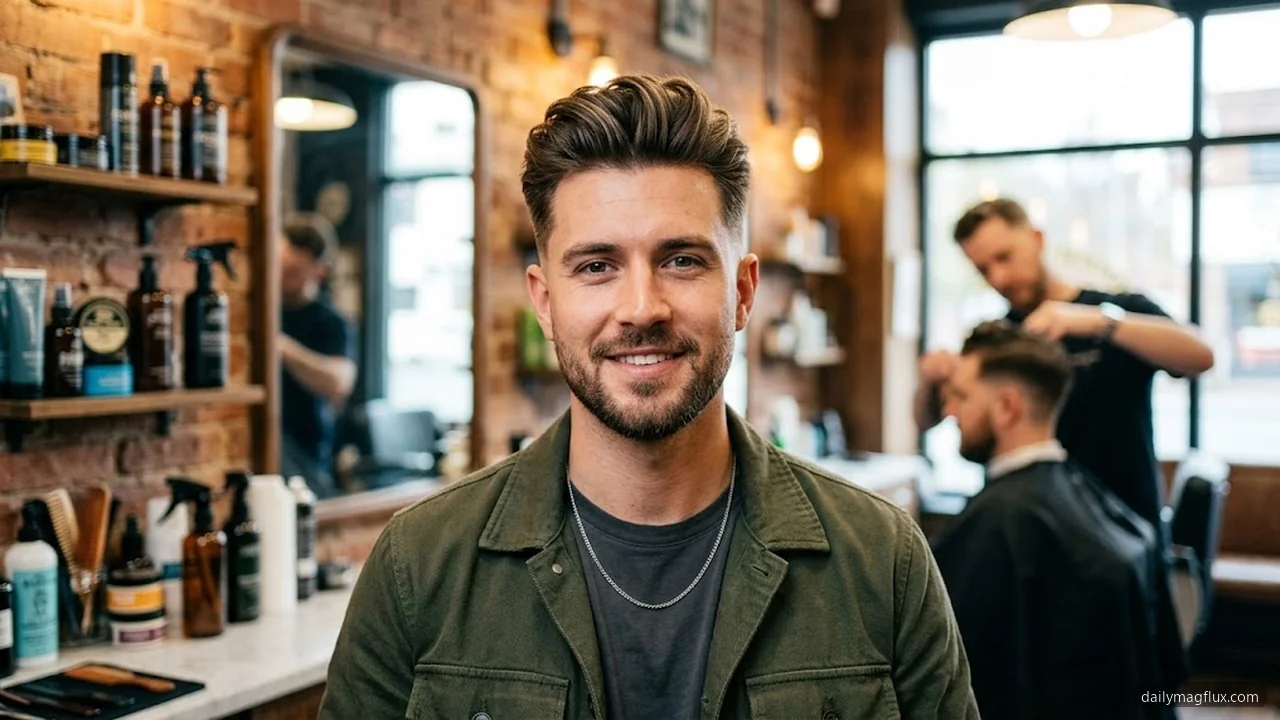
This version builds the volume with texture powder instead of a brush and dryer. The top is point-cut so the ends separate into visible, dry-looking pieces. Sides keep a soft #1 taper that leaves 1/8 inch at the sideburn point. The overall shape reads messy on purpose, with height at the crown.
Fine, straight hair benefits most, because powder adds grip without weight. Round faces gain height up top, which balances the face visually. Thick hair can work too, but ask your barber to thin the top first. Skip it if you want a neat side part that stays in place all day.
Sprinkle texture powder at the roots, then work it in with your fingertips. Pinch small sections upward until the top looks loose and uneven. A light mist of sea salt spray adds grit before you leave the house. Skip the dryer entirely, which keeps the finish matte and casual.
Upkeep runs every three to four weeks, since the taper line grows soft. Between visits, trim stray sideburn hairs with a small clipper at home. Wavy 2A to 2C hair needs less powder, because the wave already lifts. Coily 4A to 4C hair should use cream instead, since powder dries the scalp.
Blowout Combos
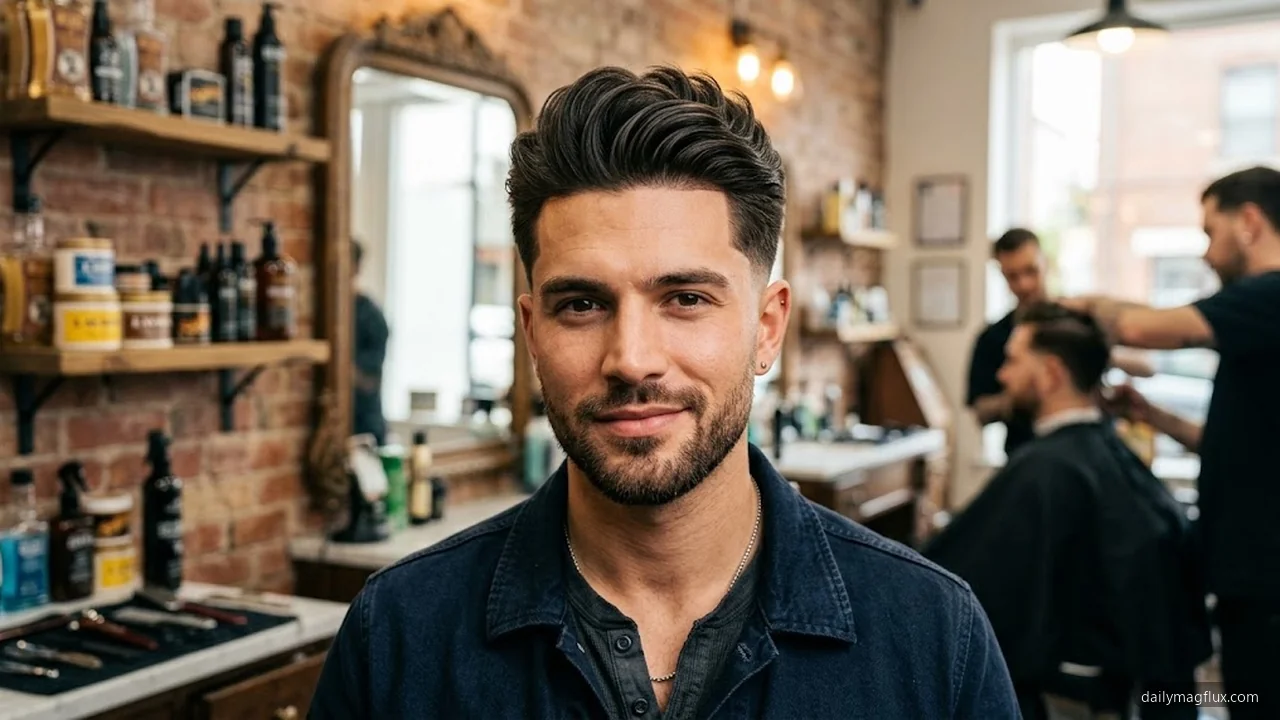
A combo just means you add one extra feature to the same mid taper base. The extra detail changes how the cut reads from the side and the back. Each combo below suits a different face shape and a different morning routine.
A burst fade arcs around the ear and leaves the hair behind it longer. That shape suits diamond faces, because the extra weight fills narrow temples. Ask for a #0.5 at the arc blending into a #2 above it. It reads sharper than a standard mid taper from the side.
A drop fade curves down behind the ear instead of staying level. The back sits lower, which balances a triangular jaw with a wider chin. Barbers blend it with a #1 at the bottom and a #3 near the crown. Keep the top at three inches so the drop stays the focus.
A sharp line-up squares the hairline and makes the whole cut look fresher. Square and oval faces carry that hard edge, while round faces should soften it. Ask for a natural line with a razor edge only along the front. Re-book every two to three weeks if you want the line crisp.
A beard fade connects the sideburn taper straight into your beard length. That link suits oblong faces, because it adds width across the jaw. Ask for a beard fade from #1 at the ear to #3 at the chin. Keep the moustache trimmed above the lip line so the top stays visible.
A textured fringe sweeps forward over the forehead instead of standing up. Heart and oblong faces suit it, since the fringe shortens a long face. Leave four inches at the front, point-cut so the ends look broken up. Use sea salt spray and skip the dryer to keep the sweep loose.
A comb-over pairs a deep side part with a smooth sweep across the top. It suits professional men who need a tidy shape under office lighting. Ask for a #1.5 taper on the sides and three inches on top. Blow dry it flat with a vent brush and finish with a light pomade.
Pick a combo by the feature you already like on your face. A strong jaw suits the line-up, while a narrow chin suits the beard fade. Busy mornings favour the comb-over, because it survives a rushed dry. Ask your barber which combo grows out cleanest before you commit.
Low-Maintenance Pairings
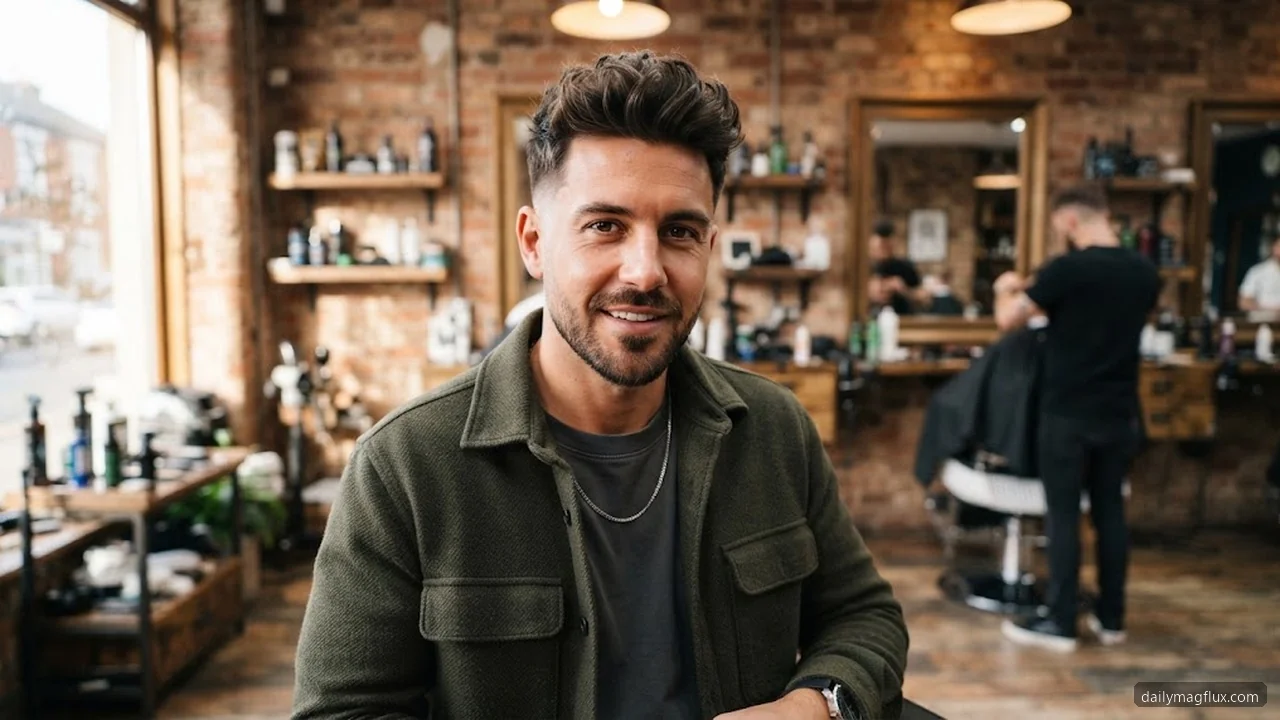
Not every guy wants to spend ten minutes with a dryer each morning. These pairings keep the taper tidy and let the top air dry on its own. Each one still reads as a blowout shape, just softer and looser. Choose based on your curl pattern and how often you wash.
Straight hair can air dry into a soft lift if you towel it upward. Ask for a #2 taper on the sides and three inches on top. Scrunch the roots with your fingers while the hair is still damp. It dries flat at the ends and lifted at the crown within twenty minutes.
Wavy hair does most of the work, so you can skip the round brush. A #1 taper at the sideburns keeps the wave from puffing at the edges. Rake a pea-sized amount of curl cream through damp hair and leave it. The wave sets into loose pieces that hold shape without any spray.
Curls need moisture more than hold, so a cream beats any clay. Ask for the taper to stop at a #1.5, leaving weight around the ears. Apply cream in the shower and blot the excess with a cotton shirt. Never brush dry curls, because that breaks the pattern into frizz.
Curly Top Blowout
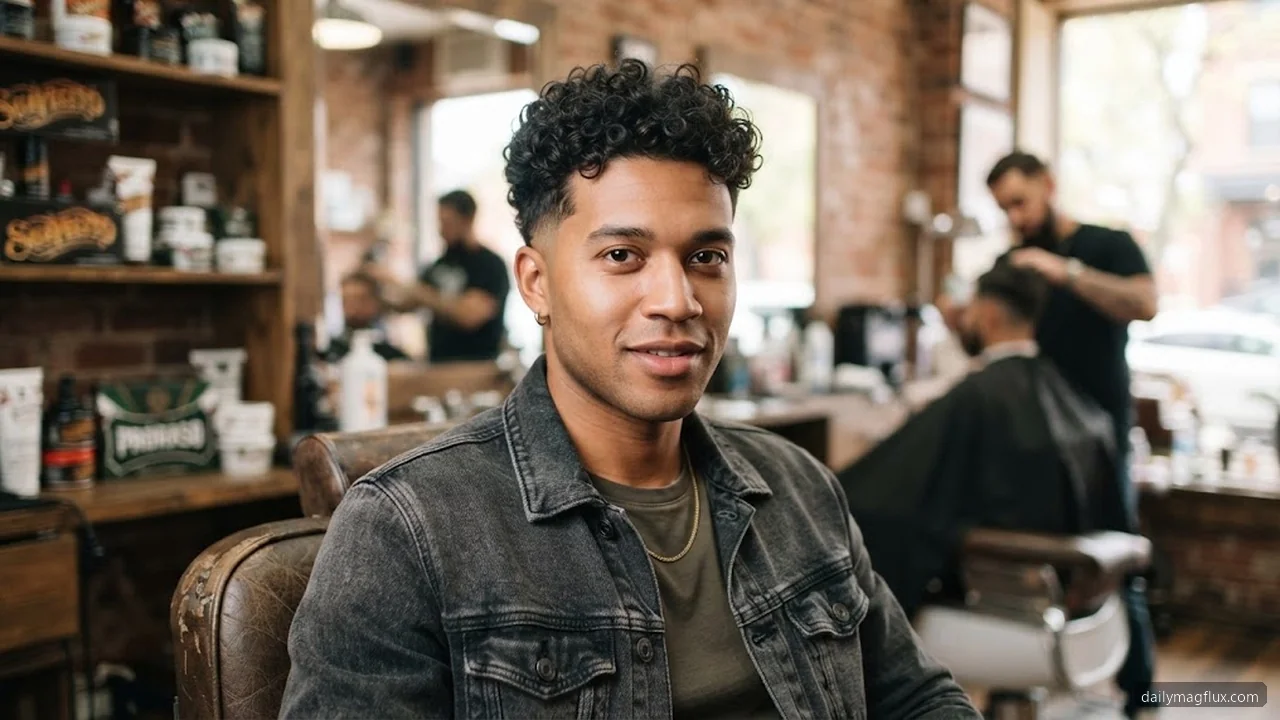
The curly version keeps the taper mid-height and lets the top coil freely. From the front, the curl sits like a soft dome above the forehead. Smooth sides make the curl on top look deliberate rather than lazy. Leave three inches of coil, since shrinkage steals about an inch.
It suits 3A to 3C curls and wavy 2C hair that springs up when it dries. Diamond faces gain softness at the temples from the rounded top. Work curl cream through soaking wet hair and diffuse on low heat. Upkeep falls every four weeks, because coils hide the taper line longer.
Hard-Part Blowout
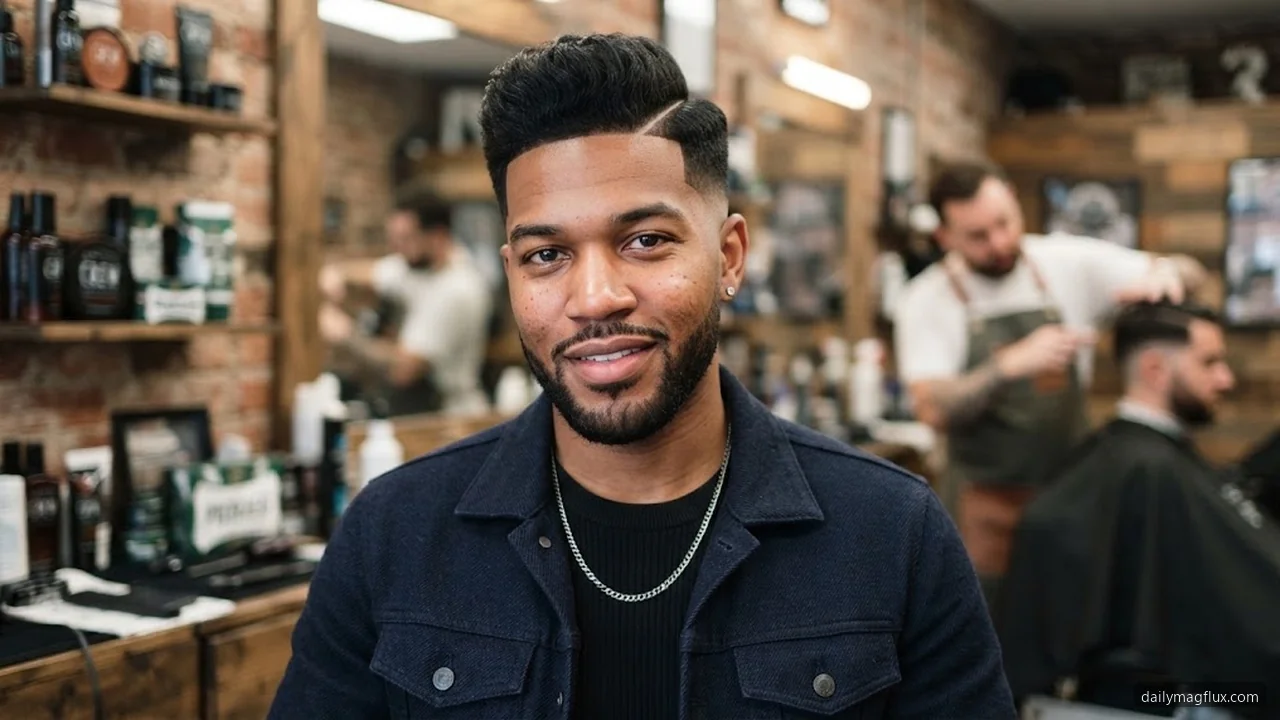
A hard part is a shaved line that separates the heavy side from the short side. The taper stays mid, but the part cuts a sharp channel near the temple. Re-book every two to three weeks, because a shaved line grows shut fast.
It suits square and oval faces, and straight or wavy hair holds the line. Ask for a #1.5 taper, three inches on top, and a part on the natural side. A pea-sized amount of matte paste keeps the part crisp without any wet shine.
How to Ask Your Barber for This Cut
Bring two clear photos and a short script, because a vague request gets a generic fade. Your barber needs the taper height, the guard on the sides, and the length on top. Photos from the front, side and back show the shape you actually want. Ask your questions before the clippers start, not after the first pass. See American Academy of Dermatology hair care guidelines for more.
Key Phrases to Use With Your Barber
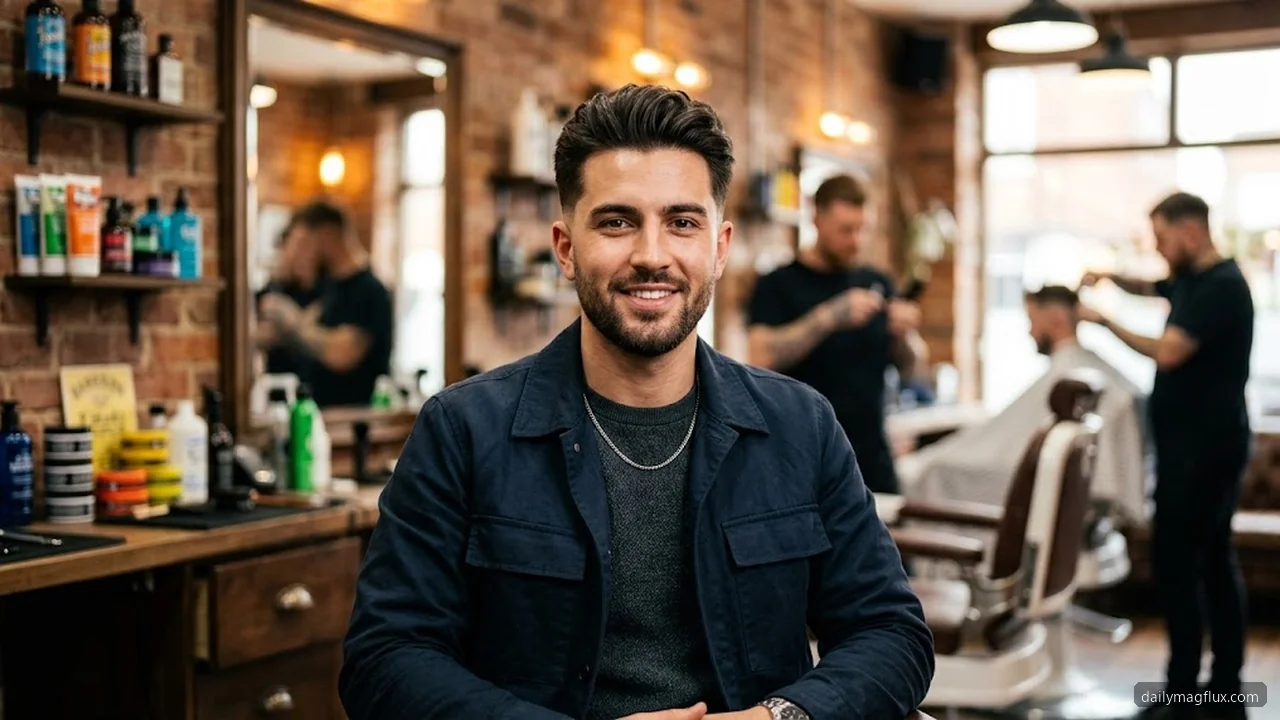
Ask for a mid taper that starts at the temple line and blends into a #3 above it. Tell your barber you want three inches left on top for a loose blowout. Add that the neckline should stay natural, with no squared-off razor line. Then ask for point-cutting on top so the hair lifts without gel.
Choosing the Right Length or Guard Number
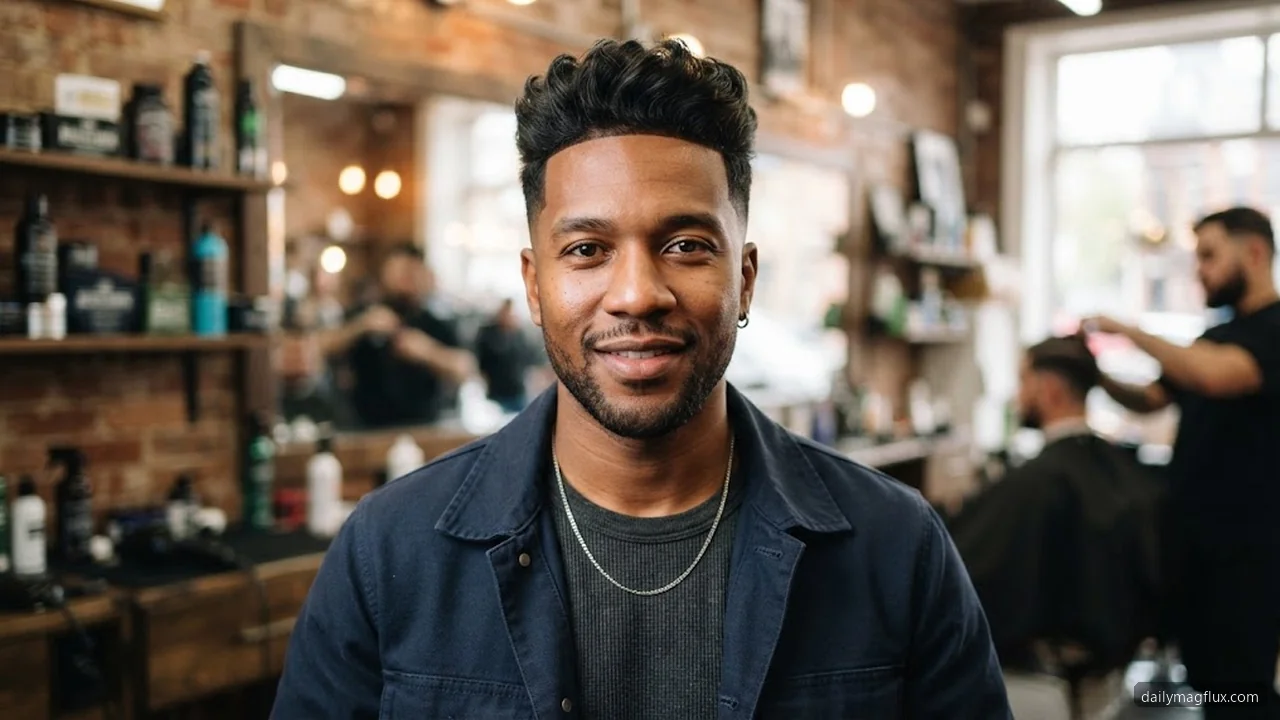
Guard numbers describe the sides, so the top is always given in inches. Ask for a #1 at the sideburn and a #3 just above the temple. Your barber can freehand the taper for a much softer transition. Bring a side-view photo, since the front hides the taper line.
- Guard #1 — 3 mm: This leaves 1/8 inch at the sideburns so the edge looks clean.
- Guard #2 — 6 mm: It covers the lower sides and blends toward the temple line.
- Guard #3 — 10 mm: Ask for this above the temple so the blend line stays soft.
- Guard #4 — 13 mm: It suits thick hair that shows clipper marks, not fine hair.
Common Mistakes to Mention
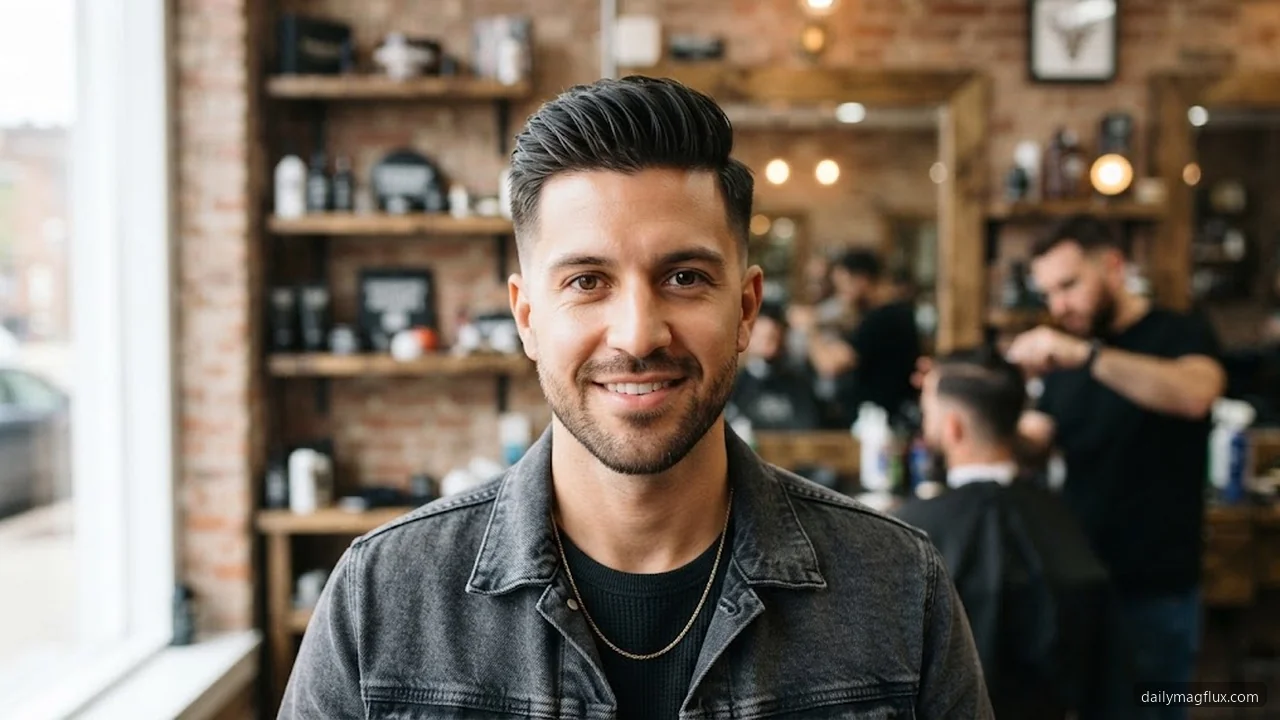
- Rush the fade blend: A fast pass leaves visible lines on dark, thick hair.
- Skip the texture talk: Tell your barber how you style, because clay and air-drying need different cuts.
- Cut the top too short: Three inches is the minimum for a blowout that lifts.
Video Walkthrough: See the Cut in Motion

Watch the clippers move up from the sideburn before the top gets touched. A short clip shows how the taper line curves behind the ear. You will see the barber check the blend with a comb and a mirror. That check is the step most rushed cuts skip, which shows up two days later. See Healthline hair health and wellness resources for more.
Common Mistakes to Avoid
Asking for a high fade when you want a mid taper is the most common mix-up. High starts at the parietal ridge, while mid starts at the temple line. Bring a side-view photo that shows exactly where the fade begins. Say the word “mid” twice if your barber reaches for the clippers too early.
Leaving the top wet during the cut hides how much length you really have. Dry hair sits about half an inch shorter than wet hair on most guys. Ask your barber to dry the top before the final trim. Skipping that step turns a four-inch blowout into a three-inch one.
How to Maintain the Cut
Keeping the shape means protecting two things: the taper line and the lift on top. The taper grows out first, so it sets your visit rhythm. The top needs the right wash and dry routine to keep any height. Cheap shampoo and heavy products flatten it faster than growth does.
Touch-Up Schedule
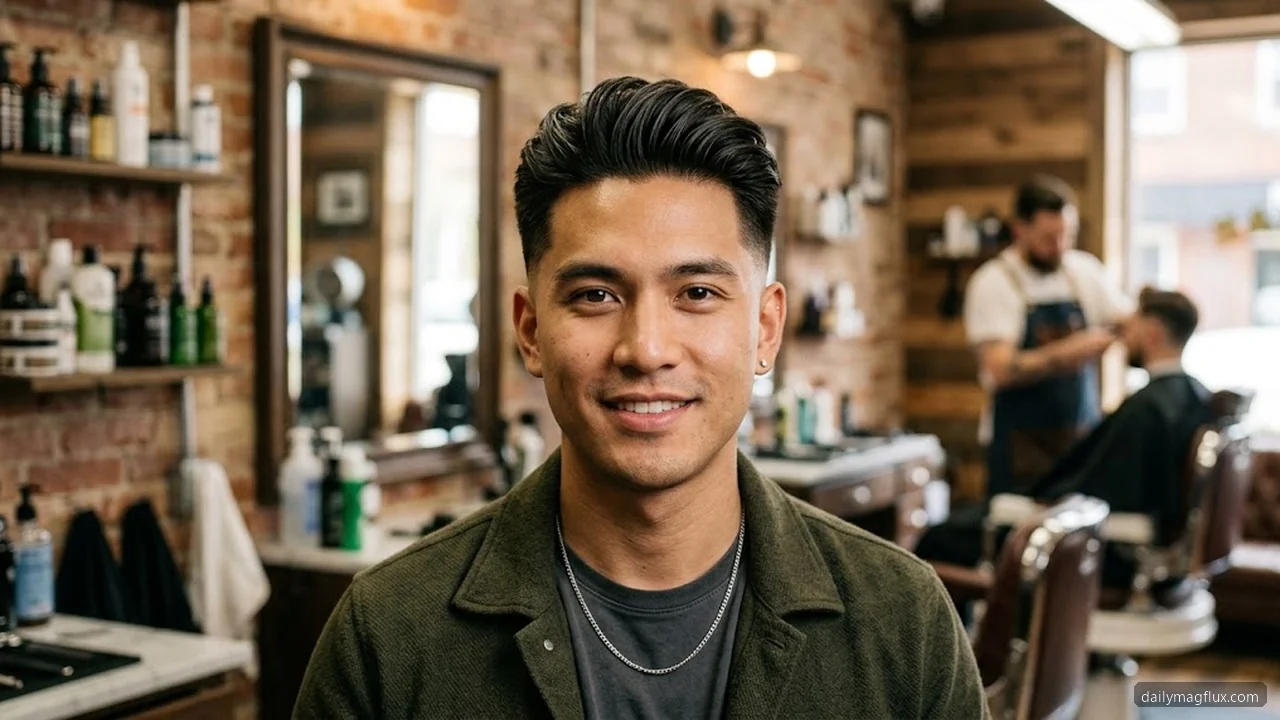
Book a touch-up every three weeks, because a mid taper grows soft around then. The sideburns and nape show growth first, while the top still looks fine. Stretch to four weeks only if you keep the neckline natural. High and skin fades need two to three weeks, which is a tighter rhythm than this one.
Daily Styling Routine
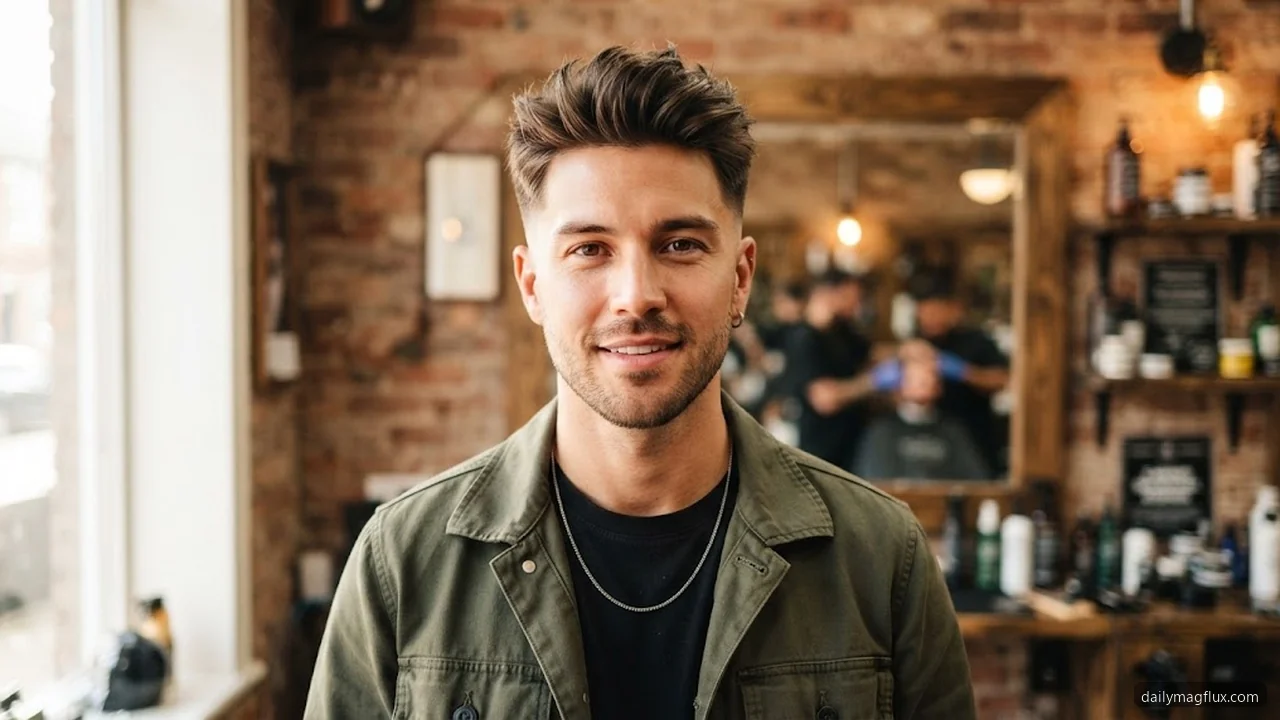
Start on soaking wet hair, because the blowout shape sets as it dries. Towel the top upward and work a pea-sized amount of mousse through the roots. Blow dry from the back forward with a round brush on medium heat. Lift the front section last so the height holds through the day.
Products That Work Best
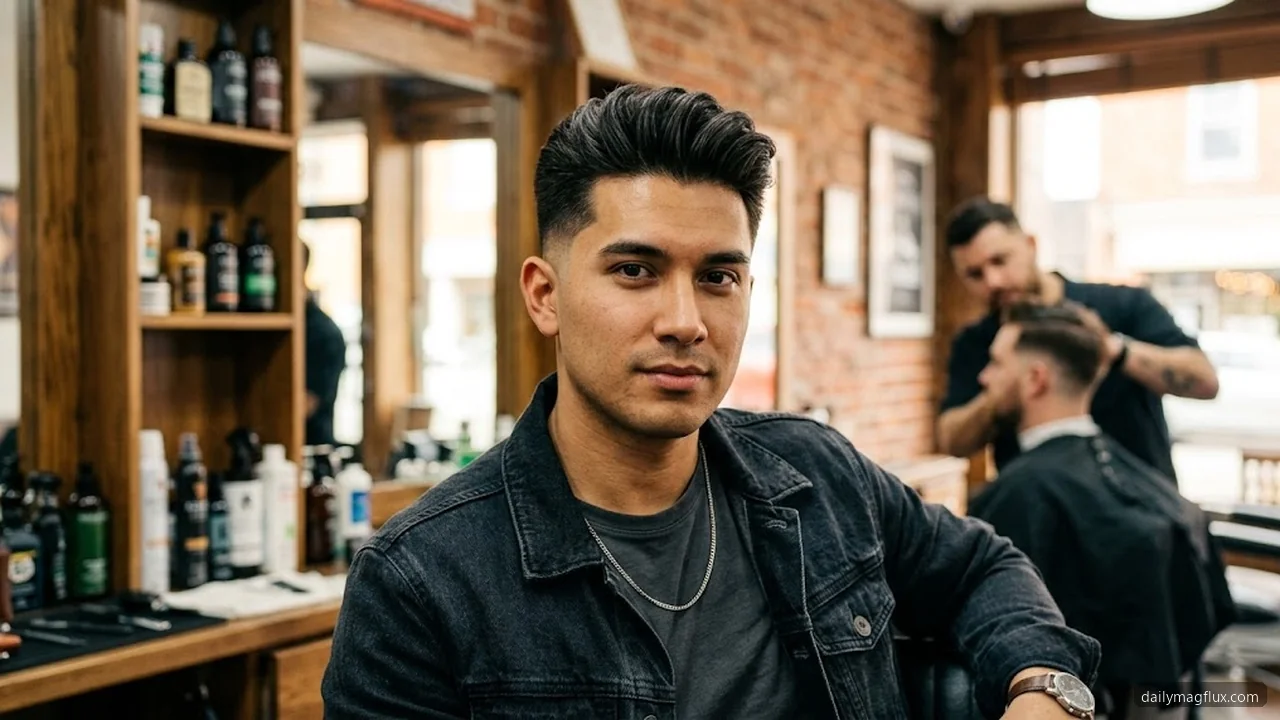
- Volumizing mousse: A golf-ball amount on damp roots gives lift that lasts all day.
- Matte clay or texture powder: Use a pea-sized amount on dry hair for grip without shine.
- Sea salt spray: Two sprays at the crown add grit so the top stays up.
- Anti-frizz spray: One light mist on humid days stops the top from swelling flat.
Best Styles by Face Shape
Your face shape decides how much height the top should carry and how tight the sides go. Tapered sides narrow a round face, while extra top length stretches a short one. The table below pairs each shape with a variation and the numbers to ask for. Check your shape in a mirror with your hair pulled back.
| Face Shape | Best Variation | Guard / Length |
|---|---|---|
| Oval | Classic blowout | #2 sides, 4 inches on top |
| Round | Texture-specific blowout | #1 sides, 4 inches on top |
| Square | Hard-part blowout | #1.5 sides, 3 inches on top |
| Oblong | Textured fringe blowout | #2 sides, 4 inches at the front |
| Heart | Side sweep blowout | #1.5 sides, 4 inches on top |
| Diamond | Burst fade blowout | #0.5 arc, 3 inches on top |
Oval Face
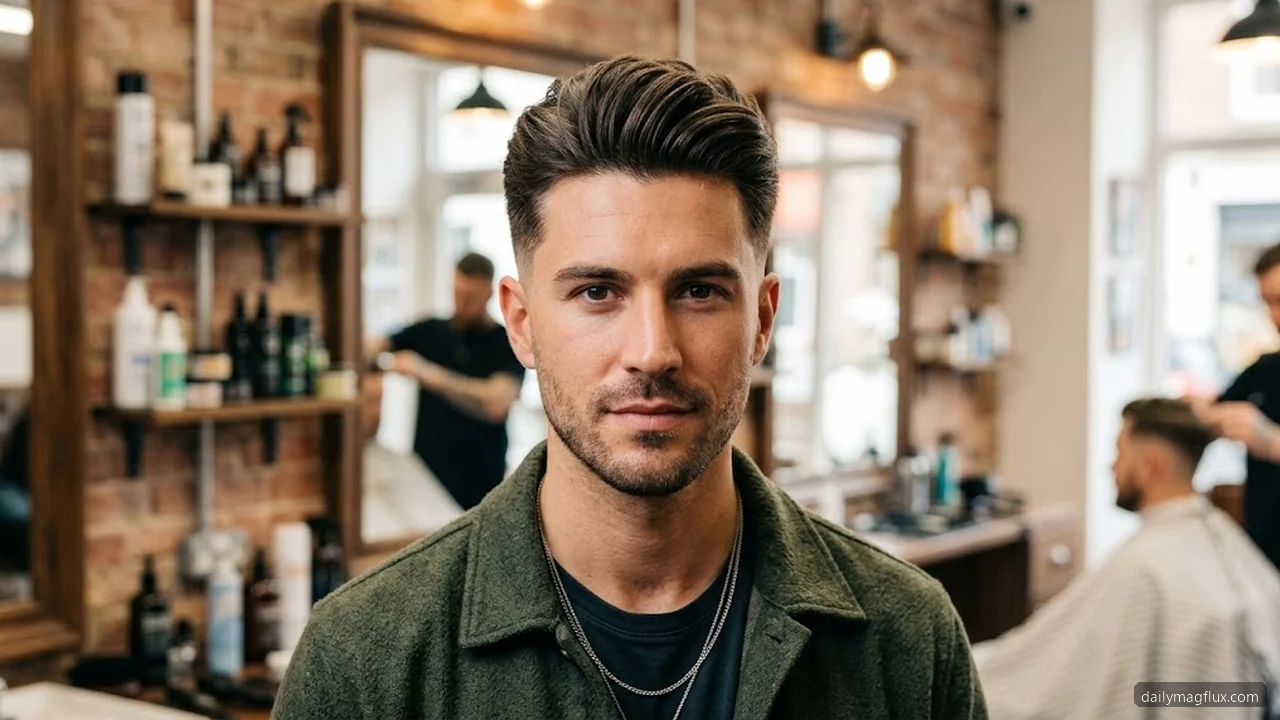
Most variations work here, so pick by hair type rather than by shape. A classic blowout with four inches on top keeps the balance you already have. Fine hair suits texture powder, while thick hair handles a round-brush blowout. Keep the taper mid, since a high fade adds height you do not need.
Round Face
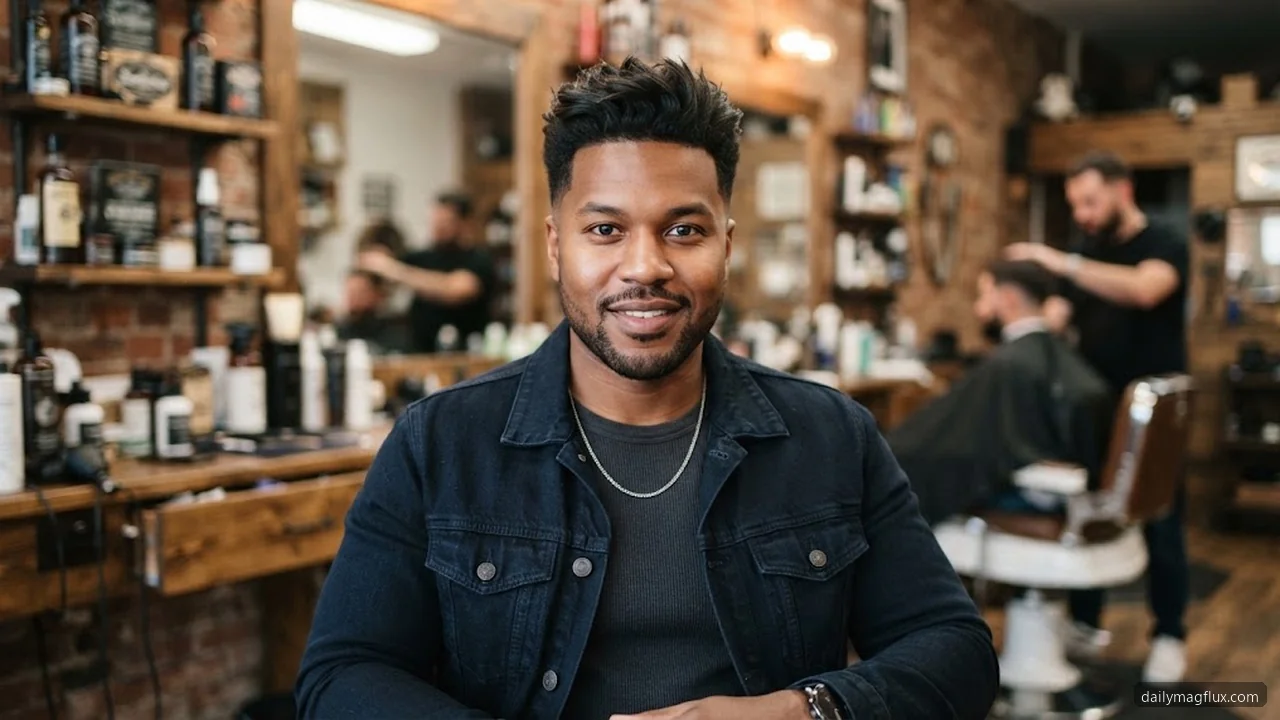
Height on top and tighter sides stop a round face from reading wider. Ask for a #1 taper and four inches on top, blown straight up. Skip volume at the sides, because that adds the width you want gone. A texture-specific blowout with powder holds the height best for you.
Square Face
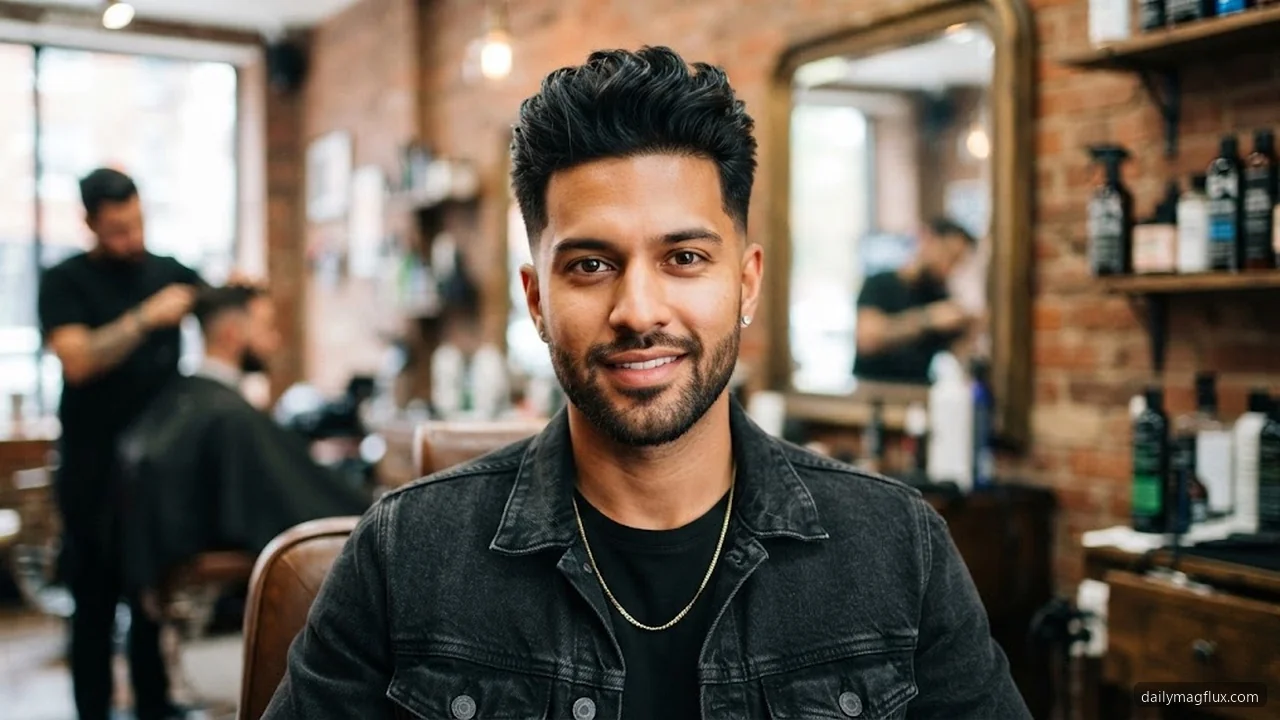
Texture on top softens a strong jaw, so ask for point-cut ends and a loose finish. A #1.5 taper keeps the sides tidy without squaring the corners further. A hard-part blowout with three inches on top suits you well. Skip heavy pomade, which flattens the texture you just paid for.
Best Styles by Age Group
Age changes density, hairline shape and how much time you will spend styling. A teenager can carry more length and powder, while a professional man needs a tidier edge. Thinning at the temples changes which top length looks full. Match the version to your routine and your hairline, not to the year you were born.
Teenagers
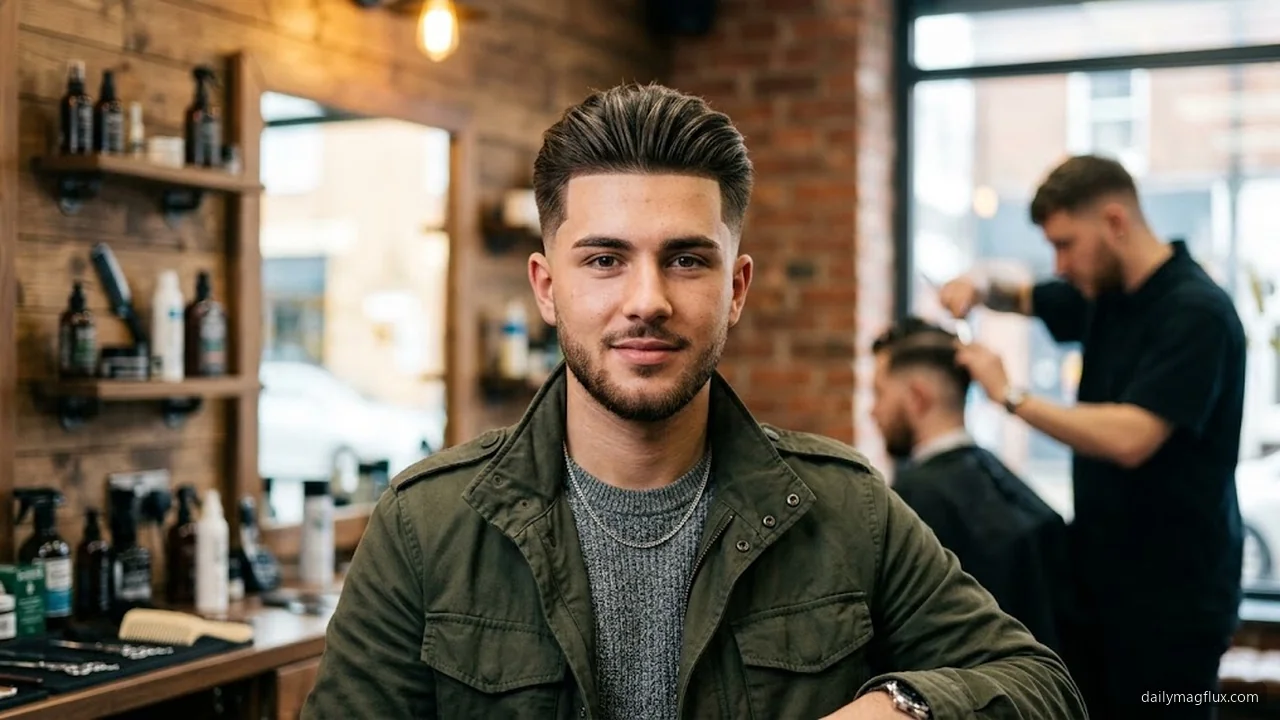
School rules often cap the length, so a #2 taper and three inches on top keeps you safe. Powder works better than gel here, because it lifts without looking wet. Ask for the neckline natural, since a hard line grows out within a week. Wash the powder out nightly to keep the scalp clear.
Young Men
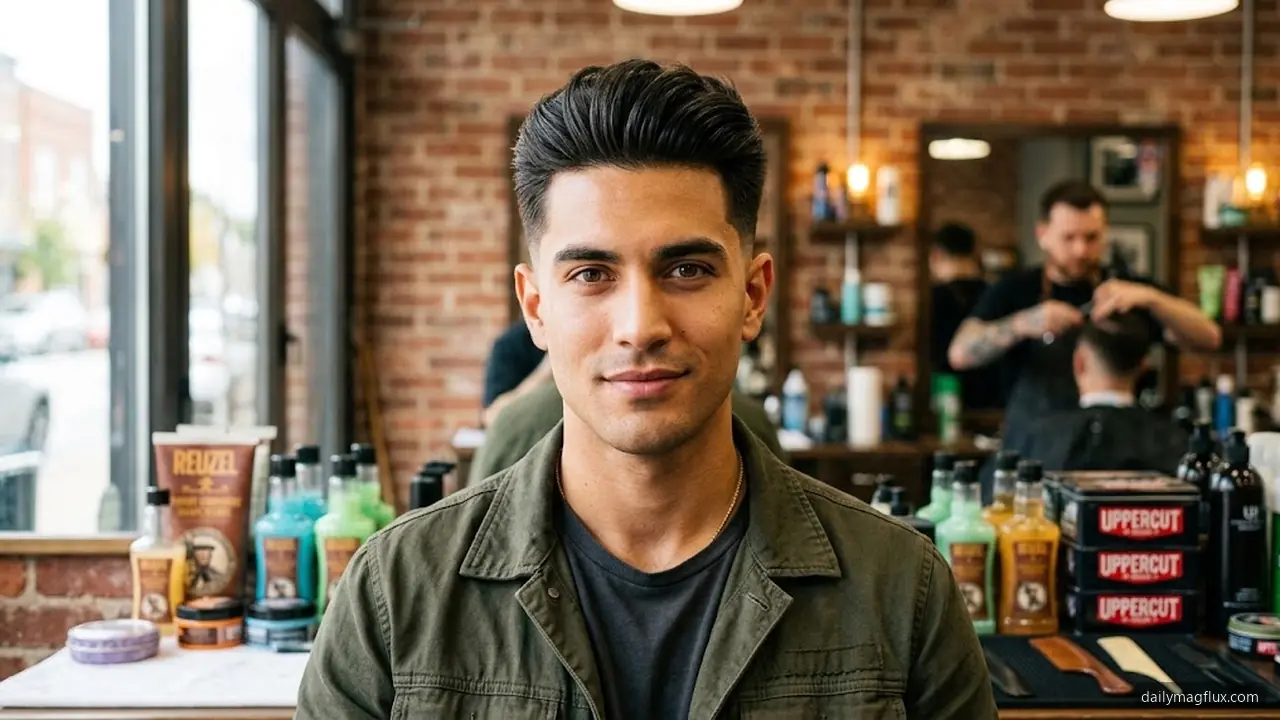
Go longer on top if your hair is thick, because four inches gives a fuller blowout. A #1.5 taper on the sides sharpens the contrast against that volume. Sea salt spray and a round brush give the loose, dry finish most guys want. Book every three weeks if you keep the taper tight.
Professional Men
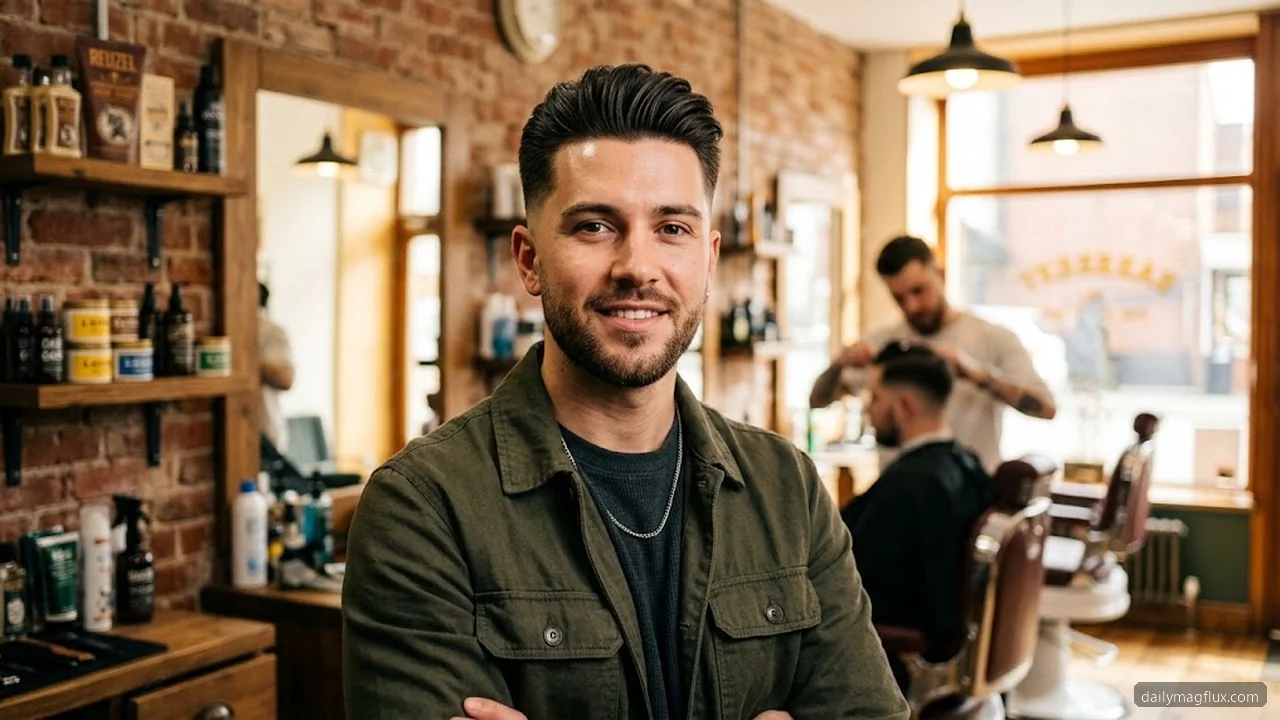
A #1 taper and three inches on top reads clean under office lighting. Blow it flat with a vent brush and finish with a light pomade for control. Ask for a soft part instead of a shaved one, which grows out quietly. Touch-ups every four weeks keep it presentable without weekend appointments.
How This Cut Compares With Similar Styles
Two nearby styles share the blowout shape but differ in finish and upkeep. One sets wet and shiny, while the other builds much harder height. Both need the same mid taper on the sides to look right. Pick by the finish you want, not by the name on the menu.
Blowout vs Slick Back
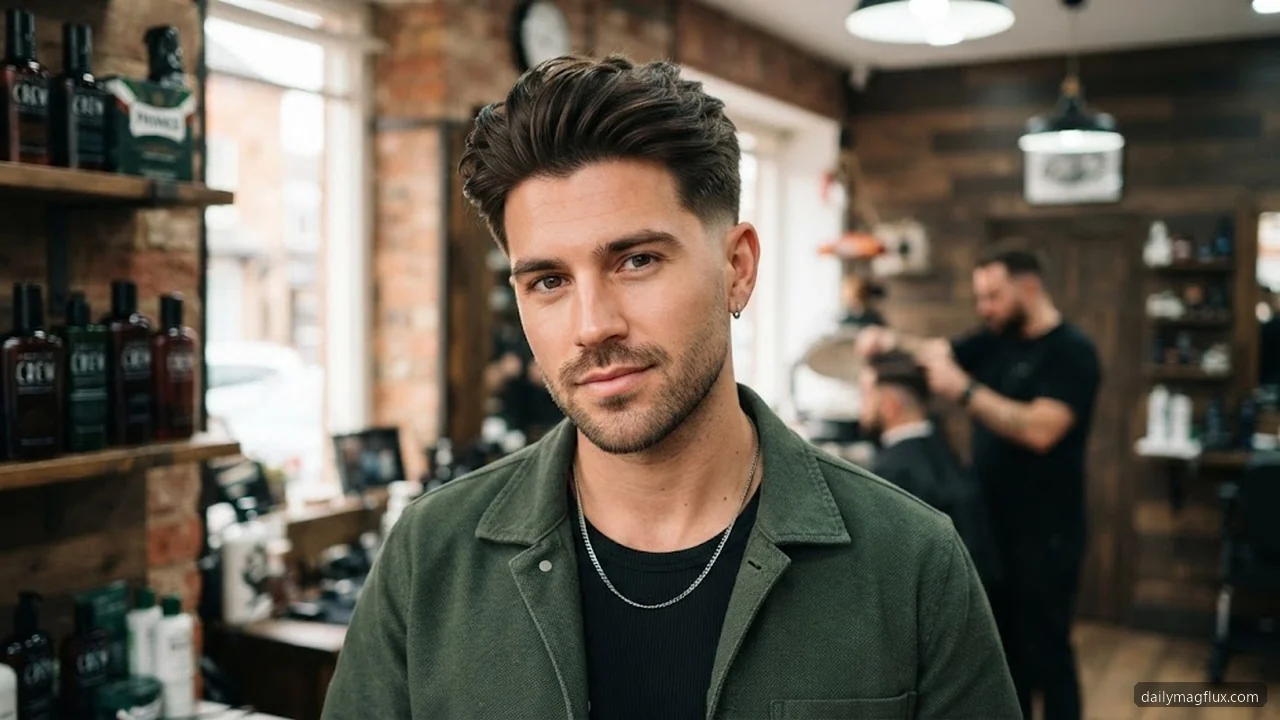
A slick back sits flat against the head with shine, while a blowout holds dry volume. Gel or pomade gives the slick version that wet finish and strong control. The blowout suits straight, wavy and curly hair with a matte product instead. Pick the slick back for a formal event, and the blowout for daily wear.
Blowout vs Pompadour
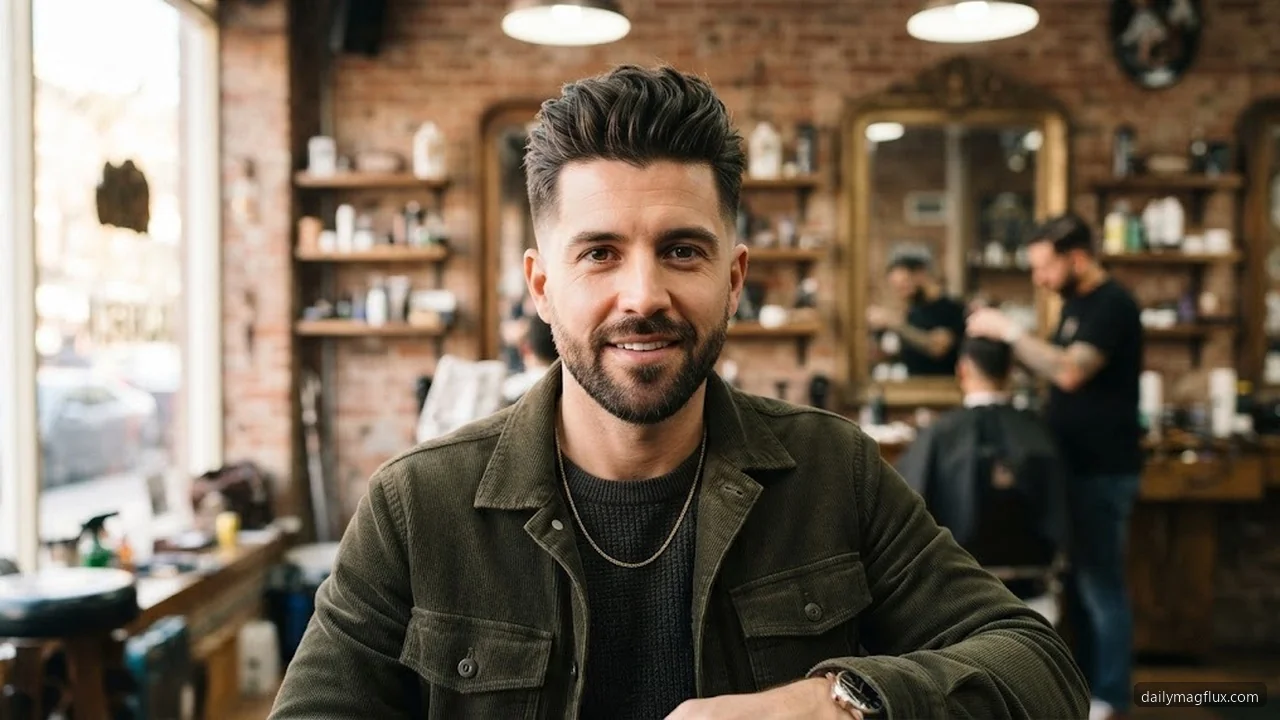
A pompadour pushes all the height to the front, while a blowout spreads it across the top. The pompadour needs more length, usually five inches, and stronger hold. A blowout keeps three to four inches and dries softer and looser. Pick the pompadour for a sharper silhouette, and the blowout for a relaxed one.
Best Hair Types and Textures for This Blowout Cut
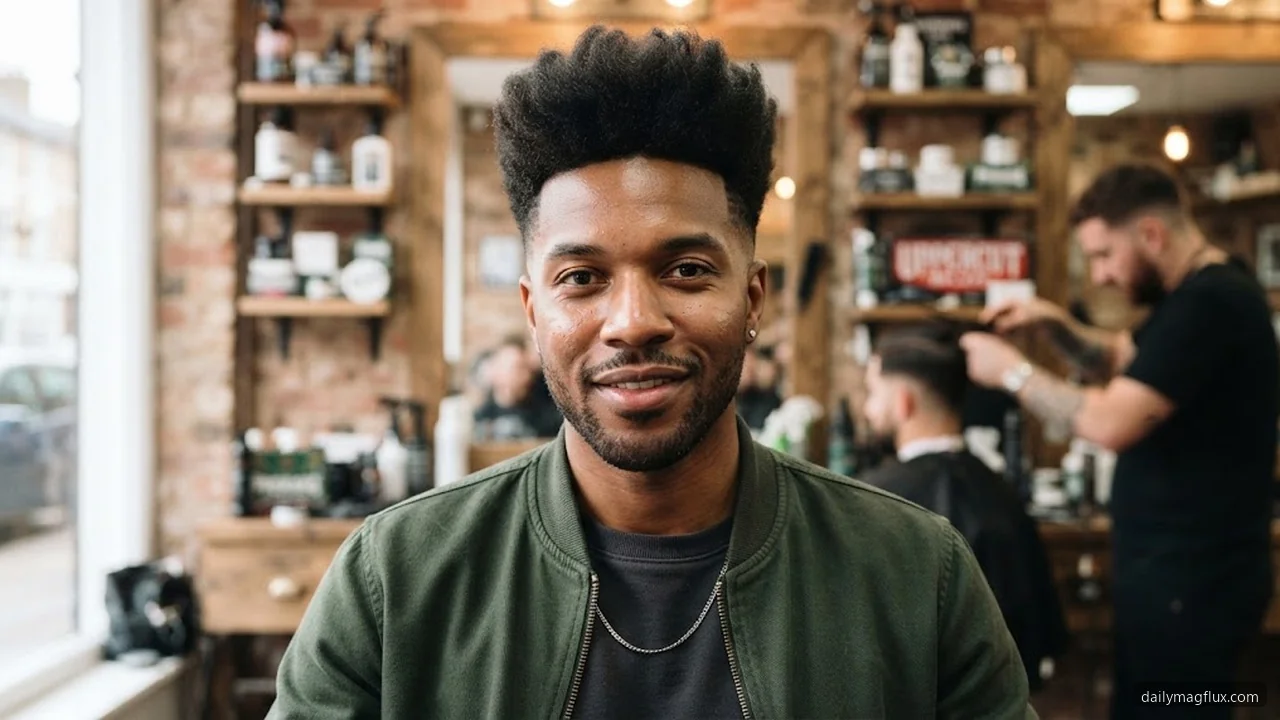
Straight hair from 1A to 1C takes the round-brush blowout best of all. It lifts easily with mousse and holds the shape through a workday. Fine density needs texture powder at the roots, because heavy clay drops the top flat.
Wavy 2A to 2C hair builds volume with less effort and needs only a cream. Curls from 3A to 3C want a diffuser on low heat and a leave-in cream for definition. Coils from 4A to 4C shrink about an inch, so ask for extra length on top.
How to Grow Out the Cut
The taper grows soft first, so the sides lose their sharp edge before the top changes. Hair grows about half an inch a month, which means the fade line drops within two weeks. Ask your barber to blend the sides up rather than cut them shorter. That keeps the top length while the taper resets.
Once the top passes four inches, blowouts take longer to dry and lose shape faster. Trim the top to three inches and keep the sides at a #2 during the transition. If you want a different cut, a taper mullet grows out of this shape well. Neither option needs a full reset with the clippers.
Frequently Asked Questions
How long does a mid taper fade blowout take to style each morning?
Plan on five to eight minutes with a dryer and a round brush. An air-dried version takes a minute of scrunching and one spray of salt. Towel the top upward before you start, because wet hair dries much slower. Skipping the dryer costs you height rather than time.
Will this cut work with a receding hairline?
Yes, if the top stays long enough to sweep back over the temples. Three to four inches gives you something to move, while a shorter top exposes the recession. Ask your barber to leave weight at the front corners instead of tapering them. A textured fringe also hides a deep hairline.
Can fine, straight hair hold the volume on top?
It can, but only with the right prep and a shorter top length. Texture powder at the roots gives fine hair the grip that mousse alone cannot. Keep the top near three inches, because longer fine hair collapses under its own weight. Skip heavy clay, which pulls fine strands down within an hour.
How much should I expect to pay for this haircut?
Expect a typical range of $30 to $60, and more in big cities. The taper is standard work, so the price reflects the shop rather than the cut. Adding a blowout to a regular trim usually costs a few dollars more. Tipping fifteen to twenty percent is normal for a barber you see monthly.
Is this cut appropriate for a conservative office?
Yes, if you keep the top smooth and the taper tidy rather than shaved. Ask for a soft part and a natural neckline, which read formal without looking stiff. Skip texture powder at work, because the loose, dry finish reads casual. A light pomade keeps it office-ready in under two minutes.
Conclusion
Book this cut if you want height on top without a wet, gelled finish. Start with the classic blowout and four inches on top if your hair is straight. Choose the texture-specific version if your hair is fine or you hate the dryer. A Mid Taper Fade Blowout flatters most faces when the taper stays mid.
In the chair, lead with the taper height and the top length in one sentence. Ask for a natural neckline, since a squared line dates the cut fast. Book a touch-up every three weeks so the sides stay sharp. Between visits, two sprays of salt at the roots revive the lift.

Harrison Jax is a hairstylist and fashion writer with 10+ years in the industry, holding a Certified Cosmetologist license and a Diploma in Fashion Styling from the London College of Style. He’s contributed grooming and trend guides to GQ India and Vogue Blogs, and currently leads DailyMagFlux’s hair and fashion coverage, blending runway insight with practical, everyday styling advice.