


The Low Taper Fade vs Mid Taper Fade choice comes down to where your taper starts. Both cuts suit men who want tidy sides and length on top. A low taper trims only the sideburns and nape, so the sides stay full. Mid tapers blend from the temple line down and cut more of the side.
Round faces gain the most from a mid taper, because tighter sides slim the cheeks. Oblong faces should keep side weight, which a low taper protects better. A low taper runs from #1 to #3 and holds its shape about four weeks. Mid tapers drop to a #0.5 and need a touch-up closer to three weeks.
Quick Answer
A Low Taper Fade vs Mid Taper Fade pick depends on how high the blend sits. The low taper covers only the sideburns and nape, so it suits longer styles. Mid tapers start at the temple and suit men who want tighter sides. Expect a #1 to #3 range at the bottom and touch-ups every three weeks.
The Short Version: Low Taper vs Mid Taper at a Glance
The main difference is where the blend begins on your head. A low taper starts just above the ear and works down to the neckline. That keeps the upper sides full, which is why longer tops pair well with it. It leaves a visible weight line that many men like on classic styles.
A mid taper starts higher, at the temple line above the ear. That extra height removes bulk from the sides and squares off the head shape. Men with thick hair often pick it because the sides stay tidy for longer. The blend also looks sharper in photos because the transition sits in view.
Choose a low taper if you wear your hair longer or swept back. Pick a mid taper if your sides grow out fast or feel heavy. Both cuts cost about the same at the chair, usually a standard men’s rate. The real cost is time, because the tighter taper needs more visits.
| Feature | Low Taper Fade | Mid Taper Fade |
|---|---|---|
| Where it starts | Just above the ear and neckline | At the temple line above the ear |
| Bottom guard | #1 blended into a #3 | #0.5 blended into a #3 |
| Side weight | Upper sides stay full | More of the side gets cut |
| Top length | 2 to 4 inches, cut with scissors | 1.5 to 3 inches, cut with scissors |
| Best face shape | Oblong, heart, diamond and triangle | Round and square |
| Best hair type | Straight and wavy, 2A to 2C | Thick straight and curls, 3A to 3C |
| Touch-up | Every 3 to 4 weeks | Every 3 to 4 weeks |
What Is a Low Taper Fade?
A low taper fade trims the hair only at the sideburns and the nape of your neck. The blend starts just above the ear and finishes at the natural hairline. Everything above that line keeps its length, so the sides look full. Barbers call it a taper because the hair shortens gradually, not all at once.
At the bottom, your barber usually starts with a #1 guard on the sideburn. That short hair then blends upward into a #2 or #3 around the ear. The whole taper covers roughly an inch of hair above the neckline. Above that point the sides stay at whatever length you already had.
Unlike a full fade, a low taper never strips the sides down to skin. It also sits lower than a mid taper, which climbs to the temple line. That lower starting point leaves more hair around the ears and crown. Men pick it when they want a clean neckline without a barber-shop look.
It is the easiest way to look tidy between two longer haircuts. Because so little hair comes off, the shape lasts about four weeks. Guys growing out a shorter cut often use it to survive the awkward stage. It also suits men who wear a side part or a swept fringe.
The silhouette stays close to your natural head shape, only tidier. At the front, you see short sideburns and full sides above them. The back shows a clean neckline that never looks shaved or bald. From the side, the blend line sits low, near the bottom of the ear.
Your barber cuts it with clippers, working upward in short strokes. The comb guide lifts hair away so the guard never digs a hard line. Scissors then tidy any stray hairs around the ear and neckline. The whole taper takes about five minutes on top of your normal cut.
What Is a Mid Taper Fade?
A mid taper fade starts the blend at the temple line above your ear. It then runs down through the sideburn and finishes at the neckline. Because it covers more of the side, it removes more bulk than a low taper. The top stays long and gets cut with scissors, never with a guard.
The temple line sits roughly level with the top of your ear. Starting there means the clippers travel over more hair than a low taper. Your barber opens the blend with a #1 or #1.5 near the bottom. That guard then works upward into a #2 or #3 above the temple.
Guard numbers for a mid taper run from a #0.5 up to a #3. A #0.5 or a #1 at the bottom gives a tight finish without going bald. The #3 sits at the top of the blend, just under the longer hair. Ask for a foil shaver only if you want a skin fade instead.
A high fade goes further still, starting at or above the parietal ridge. That height leaves almost no visible hair on the sides at all. A mid taper keeps a clear band of length between the fade and the top. Men choose it when a high fade feels too aggressive for their job.
Drop and burst describe the shape of a fade, not how high it sits. A drop fade curves down behind the ear and toward the neckline. Burst fades arc around the ear and leave the back longer. You can ask for either shape at mid height if you like the look.
The blend creates a soft weight line just above the temple area. That line is what separates a taper from a full fade cut. On dark, thick hair the line reads clearly and needs clean blending. Light or fine hair hides it almost completely, which forgives small mistakes.
Men ask for a mid taper when their sides grow out faster than the top. It also suits anyone who wants a sharper shape without daily styling. Athletes and men in uniform like how tidy it looks after a workout. It works with a fringe, a quiff, or a short textured top.
Your barber sets the blend with clippers and a comb attachment first. The clippers move upward in small arcs to avoid a hard line. Scissors then check the top of the blend for any stray weight. A good mid taper takes about ten minutes on top of the cut.
The neckline can finish natural or squared, and both look tidy. Around the ears, the hair gets trimmed close but usually not shaved. Ask for the sideburns to keep their natural shape at the bottom. That small detail stops the whole taper from looking painted on.
How the Two Look Side by Side
Put the two cuts side by side and the difference shows at the ear. The low taper keeps hair covering the top half of the ear. A mid taper clears the ear completely and blends above it. The same top length gives a very different silhouette from the side. See American Academy of Dermatology hair care guidelines for more.
From the front, a low taper looks almost like no fade at all. You see a clean sideburn and a full side that frames the face. A mid taper shows a visible gradient starting beside the temple. That gradient narrows the face and makes the top look taller.
From the back, both cuts clean up the neckline in a similar way. The low taper stops lower, so more hair sits above the neck. The mid taper fades higher, which makes the back look shorter. Men with a thick neck often prefer the taller version for balance.
Blend lines show most on dark, thick hair and least on fine hair. So a mid taper looks sharper on dark hair and softer on blond. A low taper hides imperfections better because there is less blending. If your last cut left clipper marks, the low version forgives more.
Which One Looks More Professional?
For a strict office dress code, the low taper is the safer pick. It reads as a tidy haircut rather than a statement, so nobody comments. A mid taper still looks professional in most modern workplaces today. It only reads casual when the bottom is taken down to skin. See Healthline hair health and wellness resources for more.
Keep the bottom at a #1 or above if you sit in client meetings. A #0.5 is fine in creative offices where grooming rules are looser. Pair either taper with a neat side part for the sharpest result. Ask your barber to leave the neckline natural instead of squared off.
Which Fade Suits Your Face Shape?
The taper height changes how wide your face looks from the front. Tighter sides slim a round or square face and add visible length. Fuller sides keep weight lower, which flatters longer or narrower faces. So the right pick depends on your jawline, not on fashion alone.
Round faces carry width at the cheeks and need height on top. A mid taper takes bulk off the sides, so the face reads longer. Square faces already have a strong jaw and can take either fade. Texture on top softens those hard angles, so ask for a choppy finish.
Oblong faces look longer than they are wide, so side weight helps. A low taper keeps that weight and stops the face looking stretched. Heart faces are wide at the forehead and narrow at the chin. A low taper with a side sweep balances the chin without adding height.
Diamond faces have wide cheekbones with a narrower forehead and chin. Keep the temples full, because a tight blend there widens the cheeks. Triangle faces carry more width at the jaw than at the forehead. Volume on top and at the upper sides evens out that heavy jawline.
| Face Shape | Best Fade | Why It Works |
|---|---|---|
| Round | Mid taper, #0.5 to #2 | Tighter sides add length and slim the cheeks |
| Square | Mid taper, #1 to #3 | Removes side bulk while texture softens a strong jaw |
| Oblong | Low taper, #1 to #3 | Keeps side weight so the face looks less long |
| Heart | Low taper, #0.5 to #2 | Balances a wide forehead without adding height |
| Diamond | Low taper, #1.5 to #3 | Leaves the temples full so the cheeks look narrower |
| Triangle | Low taper, #1 to #2 | Keeps upper-side volume that offsets a wide jaw |
Which One Works Better for Your Hair Type?
Straight hair shows every clipper line, so blending has to be clean. A low taper is the easier choice because less of the side gets cut. Mid tapers work too, but only with a slow and careful blend upward. Fine straight hair can look thin at the sides after a mid taper.
Wavy hair sits in the 2A to 2C range and holds a taper well. The wave hides small blend lines that straight hair would clearly show. A mid taper controls the puffiness that waves get around the ears. Keep a low taper if you prefer a softer outline on the sides.
Curls in the 3A to 3C range can change shape as they dry. That shrinkage means a mid taper can climb higher than you expect. Show your barber where you want the blend to sit, then check it dry. A low taper is safer if you wear your curls long and loose.
Coils from 4A to 4C need a barber who cuts textured hair often. A mid taper gives a sharp outline that lasts through a busy week. The low taper suits men who wear a sponge twist or short coils. Ask for the neckline finished with a trimmer rather than a razor.
Thick hair benefits from a mid taper because the sides hold bulk. Removing that bulk makes the whole cut look lighter and much cleaner. Fine hair should keep more length on the sides to look fuller. That makes the low taper the better match for fine, straight hair.
A cowlick near the temple can push hair out of a tight blend. The low taper avoids that spot and keeps the growth pattern hidden. A receding hairline is a separate issue from whichever taper height you pick. Both cuts work with a shorter top, so neither forces a comb-over.
Low Taper Fade vs Mid Taper Fade: Style Pairings
A taper sits under every other decision you make about a haircut. It sets how much weight stays on the sides and how sharp the outline looks. Pick your pairing by hair type first, then by face shape and daily routine. If you style for two minutes each morning, a tidier taper saves you time.
Textured Crop with Low Taper
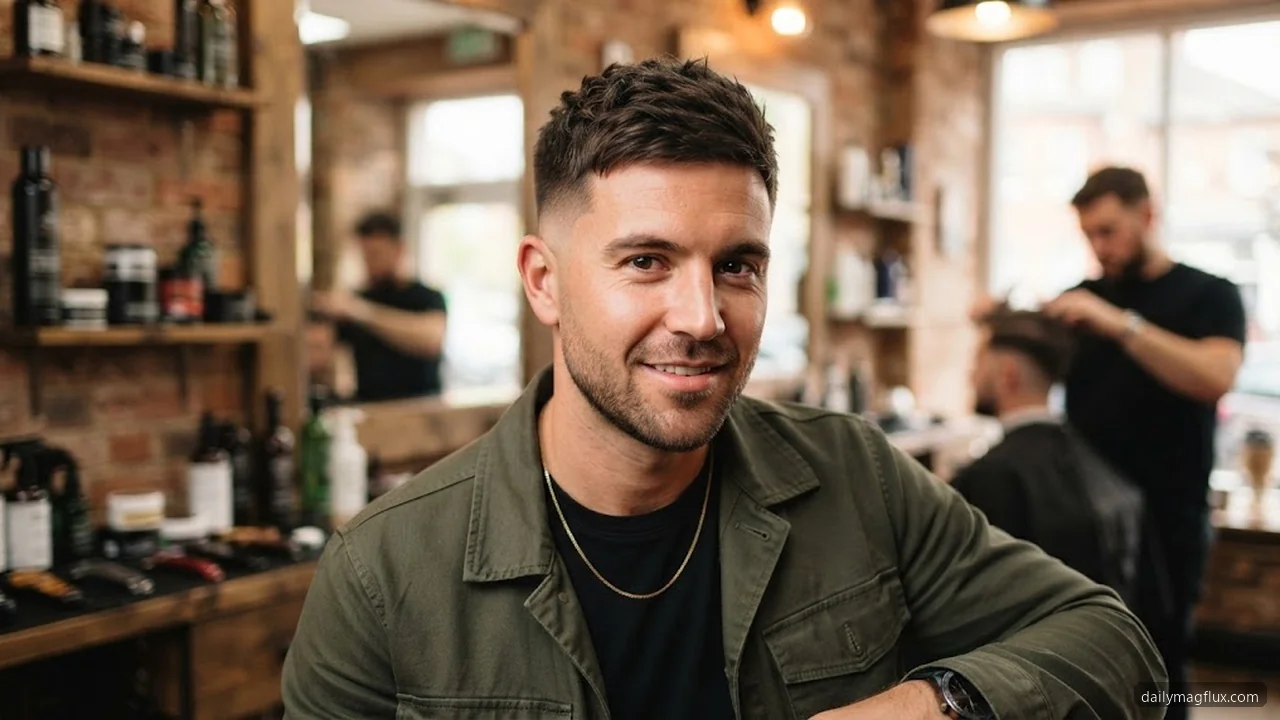
The textured crop sits forward, with choppy pieces falling over the forehead. Behind that fringe, the top stays short and point-cut for movement. At the sides, a low taper trims only the sideburns and the nape. From the back it looks clean, and from the side the weight stays high.
Unlike a blunt crop, this version keeps the sides full above the ear. Square and oval faces carry it well because the fringe softens angles. It suits men who want a modern cut that still passes at the office. Thick straight hair holds the texture best, though waves work too.
Ask for a #1 to #3 taper at the sideburns, keeping 2 inches on top. A pea-sized amount of matte clay gives hold without any shine. Rub it between your palms, then push the fringe forward and pinch tips. That whole routine takes about thirty seconds once your hair is dry.
Book a touch-up every three to four weeks to keep the neckline sharp. The fringe reaches your brows first, usually around the fourth week. Between visits, a light trim with scissors keeps it out of your eyes. For a sharper look, ask for a mid taper instead of the low version.
Curly Top with Mid Taper
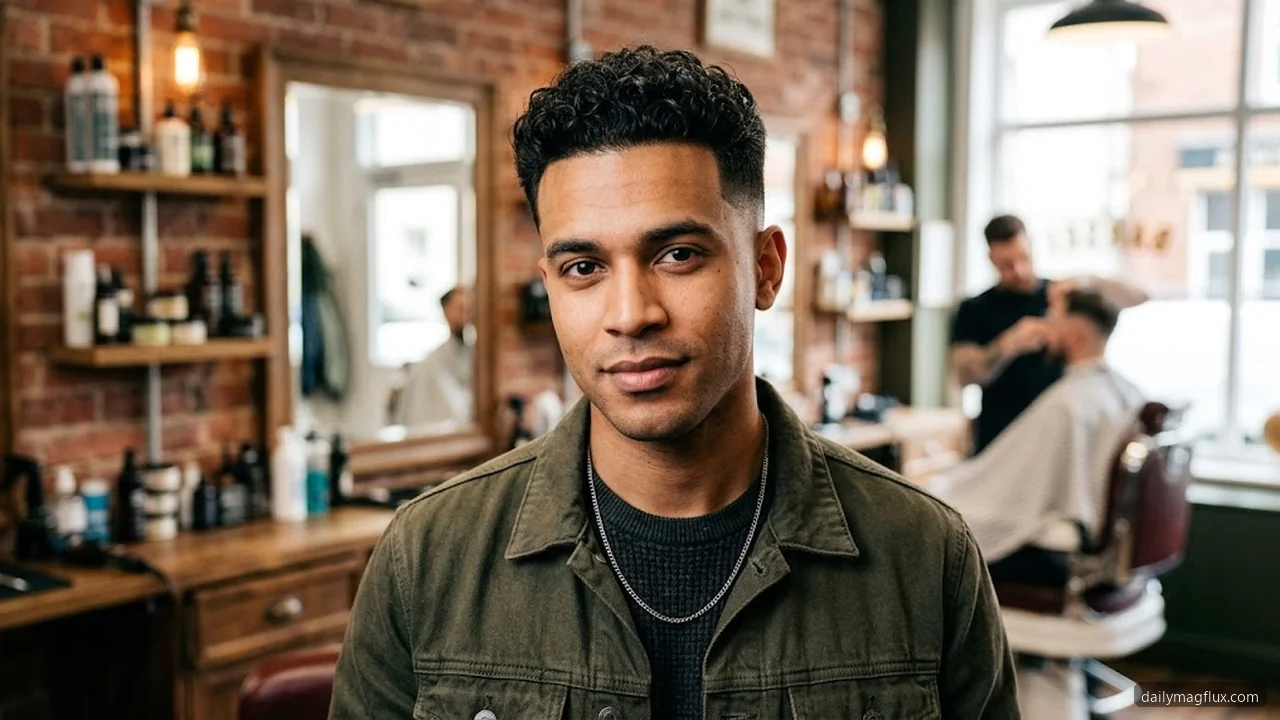
A curly top keeps its length and volume while the sides stay tight. The mid taper starts at the temple and blends down past the ear. From the front, you get a rounded shape with a clean outline. Behind, the fade runs high and keeps the neckline neat and tidy.
Round and square faces suit this pairing because the sides stay short. It differs from a curly fade because the top keeps about three inches. Curls in the 3A to 3C range give the best shape here. Men who want volume up top but tidy sides pick this one.
Ask for a #0.5 to #2 mid taper with the curls left long on top. A dime-sized amount of curl cream defines the curls and stops frizz. Apply it to wet hair, scrunch upward, then let the curls air dry. A light gel adds hold if you need the shape to last all day.
The taper grows out fastest, so book a touch-up every two to three weeks. Your curls also stretch as they grow, which changes the shape slowly. Between cuts, a sea salt spray refreshes volume without weighing hair down. Ask your barber to cut curls dry, so shrinkage does not surprise you.
Side Part with Mid Taper
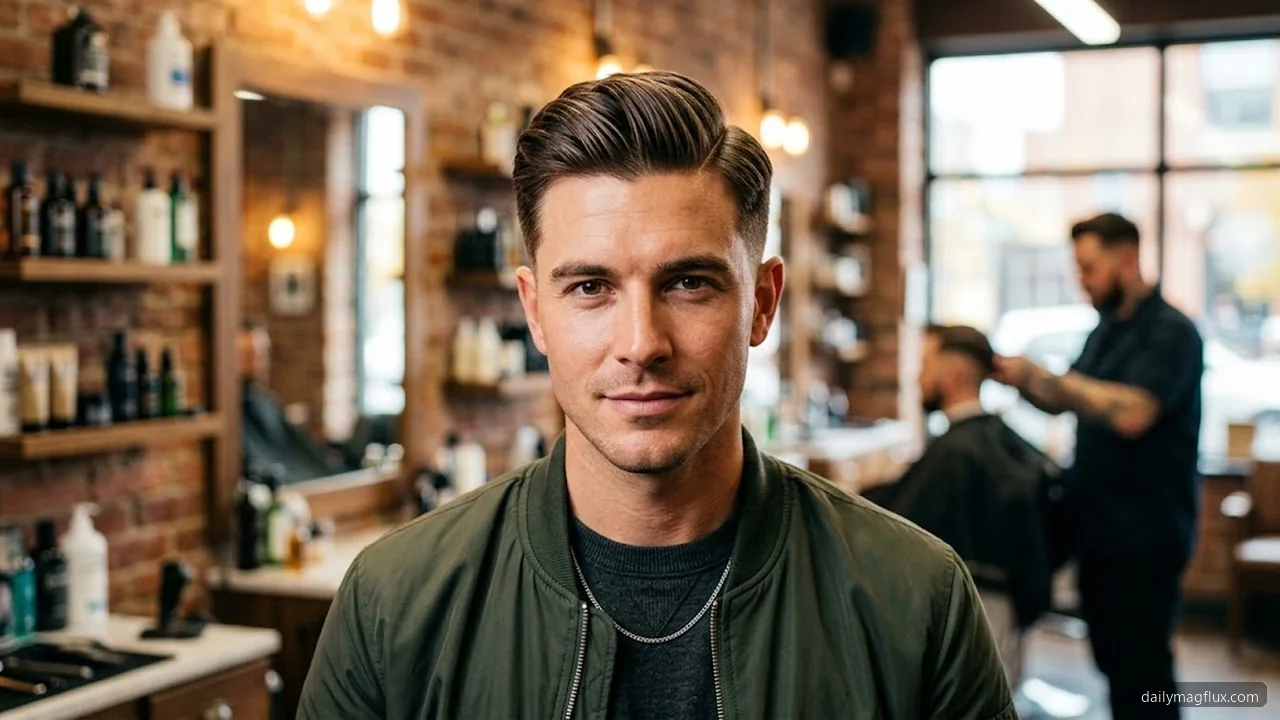
The side part sweeps across your head and finishes in a clean line above the temple. On top, two to three inches of hair comb back and to one side. The mid taper cuts the sides from the temple down to a #1 or #2. Behind the ear, the blend runs into a squared neckline that looks sharp.
Square and oval faces wear this best, because the diagonal line adds softness. Straight and wavy hair in the 2A to 2C range holds comb lines longest. Fine hair goes flat along the part by mid-morning, so it needs extra volume. A diamond face should ask for a softer blend at the temple instead.
Work a pea-sized amount of pomade through damp hair from the crown forward. A fine-tooth comb then draws the part and presses the sides flat. Blow-dry the front upward for two minutes if you want more lift. Three sprays of light hold spray keep the part in place all day.
Book a blend touch-up every three weeks and a full cut every six. The nape grows out first and blurs the line behind your neck. Between visits, comb the part with water to reset it each morning. If the part drifts, your barber can re-cut it at the next visit.
Maintenance: Which One Lasts Longer?
The low taper holds its shape longer, because less hair gets cut at the start. Hair grows about half an inch a month everywhere on the head. Your nape and sideburns show that growth first, usually by week three. Nothing slows that growth, so the shape fades on its own schedule.
A mid taper shows regrowth sooner, because the blend covers more of the side. By week two, the line above your ear looks softer and less sharp. Skin and high fades fade fastest, so barbers see those men every two weeks. A taper at mid height usually gets three weeks of clean wear.
Between visits, a trimmer at the #1 guard tidies the neckline at home. Ask your barber for a quick neck trim if you are passing the shop. A mid taper with a beard needs the cheek line edged at the same time. Keep the sides combed flat so the blend looks fresher for longer.
Everyday Styling and Products
A low taper needs almost no product, because the sides already sit flat. Two sprays of sea salt spray add grit to the top before you blow-dry. Finish with a pea-sized amount of matte clay for a dry finish. That routine suits men who want to be out the door fast.
A mid taper looks best with the sides kept flat and smooth. Smooth a dime-sized amount of light gel from the part to the ends. Comb it against the head so the blend line stays sharp. Three sprays of light hold spray lock the shape in place.
Keep a comb in your bag for a two-second tidy before meetings. A round brush and a hairdryer add lift at the front in three minutes. Wash with a gentle shampoo twice a week to stop product build-up. Rinse the comb weekly, because dried clay and gel clog the teeth fast.
Pros and Cons at a Glance
- Low upkeep: The sides keep their length, so a touch-up every three to four weeks is enough.
- Office friendly: The low blend reads as a tidy haircut rather than a fade, which suits strict dress codes.
- Forgiving: Fewer clipper marks show at the neckline, so a missed detail is harder to spot.
- Grows out soft: The weight line sits low, so week five still looks like a normal haircut.
- Sharper shape: Tight sides slim a round face and make the top look taller from the front.
- Bulk control: Thick hair stops puffing at the ears, which keeps the outline clean all week.
- Less definition: Nobody sees much of a blend, so the cut can look plain next to a mid taper.
- Heavy sides: The length left above the ear flattens very thick hair and hides the taper.
- Limited styling: Swept and slicked styles suit it best, while a tight fade look needs another cut.
- Frequent visits: Regrowth shows by week three, which means more chair time and more money per year.
- Blend line risks: A rushed pass with the clippers leaves a hard line that is very hard to hide.
- Curl shrinkage: Curls pull up as they dry, so the blend can finish higher than you agreed.
How to Ask Your Barber
Say this for a low taper: “Low taper at the sideburns, #1 into a #3. Keep the neckline natural.” Then add your top length in inches, because guards only cover short hair. Bring a front photo and a side photo of the shape you want. Your barber copies the outline faster from two angles than from words alone.
Say this for a mid taper: “Mid taper, #1 at the bottom into a #3. Three inches on top.” Ask your barber to show the top of the blend before the clippers go higher. Many rushed cuts climb past the temple, which turns a taper into a high fade. Point at the spot where you want the blend to stop.
Common Mistakes to Avoid
The most common mistake is asking for a taper when you want a fade. A taper touches only the sideburns and nape, while a fade covers the whole side. Another is naming a guard for hair longer than one inch on top. Guards stop at one inch, so anything longer is measured in inches and cut with scissors.
- Mixing up heights: A low taper never reaches the temple. So, do not describe it as a mid taper placed lower.
- Chasing skin: Asking for a #0 at the bottom of. A taper leaves a bald patch that looks odd within days.
- Skipping the fringe: A long fringe hides the taper line from the front and makes the cut look unbalanced.
- Ignoring growth: Waiting five weeks leaves the neckline shaggy and the blend soft before the next visit.
Final Verdict: Low Taper Fade or Mid Taper Fade?
Pick the low taper if you want a tidy neckline without touching your side length. Pick the mid taper if your sides grow fast or feel heavy by week two. Both cuts work with a fringe, a side part, or a textured top. Your hair type and face shape decide which one looks better on you.
- You wear it longer: Two inches or more on top needs the side weight that only a low taper keeps.
- Your face runs long: Oblong and heart shapes look better with the extra fullness at the sides.
- You hate the chair: Three to four weeks between visits suits a busy schedule with no fuss.
- You work somewhere strict: A low blend passes a dress code that frowns on visible fades.
- Your sides puff out: Thick hair around the ears settles down once the blend starts at the temple.
- You have a round face: Tighter sides add length and keep the cheeks from looking wide.
- You want a sharp outline: A visible gradient suits a quiff, a crop, or a curly top.
- You can visit often: Three to four weeks between touch-ups keeps the blend looking fresh.
Want More Taper Fade Guides?
A burst fade arcs around the ear and leaves the back longer than a mid taper. Drop fades curve behind the ear and suit men who want movement at the nape. Skin fades take the sides to a foil shaver, which needs a touch-up every two weeks. Ask your barber which of these fits your hair type before you book.
Frequently Asked Questions
Low Taper Fade vs Mid Taper Fade: Which Should You Choose?
Pick the mid taper when your sides grow out fast and you want a sharp outline. Pick the low taper when you wear your hair long and want fewer visits. Round faces gain from the mid version, while oblong faces do better with the low one. Both cost about the same at most shops.
What guard number is used for a low taper fade?
A low taper usually runs from a #1 at the sideburns up to a #2 or #3. The #1 leaves an eighth of an inch, so nothing goes bald. Your barber blends that short hair into the longer hair above the ear. Ask for a #0.5 instead if you want a tighter finish.
What guard number is used for a mid taper fade?
Mid tapers usually start with a #0.5 or a #1 at the bottom. The blend then works upward into a #2 or #3 near the temple. Thick hair takes a #1 at the bottom for a cleaner finish. Fine hair does better with a #1.5 that keeps some weight.
Does a low taper fade suit a round face?
A low taper is not the best match for a round face, because it keeps side weight. Round faces need tighter sides and more height to add length. A mid taper or a high fade slims the cheeks far better. If you still want the low version, keep the top tall and textured.
Does a mid taper fade work on curly hair?
Yes, a mid taper works well on curls, as long as the cut suits your pattern. Curls in the 3A to 3C range shrink by up to half as they dry. Show your barber where you want the blend to sit on dry hair. Ask for the sides finished with a trimmer, not a razor.
Which fade grows out faster, low or mid taper?
The mid taper grows out faster, because it cuts more hair from the sides. Regrowth shows around the second week, especially above the ear. A low taper looks tidy for about three to four weeks instead. Ask for a touch-up sooner if your hair grows quickly.
Can you get a low taper fade with a beard?
A low taper pairs well with a beard, because both edges sit low on the face. Ask your barber to connect the sideburn into the beard line. Keep the cheek line tidy so the taper does not look disconnected. A short beard works better here than a long, bushy one.
How often should you touch up a mid taper fade?
Book a mid taper touch-up every three to four weeks to keep the blend sharp. The line above your ear softens first, usually by week three. A full cut can wait five or six weeks if the top still holds shape. Ask for a quick neck trim between visits to save money.
Is a mid taper fade professional for an office job?
A mid taper looks professional in most offices when the bottom stays above skin. Keep the blend at the temple and avoid a skin fade for client meetings. Pair it with a side part or a neat crop for a cleaner look. Ask about your workplace rules before going shorter.
What do you tell your barber for a low taper fade?
Ask for a low taper that starts at the sideburns and blends up to a #3. Give your top length in inches, since guards only cover hair under one inch. Request a natural neckline if you want a softer finish. Bring a side photo so your barber sees where the blend ends.
Conclusion
The Low Taper Fade vs Mid Taper Fade call depends on how much side length you keep. Book the mid taper if your sides grow fast and you want a sharp outline. Choose the low taper if you wear a longer top and prefer fewer visits. Both cuts keep the neckline tidy and the top open to styling.
Tell your barber the bottom guard and the length in inches up top. Point at the spot where you want the blend to stop on your head. Book your first touch-up three weeks out so the shape stays sharp. Then judge the cut dry at home before you change anything.

Harrison Jax is a hairstylist and fashion writer with 10+ years in the industry, holding a Certified Cosmetologist license and a Diploma in Fashion Styling from the London College of Style. He’s contributed grooming and trend guides to GQ India and Vogue Blogs, and currently leads DailyMagFlux’s hair and fashion coverage, blending runway insight with practical, everyday styling advice.