

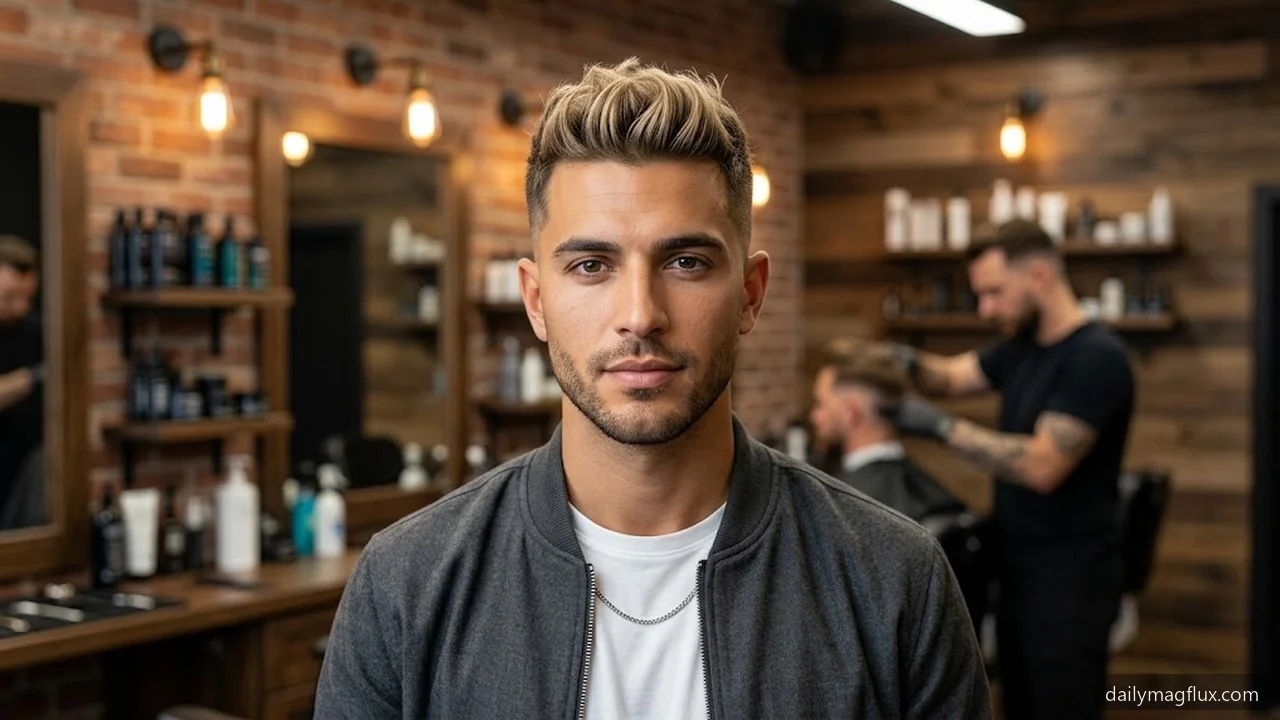
Low Taper Fade Blonde Hair pairs a short taper at the ear and nape with blonde color on top. The sides stay tight at the sideburns and neckline, while the top keeps length. Blonde softens every blend line, so the fade needs clean clipper work. The finish reads sharp at the edges and soft through the crown.
Square and oval faces wear this cut easily, while round faces need height on top. Fine hair blends fastest and shows the cleanest line because color lifts evenly. Ask for a #1 bottom blended to a #3, with 2 to 3 inches on top. Book touch-ups every 3 to 4 weeks and a toner refresh every 4 to 6 weeks.
Quick Answer
Low Taper Fade Blonde Hair is a low taper at the ear and nape with blonde color on top. It suits oval, square and heart faces with most hair textures. Ask for a #1 bottom blended to a #3, and leave 2 to 3 inches on top. Plan on a touch-up every 3 to 4 weeks to keep it crisp.
What Is a Low Taper Fade on Blonde Hair?
Blonde changes how a low taper reads, because light hair shows every clipper line. A taper shortens only the sideburns and nape, which keeps weight above the ear. Color adds a second layer of work, since bleach lifts the cuticle before toner sets the shade. Getting both right takes a plan for the cut, the color and the grow-out.
Low Taper vs Low Fade vs Skin Fade
A taper only touches the sideburns and nape, so length stays above the ear. Meanwhile, a low fade blends the entire side and back down to very short hair. Both start low, but only the fade removes weight from the whole side. That difference shows most at the temple, where a fade climbs higher.
Skin fades go to #0 or a foil shaver, which leaves bare skin at the base. A low fade keeps a little stubble, usually a #0.5 or #1 at the bottom. The taper never reaches that point, because it stops at the natural hairline. Pick skin if you want the sharpest edge and can handle neck upkeep.
Tapers suit men who want a tidy neckline without committing to a full fade. Low fades flatter round and square faces, since tight sides narrow the width. Skin fades ask for a touch-up every 2 to 3 weeks to stay sharp. A taper buys you 3 to 4 weeks, which is easier on the wallet and calendar.
On blonde hair the contrast between faded sides and a lighter top is the whole point. Bleached sides hide clipper marks best, because pale hair catches the light. A taper hides small errors better, while a skin fade exposes every line. So ask for a taper if your barber is still learning your head shape.
| Feature | Low Taper Fade | Low Fade / Skin Fade |
|---|---|---|
| Where it starts | Sideburns and nape only | Just above the ear and neckline |
| Shortest point | #1 at the neckline | #0.5 down to bare skin |
| Touch-up interval | Every 3 to 4 weeks | Every 2 to 3 weeks |
Why Blonde Hair Changes the Fade
Bleach lifts natural pigment first, then toner sets the final blonde shade. That lifting process swells the cuticle slightly, so hair feels rougher after a session. Lifted hair also catches light at the edges, which makes fade lines visible from across the room. Dark hair shows those lines even when you stand in dim light.
Platinum and ash tones hide small clipper marks, because they strip the warm pigment. Honey and sandy blondes keep a little warmth, which softens the line at the blend. If you want a forgiving fade, stay one or two levels below platinum. Your barber can match the sides a shade darker than the top for a cleaner transition.
Fine blonde hair blends quickly, since the color lifts evenly across the head. Thick hair holds a harder line, because the density traps shadow at the blend point. Wavy and curly blonde hair hides small mistakes, as the pattern breaks up the edge. Straight, fine platinum is the most forgiving combination you can choose.
Blonde fades need toner refreshed every 4 to 6 weeks, or the shade turns yellow. Cutting the sides shorter removes the most damaged hair, which helps the color hold. A purple shampoo once or twice a week keeps brassy tones in check at home. Skip it on the day of a fresh bleach, since the cuticle is still open and sensitive.
Does a Low Taper Fade Suit Your Hair?
Not every head of hair takes a low taper the same way. Texture and density matter as much as the guard number you ask for. Fine hair blends faster, while thick hair holds a stronger line at the edge. Face shape decides how high the taper should climb above the ear.
Best Hair Textures for a Low Taper Fade
A bleached buzz keeps a #2 or #3 over the whole crown, which lifts to a pale gold. The mid taper starts at the temple line and drops behind the ear, curving down. That drop shape leaves more weight at the back of the head. This is a mid taper rather than a low taper, so the sides read tighter up front.
Triangle faces suit the mid drop, since extra weight at the back balances a wide jaw. Ask your barber for a #2 buzz with a mid drop that curves down behind the ear. A dime-sized amount of matte paste adds grip without any shine on the buzz. This cut suits straight and wavy hair, because the bleach lifts evenly there.
How to Ask a Barber for This Haircut
Getting the cut you want starts with the words you use in the chair. A blonde taper fade depends on two separate jobs: the clipper work and the color. Photos settle the shape faster than any description you can give. Bring both a picture and a script, so your barber knows the height and the shade. See American Academy of Dermatology hair care guidelines for more.
Reference Photos to Bring
Start on damp hair after a towel dry, because soaking wet hair dilutes the product. Rub a pea-sized amount of matte clay between your palms until it disappears. Work it from the back forward, so the front stays the last thing you touch.
Blow-dry the top for about a minute, lifting the roots with a round brush. That lift gives the blonde a brighter look, since light hits raised hair. Set the shape with two sprays of sea salt spray on the mid-lengths and tips.
How Often to Refresh Cut and Color
The taper at the sideburns and nape grows out first, so book clippers every 3 to 4 weeks. Hair grows about half an inch a month, and that shows fastest at the edges. Longer tops can stretch to 6 weeks before the shape drops out.
Color runs on its own clock, because roots show before the fade blurs. A toner refresh every 4 to 6 weeks keeps the blonde from turning yellow. Full bleach only needs repeating once the regrowth band gets wide. Most men space the full lift out every 8 to 12 weeks.
Keep Blonde Bright Without Over-Toning
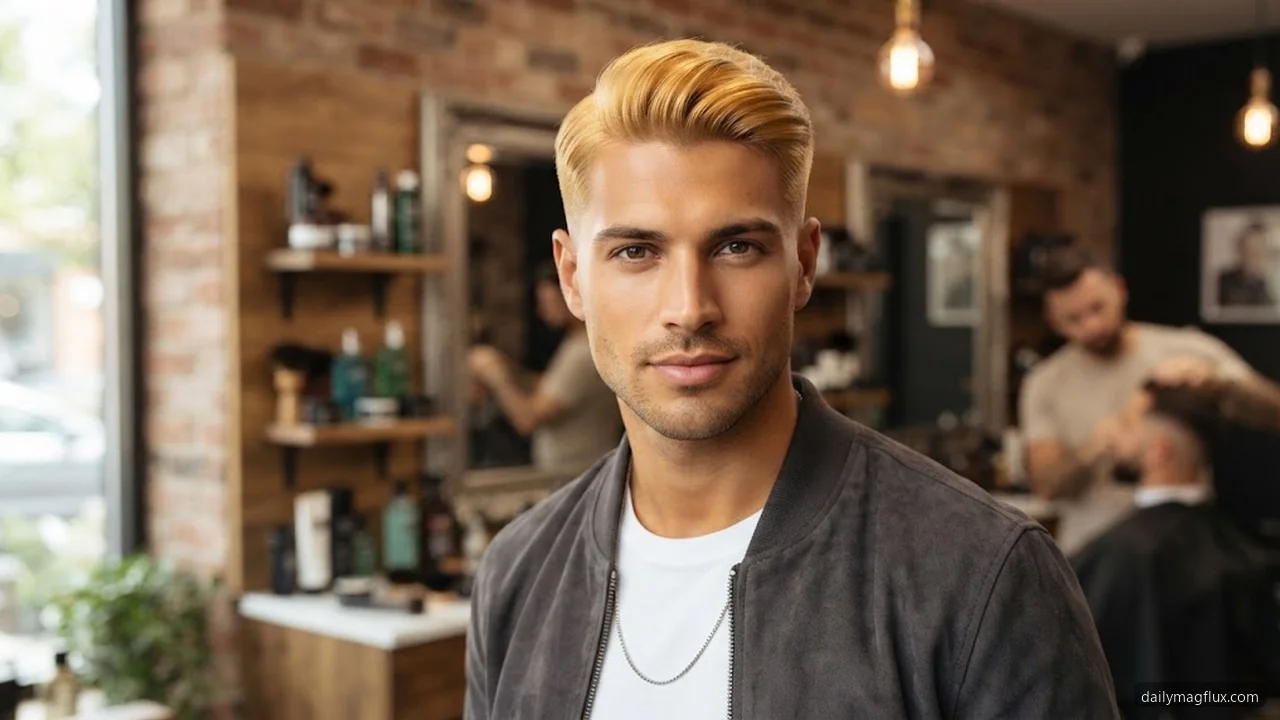
Toner sits on the surface and fades with every wash, so it never lasts as long as the bleach. Over-toning builds ash pigment that turns the hair grey rather than blonde. Use purple shampoo twice a week at most, and skip it on days you use a mask. Rinse with cool water, because heat opens the cuticle and lets color slip.
A weekly moisturizing mask protects the lifted cuticle better than any toner can. Ask your colorist for a bond-building treatment if the ends feel gummy after a lift. Sun exposure fades blonde faster than anything else, so wear a hat at the beach. Shampoo less often, since each wash takes a little toner with it.
Risks and Common Mistakes
Two things can spoil a blonde taper: the bleach and the clipper line. Most problems start before the color bowl is mixed, not after the rinse. Knowing the risks helps you ask sharper questions before you book. Here are the mistakes that cost the most time and money overall.
What to Know Before Bleaching
Bleach lifts natural pigment, and it cannot tell the difference between hair and scalp. Dark hair needs more lifting time than light hair, which raises the risk. A patch test two weeks ahead shows how your scalp will react. Never let a lift sit past the time your colorist sets for it.
Existing color changes everything, because box dye and henna block a clean lift. Tell your colorist about every product you have used in the last year. Henna can react badly with bleach, so it needs a test strand first. Old black dye may need several sessions before the color shifts at all.
Haircut and Color Mistakes to Avoid
Most bad blonde tapers come from a short list of repeat mistakes. A taper cut too high stops being a taper, and the shape changes completely. Color applied too close to the scalp burns and leaves a patchy line. Each mistake below comes with a simple fix you can ask for.
| Mistake | Why It Fails | Fix |
|---|---|---|
| Taper cut above the ear | It turns into a mid fade and removes weight the low taper keeps | Ask for the taper to stop just above the ear and check it in the mirror |
| Bleach pulled to the scalp | The scalp burns and the root lifts unevenly | Leave 1 to 2 inches of natural root and use a gentler lightener |
| Toner left on too long | Ash pigment builds up and the hair reads grey | Time the toner to the label and rinse at the first sign of grey |
| Blonde matched under shop light | Shop lights hide warm tones that show up outdoors | Step outside with your colorist before the final rinse |
| Clippers used on wet, coated hair | Clogged blades pull and cut an uneven line | Arrive with clean, dry hair and no product left in it |
Best Alternatives
If a blonde low taper does not fit your hair, several nearby cuts keep the same clean edge. Each one shifts where the weight sits and how often you visit the chair. Some suit curly hair better, while others work for a receding hairline. Pick one by how much upkeep you can honestly handle each month.
A mid taper raises the blend to the temple line, which suits round faces that need tighter sides. A burst fade arcs around the ear and leaves the back longer, which helps triangle faces. Both need clipper visits a little sooner than a low taper does.
| Alternative | Best For | Key Difference |
|---|---|---|
| Mid taper fade | Round and heart faces with thick hair | Starts at the temple line instead of the ear |
| Burst fade | Triangle faces with wavy or curly hair | Arcs around the ear and keeps the back longer |
| Drop fade | Square faces wanting shape behind the ear | Curves down behind the ear as a shape, not a height |
| Scissor taper | Longer tops of 4 inches or more | Trims the sideburns and nape without clippers |
| Natural neckline | Fine or fragile hairlines | Skips the taper and keeps the hairline soft |
| Shadow-root blonde top | Men who dislike frequent color visits | Leaves 1 to 2 inches of dark root at the scalp |
Want More Taper Fade Guides?
Taper cuts come in more shapes than most men realise, and each one changes the outline. A low taper keeps weight above the ear, while a mid taper climbs to the temple. Watching how your own hair grows out tells you which height suits you best. Take photos at week three and compare them with your first day.
Frequently Asked Questions
What is a low taper fade blonde hair?
It is a taper at the sideburns and nape with blonde color on top. The sides stay short at a #1 while the top keeps 2 to 3 inches. Blonde shows every clipper line, so the blend needs clean clipper work. Ask for it if you want weight kept above the ear, not shaved.
How long does a low taper fade take to grow out?
Hair grows about half an inch a month, so a low taper blurs in roughly 3 weeks. The taper edges at the nape and sideburns show new growth first. You can stretch it to 4 weeks if your hair grows slowly. A full grow-out to your natural shape takes 3 to 4 months.
Can I get a low taper fade with dark roots and a blonde top?
Dark roots under a blonde top create a shadow root, which is easy to keep. Your barber leaves 1 to 2 inches of natural color at the root. That regrowth looks deliberate, so you can stretch color visits to 6 weeks. Ask for a soft blend between the two tones at the blend line.
Does a low taper fade work on straight Asian hair with blonde color?
Straight, thick hair holds a clean taper line better than any other texture. The catch is the bleach, because dense dark strands need more lifting time. Budget two sessions if you want platinum, since one pass rarely gets there. A low taper suits this hair well because the sides stay tidy.
How much does bleaching for a low taper fade cost?
Color work on a blonde taper usually costs more than the haircut alone. A single-process bleach and toner typically runs from $80 to $150. Platinum that needs two lifting sessions can reach $200 or more. Ask for the color price before you sit down, since rates vary by city.
What guard number should I ask for on a low taper fade?
Most low tapers run from a #1 at the bottom to a #3. That range keeps the sideburns and nape short without going to skin. Fine hair looks better with a #2 at the blend, since a #3 can look patchy. Thick, dense hair holds the #3 line cleanly through the blend.
Will a low taper fade damage my curls?
The clipper work itself does not damage curls, because cutting does not break the pattern. Bleach is the real risk, since it opens the cuticle and dries each ring. Ask for a patch test two weeks before a full color session. Deep condition once a week to keep the curl pattern from loosening.
How do I stop a blonde low taper fade from turning brassy?
Brass comes from warm pigment that shows once the toner fades out. Purple shampoo twice a week neutralizes those yellow tones between salon visits. Skip it right after a bleach, since the cuticle is still open. Book a toner refresh at the salon every 4 to 6 weeks.
Is a low taper fade professional for work?
A low taper stays neat at the neckline, so it reads clean in most offices. The blonde top draws attention, so a softer shade keeps it subtle. Keep the top at 2 inches if your workplace dress code is strict. Shadow roots read as more natural than a solid block of platinum.
What is the difference between a low taper fade and a drop fade on blonde hair?
A drop fade curves down behind the ear and leaves more weight at the back. A low taper trims only the sideburns and nape, keeping length above the ear. Blonde shows the drop’s curve clearly, because that line sweeps down low. Choose the drop fade if you want extra shape at the back.
Conclusion
Book this cut if you want a clean neckline with real length on top. Start with a low taper at a #1 to #3 and 2 inches of blonde above it. Fine hair and square faces take it most easily, while round faces gain from a mid taper. Low Taper Fade Blonde Hair rewards a barber who checks the blend in daylight.
Say the height first, then give the numbers and the color shade you want. Book clippers every 3 to 4 weeks and a toner refresh every 4 to 6. Bring four photos shot in daylight so the taper height is clear. That routine keeps the cut sharp and the blonde tone bright.

Harrison Jax is a hairstylist and fashion writer with 10+ years in the industry, holding a Certified Cosmetologist license and a Diploma in Fashion Styling from the London College of Style. He’s contributed grooming and trend guides to GQ India and Vogue Blogs, and currently leads DailyMagFlux’s hair and fashion coverage, blending runway insight with practical, everyday styling advice.