

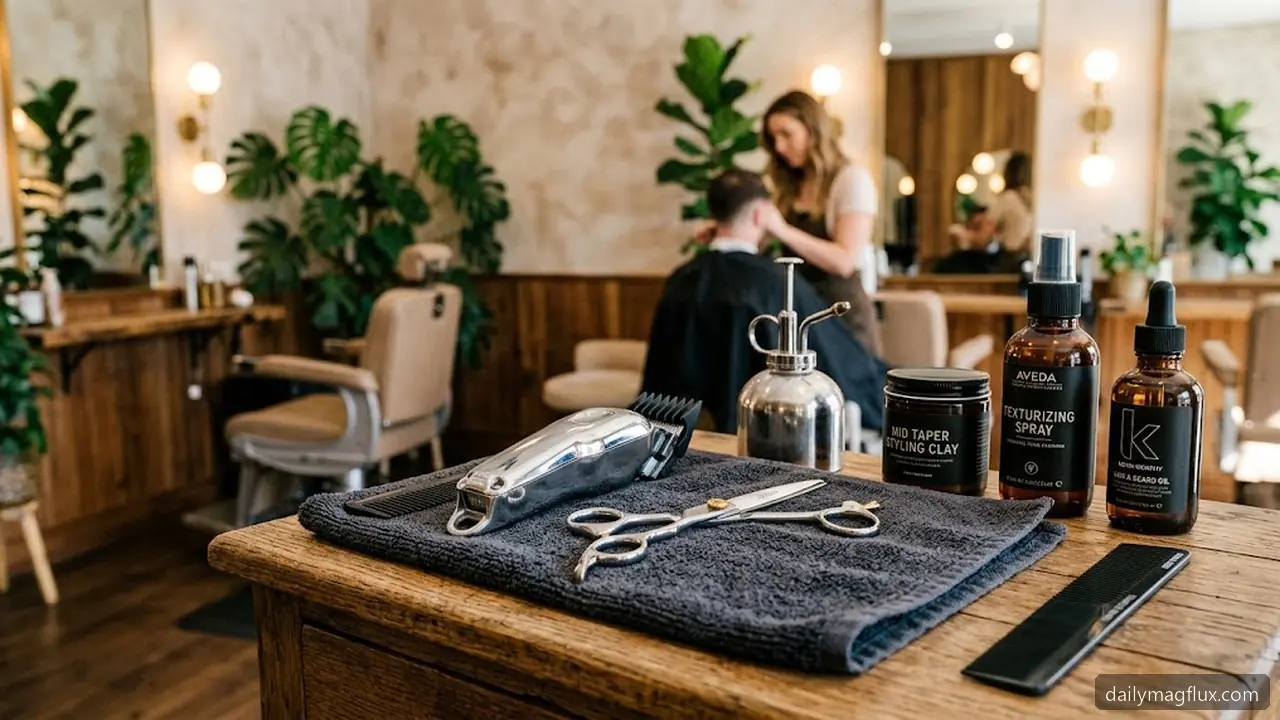
Mid Taper Fade Middle Part Styles suit men who want a balanced cut with a clean taper at the temples. The top stays three to five inches long so it splits down the middle. The taper starts at the temple line and fades to a #1 or #2 guard. The finish is soft and the part sits near your natural crown.
A mid taper with a middle part flatters oval and square faces because the height balances the jaw. If you have a round face, keep the sides tighter with a #1 guard to avoid width. Curly hair from 3A to 3B needs five inches on top for the part to hold. Book a touch-up every three weeks to keep the taper crisp.
Quick Answer
A mid taper fade middle part is a soft taper at the temples with long top hair. The top splits in the middle for a balanced look. It suits oval, square, and heart-shaped faces best. Ask for a #1 to #3 guard on the sides and a touch-up every three weeks.
What is a mid taper fade middle part?
A mid taper fade middle part keeps the sides and back short from the temple line down. The top stays long, usually three to five inches, and splits into two even sections. Unlike a low taper, the taper starts at the temple, not just above the ear. People ask for it because the fade looks clean while the top keeps a soft shape.
Why Mid Taper Fade Middle Part Is So Popular in 2026
- Versatility: The cut works for straight, wavy, and curly hair because the top keeps enough length. You can wear it loose on weekends or comb it flat for the office.
- Face-Shape Fit: The height on top balances round and square faces without adding width at the sides. A heart-shaped face benefits from the middle part because it narrows the forehead.
- Low Maintenance: You only need a touch-up every three weeks to keep the taper sharp. Between visits, a small amount of product keeps the part in place all day.
Pros and Cons
The mid taper fade middle part gives you a clean shape without shaving your whole head. The top length lets you change the part or add texture with clay. The taper keeps your neck and ears tidy between cuts. You can wear it to a job interview or a casual night out.
The cut needs regular trims or the taper grows out into a shaggy line. Fine hair can look flat on top without a root lift product. Curly hair may fight the part unless you train it with a cream. A round face needs tighter sides to avoid extra width.
| Pros | Cons |
|---|---|
| Clean taper at the temples | Needs a touch-up every three weeks |
| Works with straight, wavy, and curly hair | Fine hair needs a volumizing product |
| Top length allows part changes | Curly hair requires daily training |
| Soft finish looks natural | Round faces need tighter sides |
| Professional and casual at once | Grows out faster than a low taper |
Best Mid Taper Fade Middle Part Styles
These styles all share a mid taper at the temple line and a middle part on top. The difference comes from your hair type, the top length you choose, and how much detail you want. Each variation below changes the guard, the fade shape, or the styling product. Pick the one that matches your natural texture and daily routine. See American Academy of Dermatology hair care guidelines for more.
Wavy Middle Part with Mid Taper
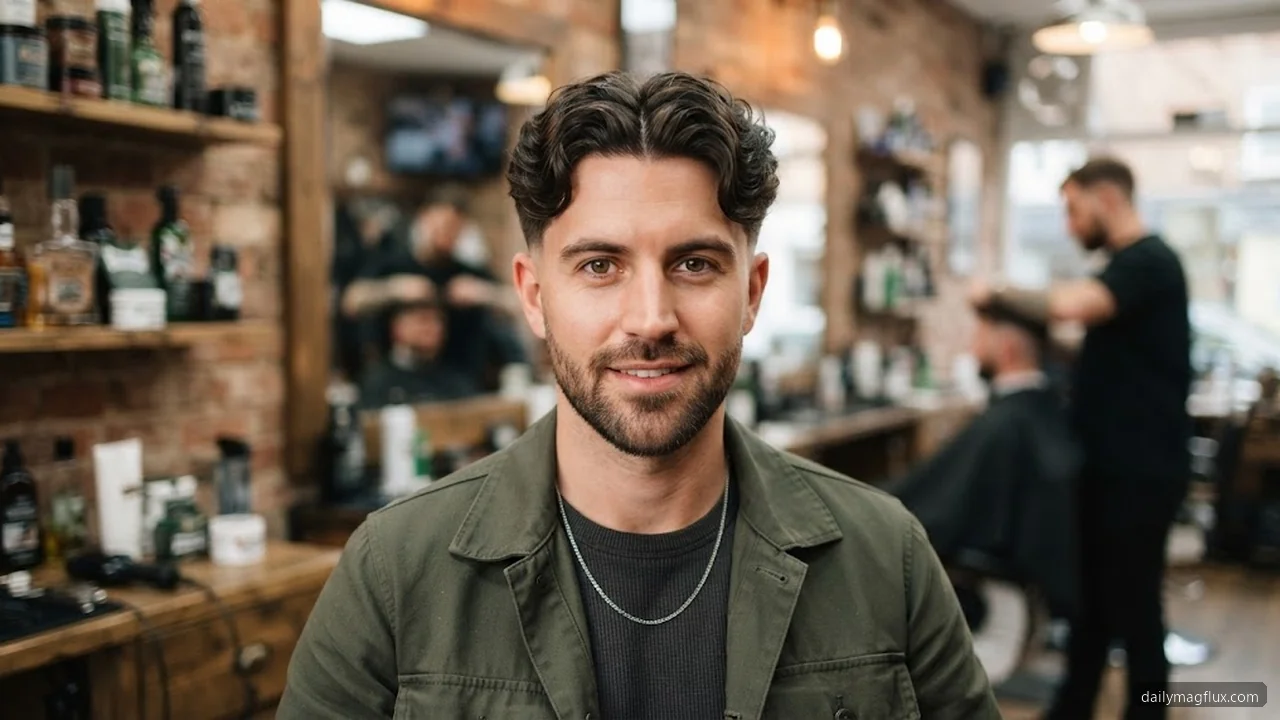
Waves give this cut a relaxed, piecey look that straight hair cannot match. The mid taper starts at the temple and blends down to a #1 at the neck for a soft edge. On top, four inches of length lets the waves split naturally down the middle. The finish is matte, so the part looks effortless rather than styled.
- Guard Length: Ask for a #2 guard on the sides with a #1 at the bottom. This blend keeps the taper soft while removing bulk near the ears.
- Top Length: Leave four inches on top so the waves can split without pulling flat. A scissors cut shapes the top because it is longer than one inch.
- Fade Height: The taper starts exactly at your temple line and drops slightly behind the ear. This mid height keeps the sides clean without exposing skin.
- Best Hair Type: This style suits 2A to 2C waves with medium density because the pattern holds the part. Fine wavy hair needs a sea salt spray for grit.
Textured Middle Part with Mid Taper
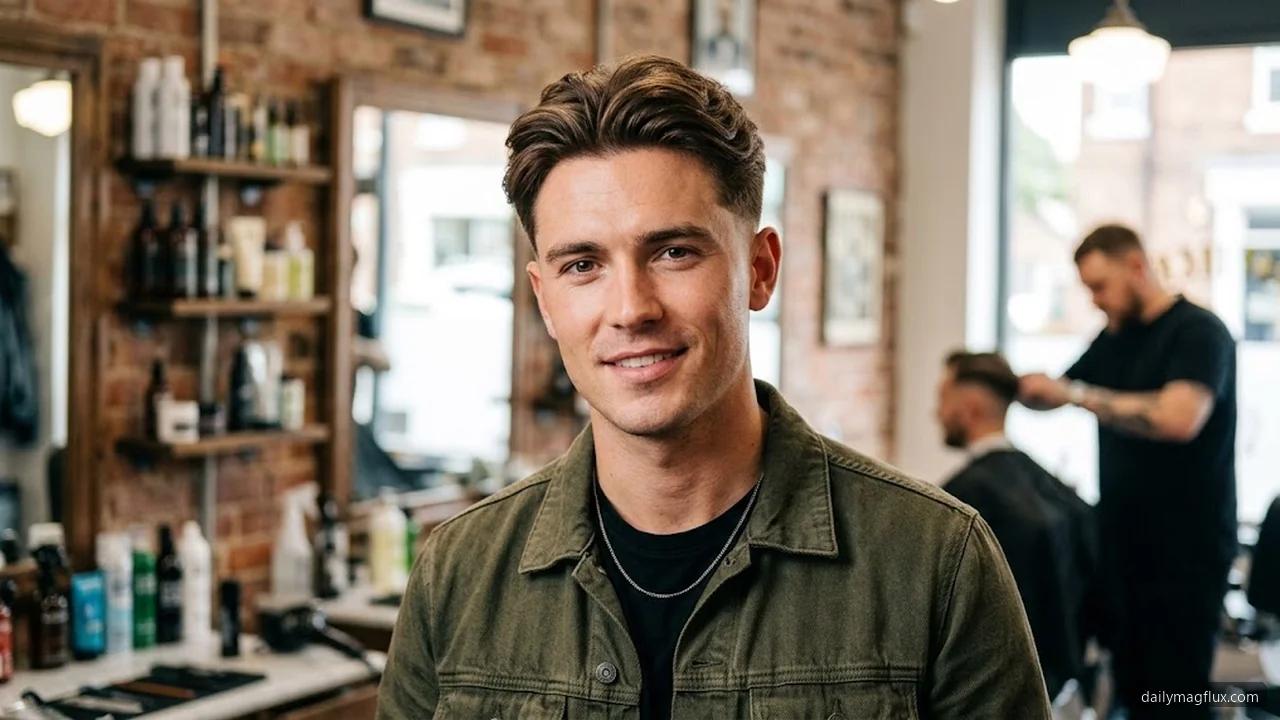
- Guard Length: Use a #1.5 guard at the bottom blending to a #3 at the temple. This range creates a visible but soft taper for straight hair.
- Top Length: Three inches on top is enough for texture because you add volume with product. Your barber cuts this length with scissors, never a guard.
- Fade Height: The taper begins at the temple and stays mid, so it does not reach the parietal ridge. This height looks neat without being bald.
- Best Hair Type: Straight to slightly wavy hair with medium to thick density holds the texture best. Fine hair needs a matte paste to build bulk.
Curly-Wave Middle Part with Mid Taper

- Guard Length: Ask for a #1 at the nape blending to a #2.5 at the temple. This gentle taper removes bulk without cutting into the curl pattern.
- Top Length: Five inches on top gives 3A to 3B curls room to coil and split. A scissors cut shapes the top because the length is over one inch.
- Fade Height: The mid taper starts at the temple and arcs around the ear in a burst shape. This burst keeps the back longer for balance.
- Curl Type: This style suits 3A to 3B curls because they hold a middle part without much product. Type 4 coils need more length to avoid shrinkage.
Combination Middle Part with Mid Taper

A combination middle part mixes two textures or two part lines in one cut. The top might be straight on one side and wavy on the other. Or you can switch between a middle and side part. The mid taper stays the same on both sides for a clean base. This style suits men who like options without growing out a new cut.
The combination works best when your barber leaves enough length on top to change the part. Four and a half inches gives you room to sweep hair left or right. A hard part shaved line adds a sharp detail that frames the middle part. Without that line, the combination looks softer and more casual.
- Guard Length: A #0.5 at the bottom fading to a #2 at the temple creates a tight base. This low-to-mid range keeps the sides very short without going bald.
- Top Length: Leave four and a half inches on top so you can part it either way. Scissors cut this length because it is longer than one inch.
- Fade Height: The taper starts at the temple and drops behind the ear in a drop fade shape. This shape curves down to keep the back longer.
- Detail Work: A shaved hard part lines up with your natural middle part for a sharp look. The barber carves a thin line from forehead to crown.
Hard-Part Combination Middle Part

The hard-part combination uses a shaved line to separate the middle part from the rest of the hair. Your barber sets the line at the natural crown and carves it with a trimmer. The sides get a #1 guard at the bottom blending to a #2 at the temple. This cut needs a touch-up every three weeks to keep the line crisp.
High-Volume Blowout Middle Part
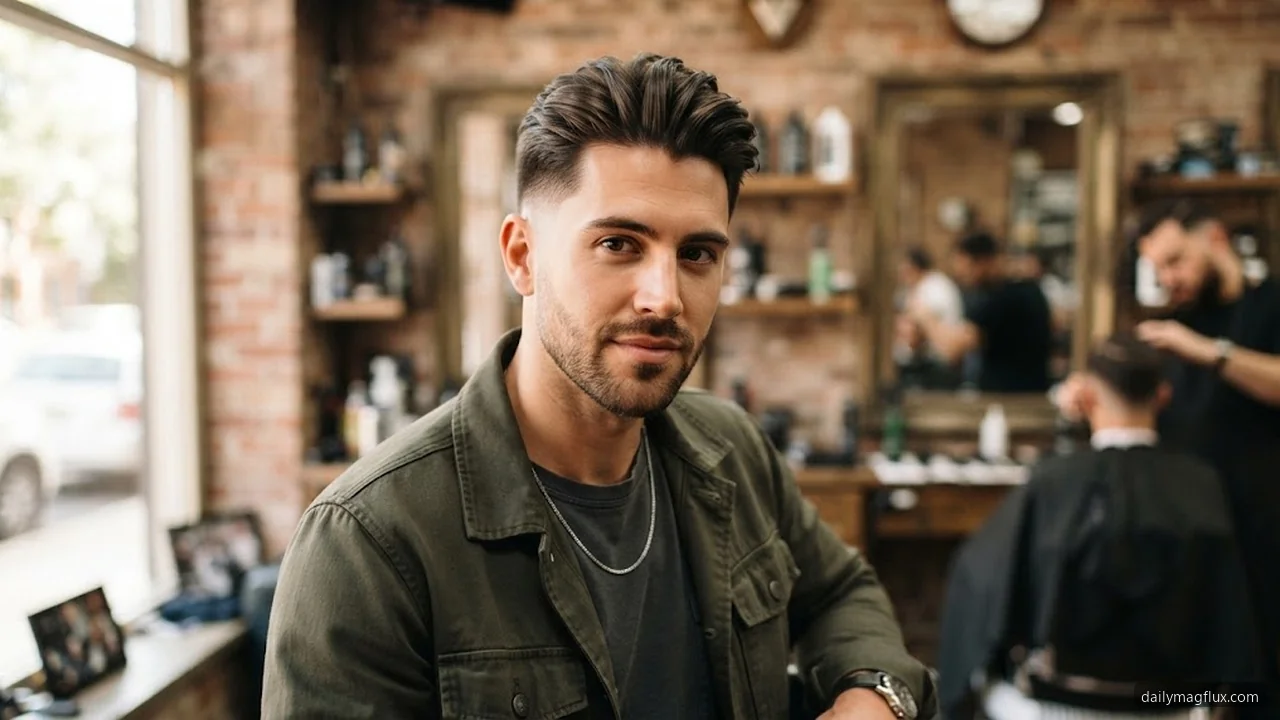
A high-volume blowout adds lift at the roots so the middle part looks full and airy. You need five inches on top and a #2 guard on the sides. The mid taper starts at the temple and blends down to a #1 at the neck. Use a round brush and blow dryer to push hair up and back.
Low Taper Fade Middle Part as an Alternative

A low taper fade keeps more length at the nape and sideburns than a mid taper. The fade starts just above the ear and blends to a #1 at the bottom. The middle part on top stays long, usually four inches, with a soft finish. This cut suits men who want a cleaner neckline without a high fade.
How to Choose the Right Style for Your Hair Type
Your natural texture decides which middle part cut will hold its shape. Straight hair needs texture products, while curls need length and moisture. Thick hair can handle tighter tapers, but fine hair needs volume at the roots. Read the section that matches your hair type before you book. See Healthline hair health and wellness resources for more.
Straight Hair
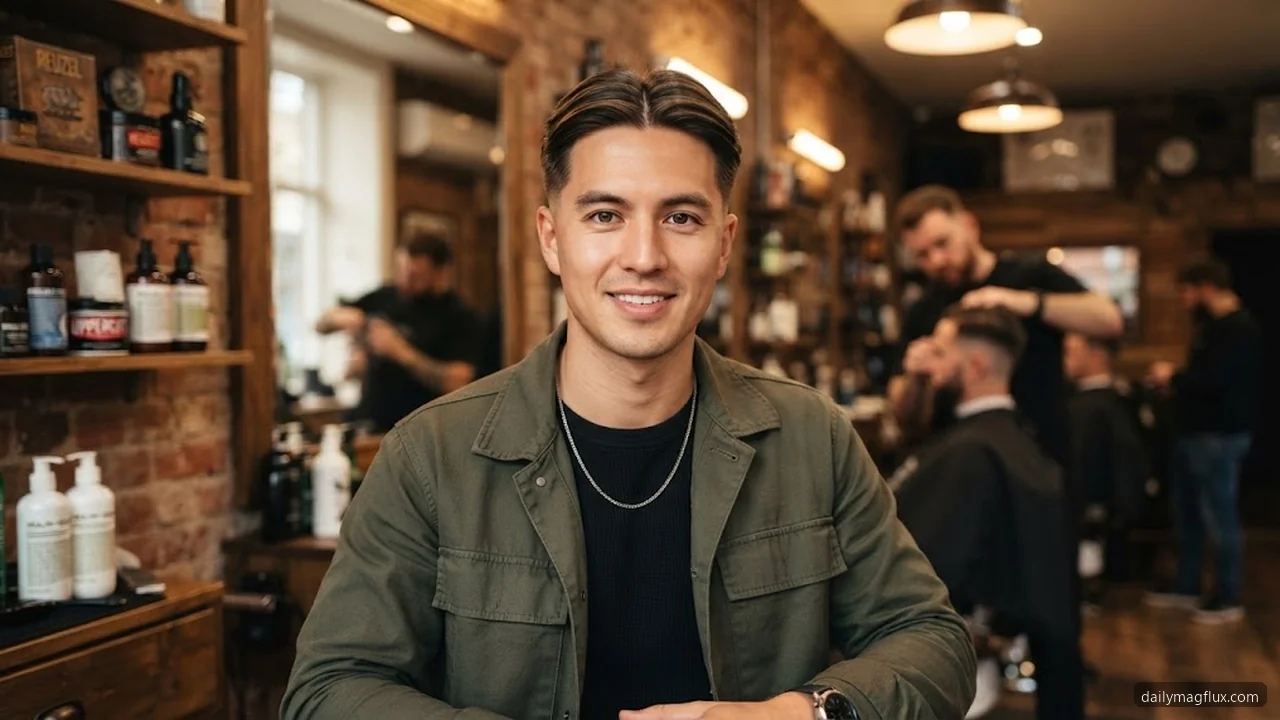
Dark, thick hair shows every clipper mark, so ask for a #2 guard on the sides. The middle part stays flat unless you add a matte paste for grip. Four inches on top gives you enough length to sweep the part without it falling. A mid taper at the temple keeps the sides neat for about three weeks.
Wavy Hair
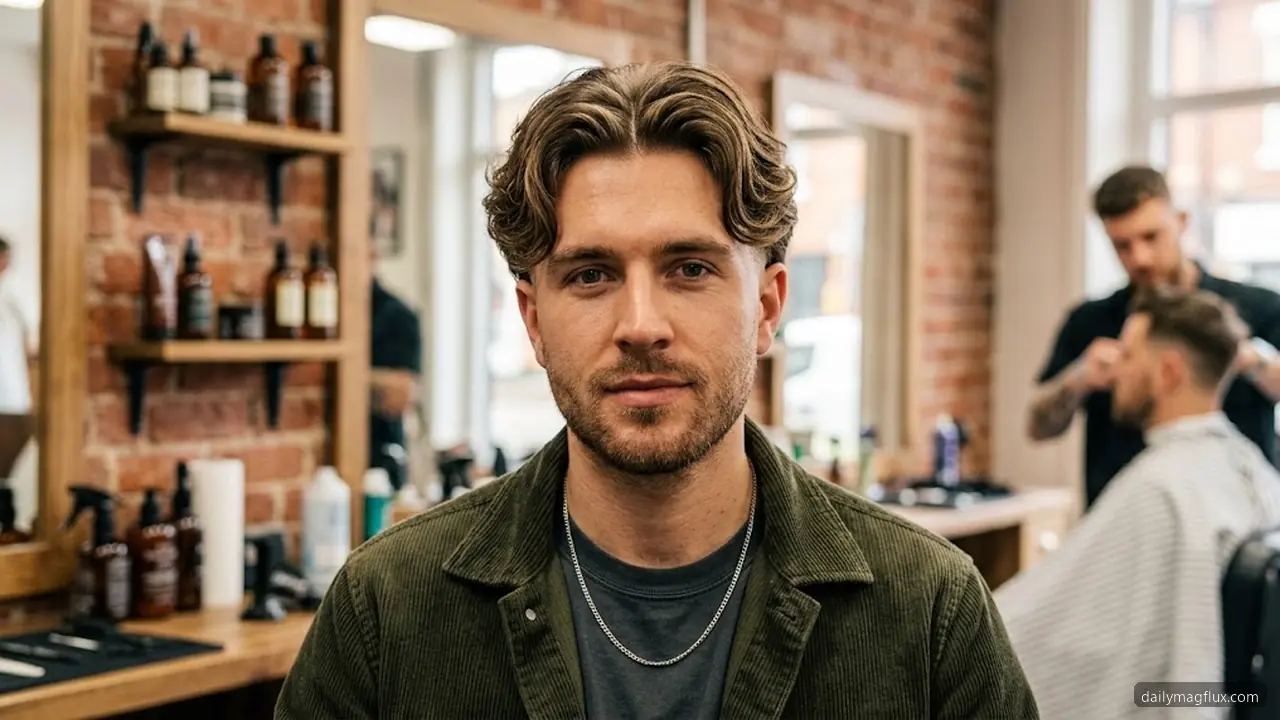
Waves from 2A to 2C hold a middle part with little effort. Leave four to five inches on top so the pattern can move without frizz. A #1.5 guard at the bottom blending to a #3 at the temple keeps the taper soft. Sea salt spray adds grit, and a light cream controls flyaways.
Thick Hair
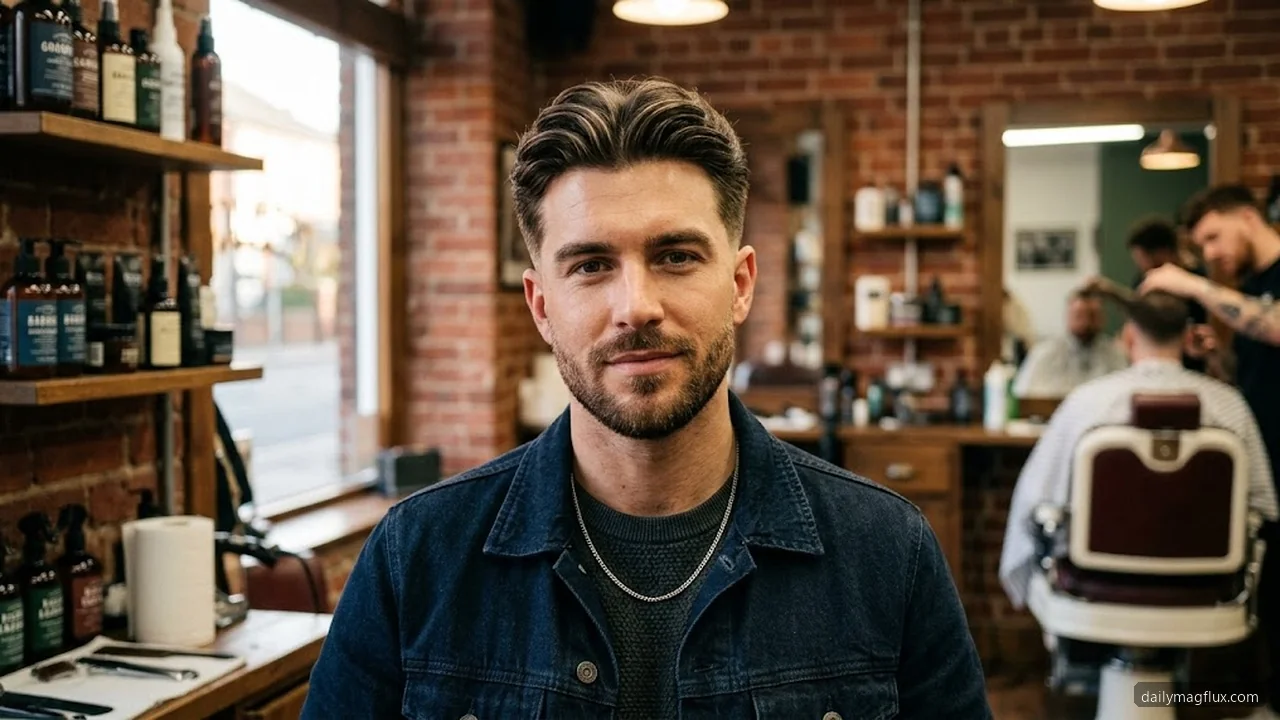
Thick hair needs a tighter taper to remove bulk near the ears. Ask for a #0.5 at the bottom blending to a #2 at the temple. The top can stay at three inches because thick hair holds volume on its own. Your barber should thin the ends with shears to stop the part from looking heavy.
Curly Hair
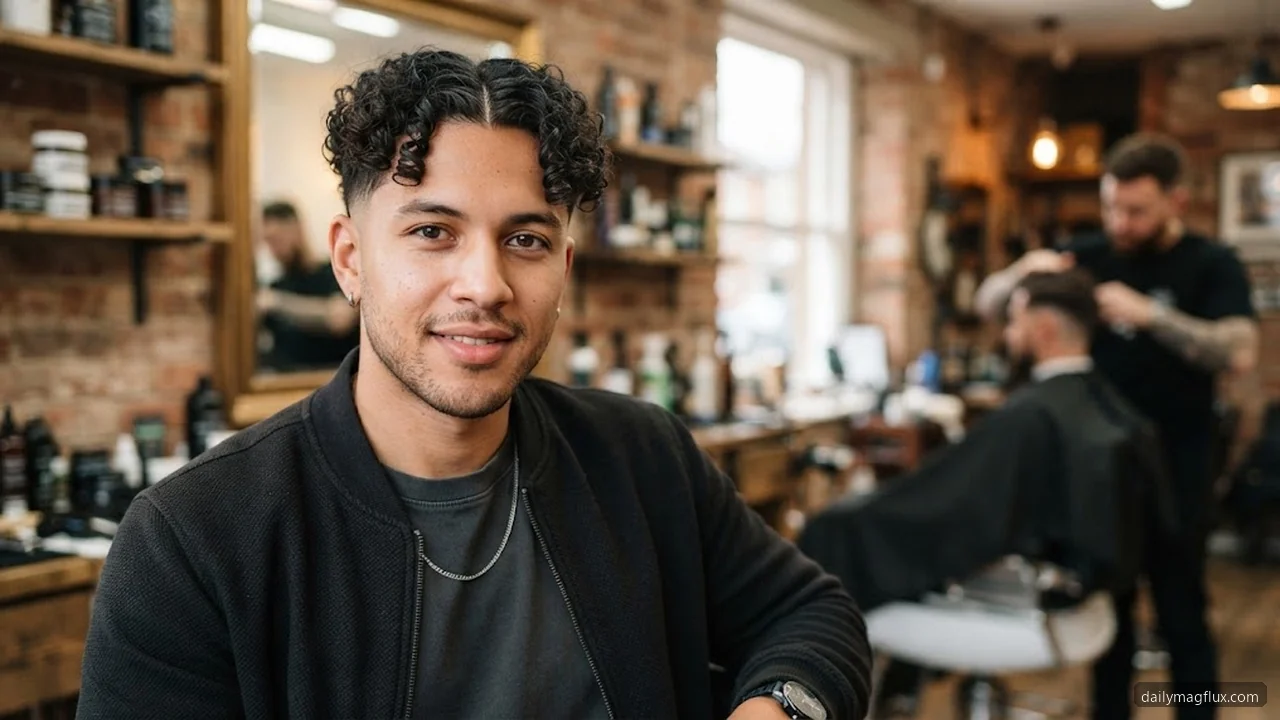
Curly hair from 3A to 3B needs five inches on top for the middle part to show. A #1 at the nape blending to a #2.5 at the temple keeps the sides tidy. Cut the top with scissors, never a guard, because the length is over one inch. Use curl cream to define the part and reduce frizz.
Fine Hair

Fine hair can wear a middle part if you add volume at the roots. Ask for a #1 guard on the sides and a #2 at the temple for a soft taper. Three inches on top is enough, but you need a volumizing powder or mousse. Without product, the part may fall flat within an hour.
Best Mid Taper Fade Middle Part Styles by Face Shape
Your face shape decides how much height and width the cut should have. A round face needs tighter sides, while a long face needs some fullness at the temples. The table below matches each shape to a specific variation and guard range. Use it to pick the right middle part before your next appointment.
| Face Shape | Best Variation | Guard / Length |
|---|---|---|
| Oval | Textured middle part with mid taper | #1.5 to #3, three inches on top |
| Round | Curly-wave middle part with burst fade | #1 to #2.5, five inches on top |
| Square | Wavy middle part with mid taper | #2 with #1 at bottom, four inches on top |
| Heart | Combination middle part with hard part | #0.5 to #2, four and a half inches on top |
| Long | Low taper fade middle part | #1 at bottom to #2, four inches on top |
| Diamond | Curly-wave middle part with mid taper | #0.5 to #2, five inches on top |
| Rectangular | Textured middle part with mid taper | #1 to #2, four and a half inches on top |
Oval Face

Oval faces wear almost any middle part because the length and width are balanced. A textured middle part with a mid taper adds interest without hiding your features. Keep the sides at a #1.5 to #3 guard and leave three inches on top. This cut works for straight or wavy hair with matte clay.
Round Face
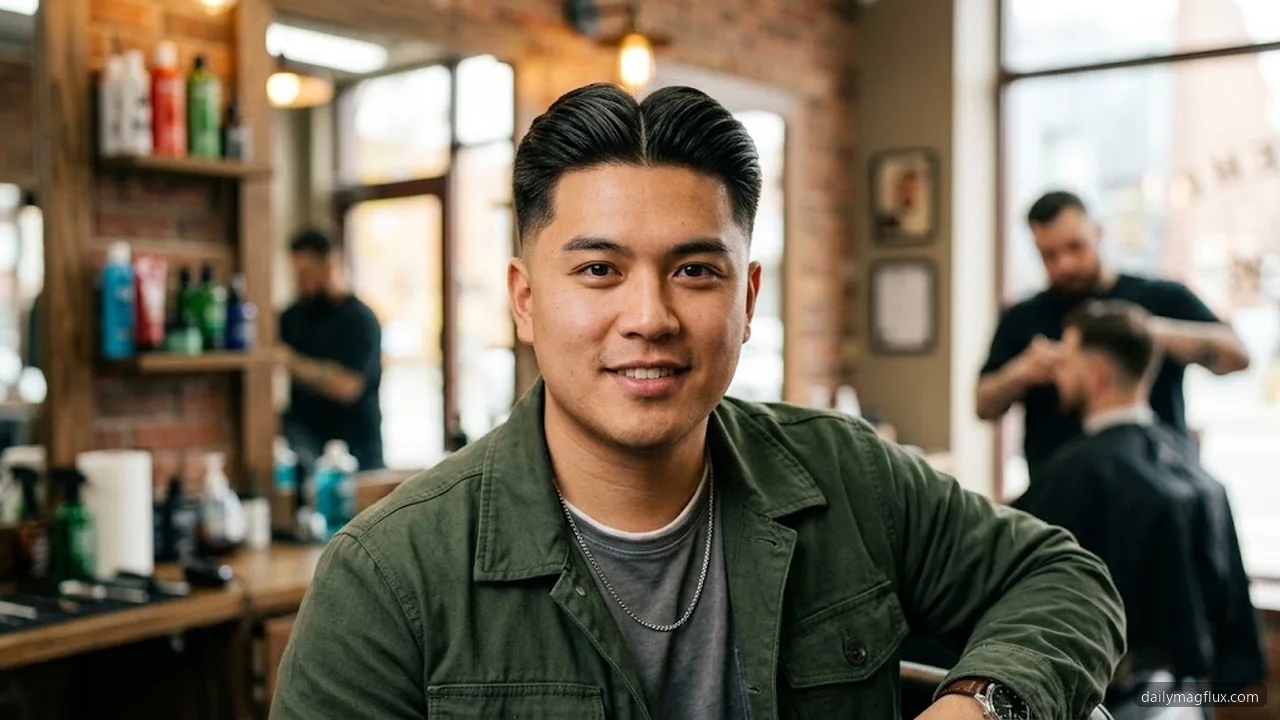
A round face needs height on top and tight sides to avoid extra width. Choose a curly-wave middle part with a burst fade, which arcs around the ear. Use a #1 guard at the nape and a #2.5 at the temple. Leave five inches on top so the curls add vertical volume.
Square Face
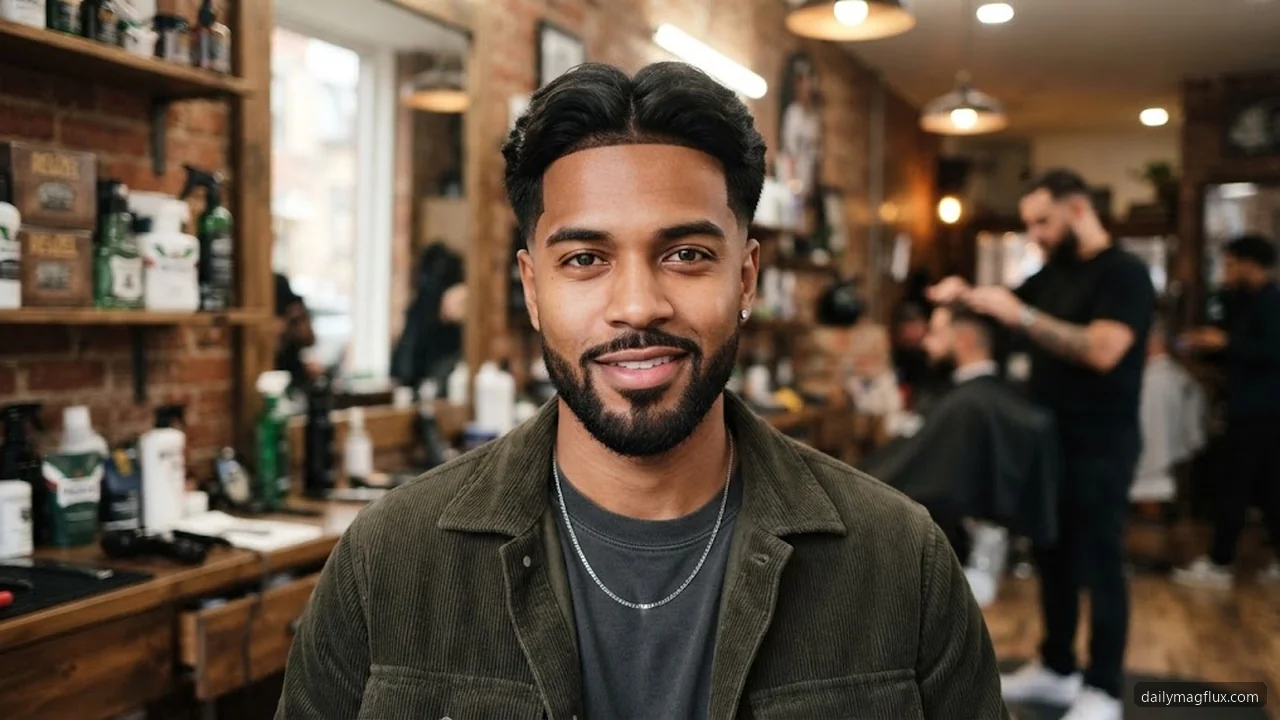
Square faces have a strong jaw, so texture on top softens the angles. A wavy middle part with a mid taper works well because the waves break up the straight lines. Ask for a #2 guard with a #1 at the bottom and four inches on top. Avoid a hard part, which can make the jaw look even wider.
Heart-Shaped Face
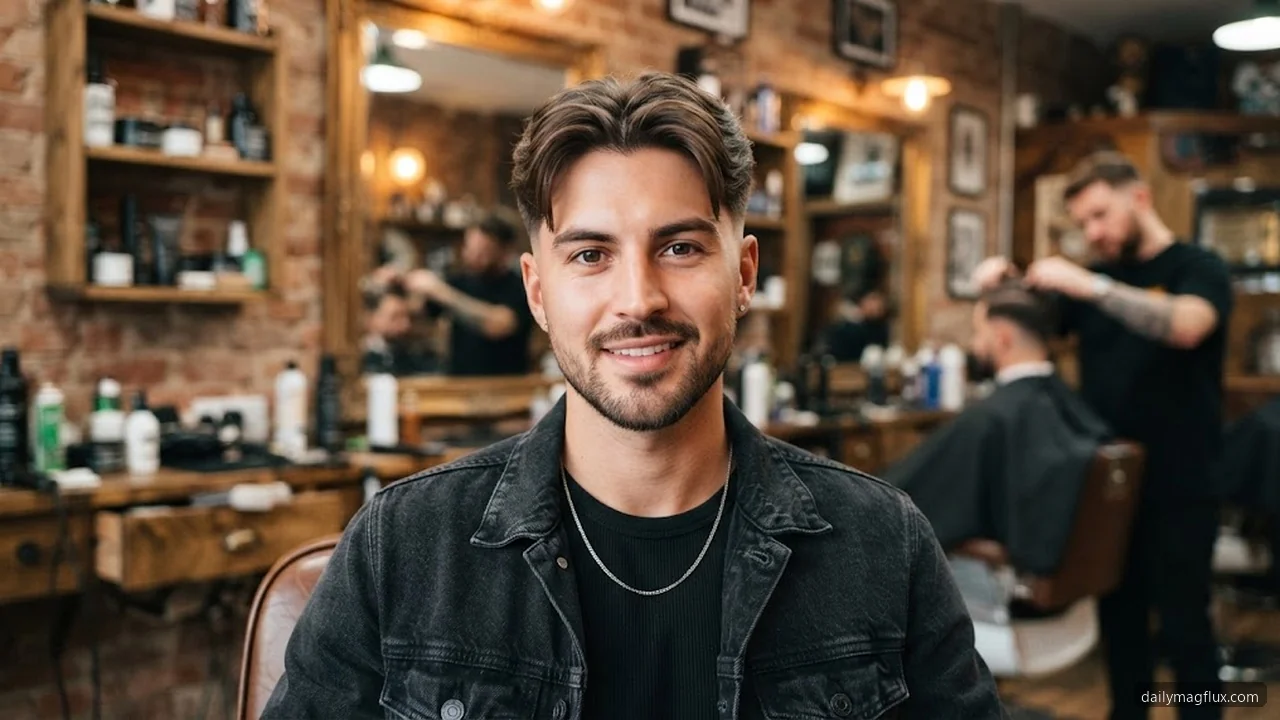
A heart-shaped face has a wide forehead and a narrow chin. A combination middle part with a hard part draws attention down the center. Use a #0.5 guard at the bottom blending to a #2 at the temple. Leave four and a half inches on top and skip very tall volume.
Long Face

A long face should skip tall height on top and keep some fullness at the sides. A low taper fade middle part shortens the visual length because the taper starts above the ear. Leave four inches on top with a #1 at the bottom and a #2 at the temple. Add a fringe if you want to break up the length further.
Diamond Face

A diamond face has wide cheekbones with a narrower forehead and chin. Choose a curly-wave middle part with a mid taper to add fullness at the temples. Ask for a #0.5 guard at the nape and a #2 at the temple. Leave five inches on top and avoid very tight sides that expose the cheekbones.
Rectangular Face

A rectangular face is longer than wide, so it needs softness rather than sharp lines. A hard-part combination middle part adds a strong vertical line that can lengthen the face further. Instead, pick a textured middle part with a mid taper and a #1 to #2 guard. Leave four and a half inches on top with a matte paste for a soft finish.
Best Mid Taper Fade Middle Part Styles by Age Group
Age changes how tight you want the taper and how much time you have to style it. A student can afford a sharper fade and a looser top. A man in an office usually wants a softer edge and a part that holds. Your age changes how tight the taper sits and how much time you style it.
Teenagers
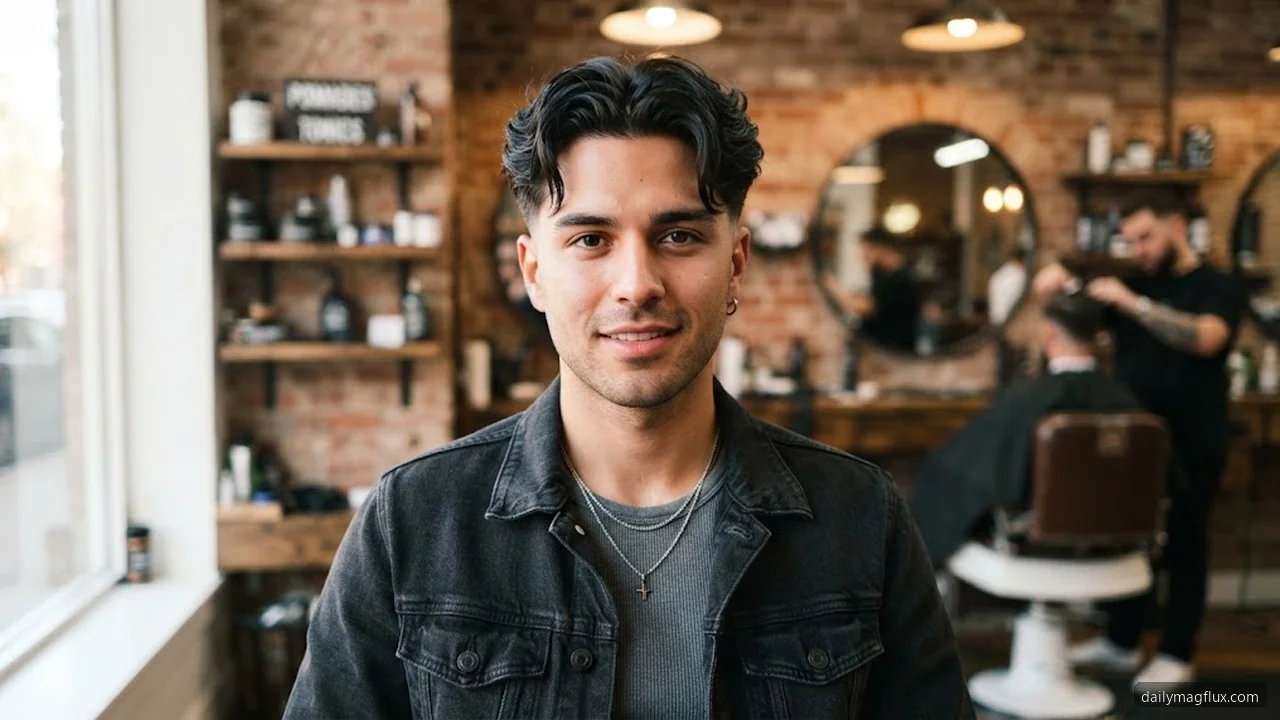
Teenagers usually want the tightest version because it lasts through a school term. Ask for a #1 at the bottom blending to a #2 at the temple, with three inches on top. A matte paste keeps the part in place without looking greasy in class. Book a touch-up every three weeks to keep the taper sharp.
Young Men
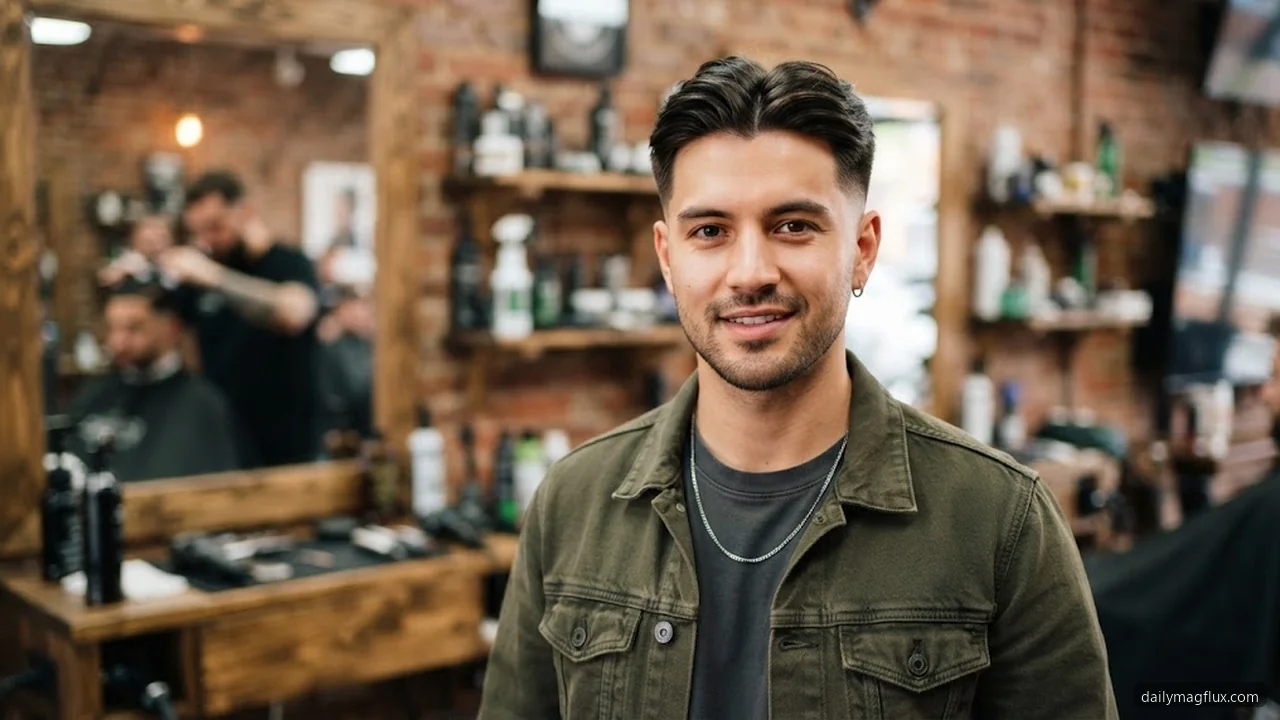
Men in their twenties often grow the top longer and wear it looser. Four inches on top gives you room to switch between a middle part and a sweep. Keep the sides at a #1.5 fading to a #3 so the taper stays visible. Sea salt spray adds grit without weighing the hair down.
Professional Men
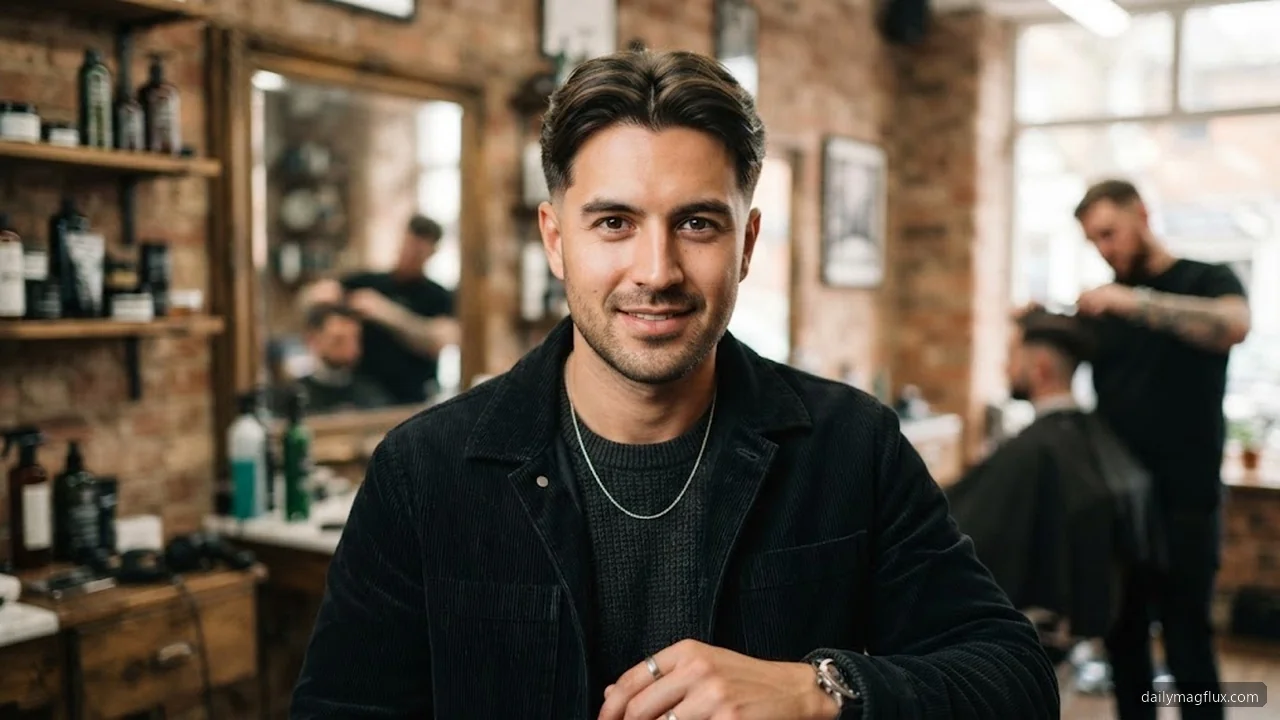
An office setting calls for a softer taper and a part that stays put all day. Ask for a #2 at the temple blending down to a #1 at the nape. Leave three and a half inches on top so the part looks tidy. Keep the neckline natural rather than squared for a softer finish.
How to Ask Your Barber for a Mid Taper Fade Middle Part
- Sides: Ask for a #1.5 to #3 mid taper fade. This keeps weight near the ear.
- Fade Height: Say: “Start the taper right at my temple line and keep it mid.”. Point to where your temple meets your forehead so the fade does not creep higher.
- Top Length: Say: “Leave four inches on top and point cut. It with scissors.” Ask for a light trim of the ends only. Since removing weight flattens the middle part.
- Part Line: Say: “Set the part where my hair naturally splits.” Comb your. Hair wet before the cut so your barber can find the real parting point.
Mid Taper Fade Middle Part — Video Guide

Watch a walkthrough of this cut before you book, because the taper height is easier to see than to describe. Look for one filmed from the front, the side, and the back. Pause on the clipper work at the temple and note the guard the barber calls out. Bring the timestamp you liked to your appointment.
Common Mid Taper Fade Middle Part Mistakes to Avoid
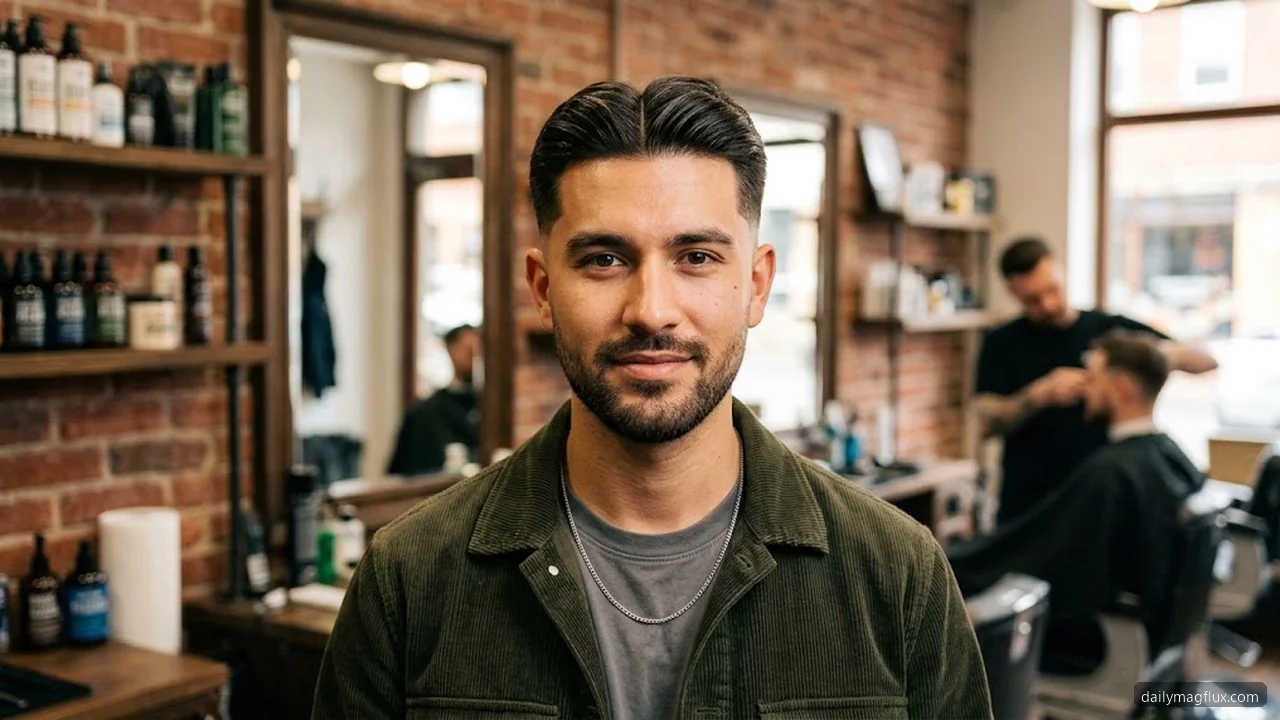
Most bad versions of this cut fail for the same few reasons. The top gets cut too short, so the part collapses within a day. Too much product weighs the hair down and kills the volume at the roots. A taper that creeps above the temple stops looking like a taper at all.
- Top Length: Leave at least three inches on top for a middle part. Curly hair needs more length.
- Product Weight: A heavy wax or thick pomade pulls the part flat within an hour. Use a pea-sized amount of matte clay instead, and start at the ends.
- Part Training: Train the part with a comb and water. Comb the line daily for two weeks.
- Taper Growth: The taper loses its shape after about three weeks because the hair grows evenly. Trim the neckline between visits with a #1 guard if you like.
How to Maintain a Mid Taper Fade Middle Part
Keeping this cut sharp comes down to three habits: how you style it daily. This products you use, and how often you sit in the chair. Each one affects how long the taper and the part hold their shape. The sections below cover the routine that keeps the cut looking fresh. Skip one habit and the part droops or the taper blurs within a week.
Daily Styling

Start with damp hair, because the part sets as it dries. Comb the line down the middle from the crown to your forehead, then push each side flat. Work a pea-sized amount of matte clay through the ends for grip. Finish by pressing the part line with your thumb so it stays crisp.
Products That Work Best
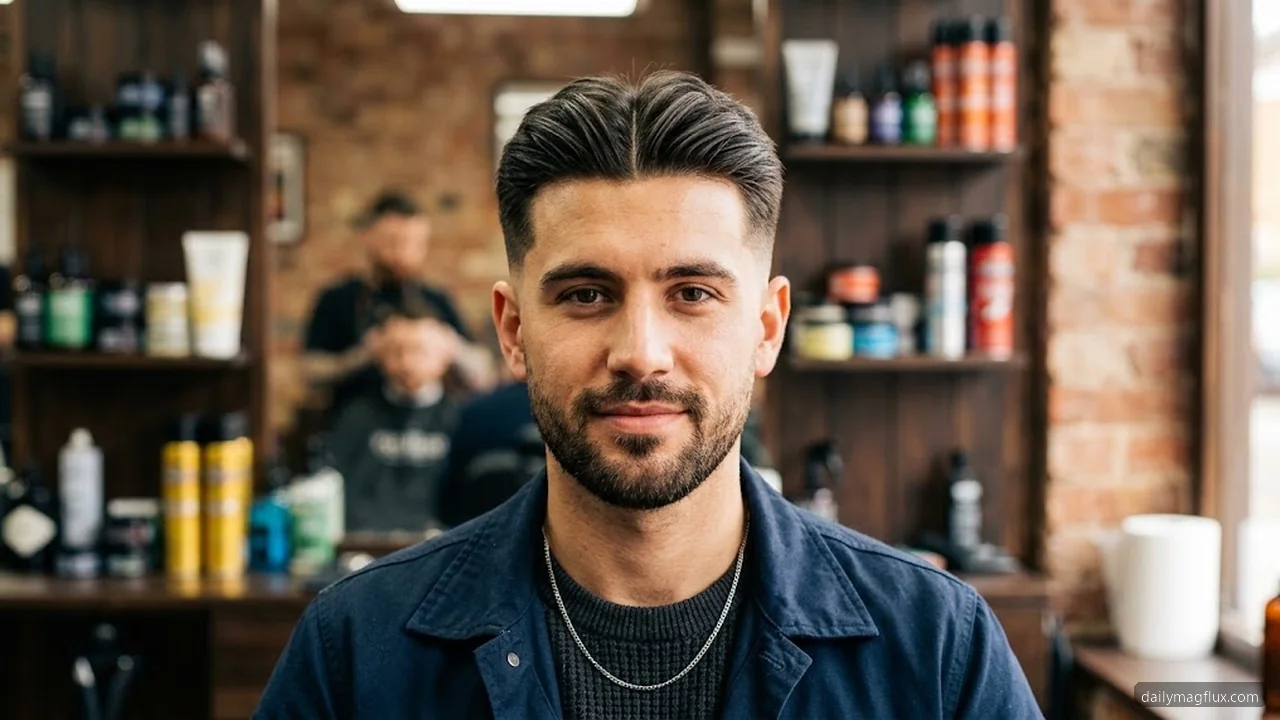
- Pomade: A dime-sized amount of pomade gives shine and slick control for a neat office look. Apply it to dry hair and comb the sides back toward the crown.
- Sea Salt Spray: Mist four or five sprays into damp roots for grit. Scrunch the top before air drying.
- Cream: A pea-sized amount of curl cream defines the part on curly hair and fights frizz. Rake it through wet hair, then let the curls dry untouched.
- Volumizing Powder: A light sprinkle of volumizing powder lifts fine hair at the crown. Tap it along the part line, then work it in with your fingertips.
Washing Routine
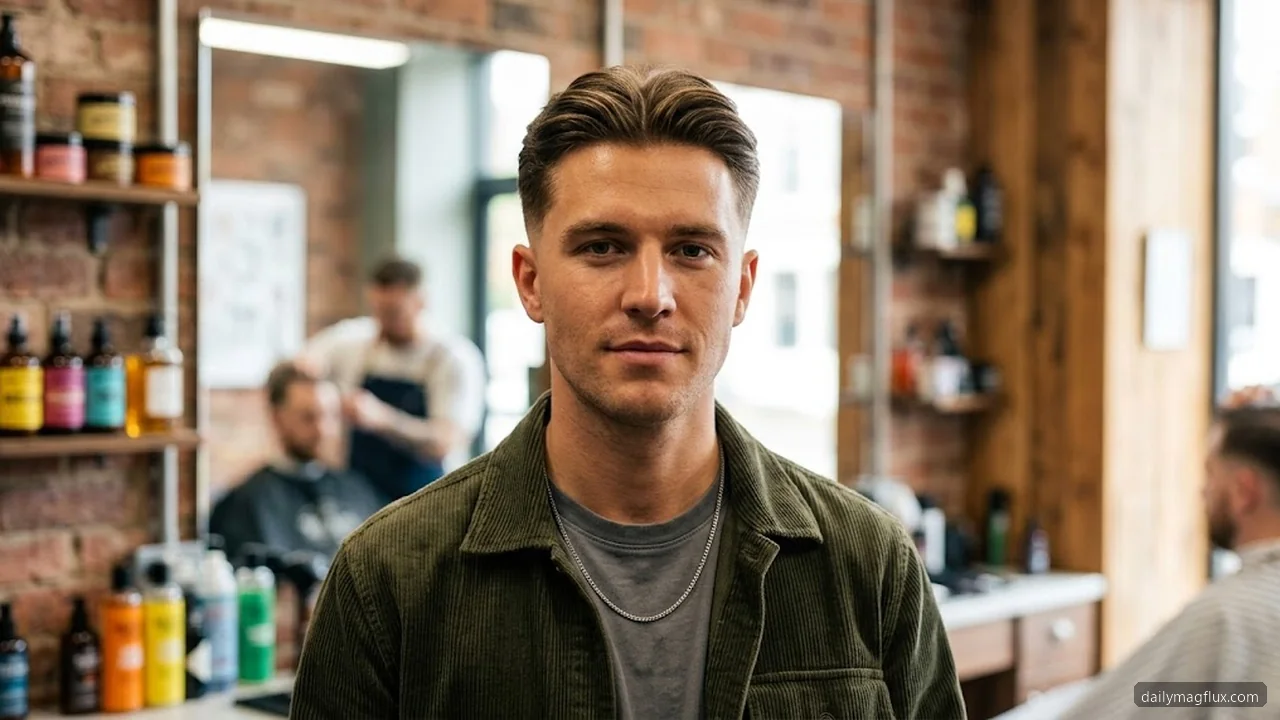
Wash your hair every second or third day, because daily shampoo strips the oils that keep the part soft. Use a light conditioner on the ends only, since heavy conditioner flattens the roots. Rinse with cool water to close the cuticle and add shine. If your scalp gets oily, use a dry shampoo on the in-between days.
Touch-Up Frequency
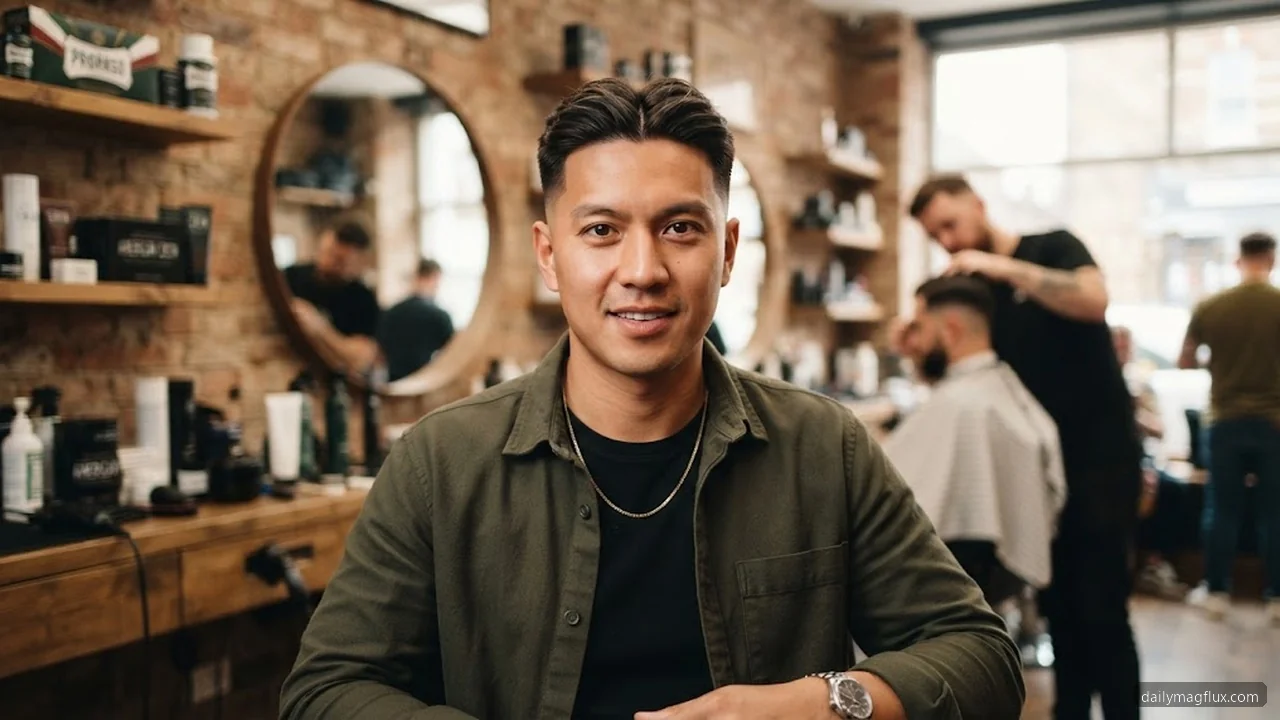
Book a touch-up every three weeks, because the taper blurs and the neckline grows shaggy first. The top can wait four to six weeks if you only need the ends trimmed. Ask your barber to clean the taper and the part without shortening the top. Between visits, keep the neckline tidy with a light trim at home.
How Mid Taper Fade Middle Part Compares With Similar Cuts
A middle part sits close to three other popular cuts, and the difference changes how the hair falls. Each comparison below covers the look, who it suits, and the upkeep each one demands. Pick the one that matches your hair type and how often you want to visit the chair.
Middle Part vs Side Part
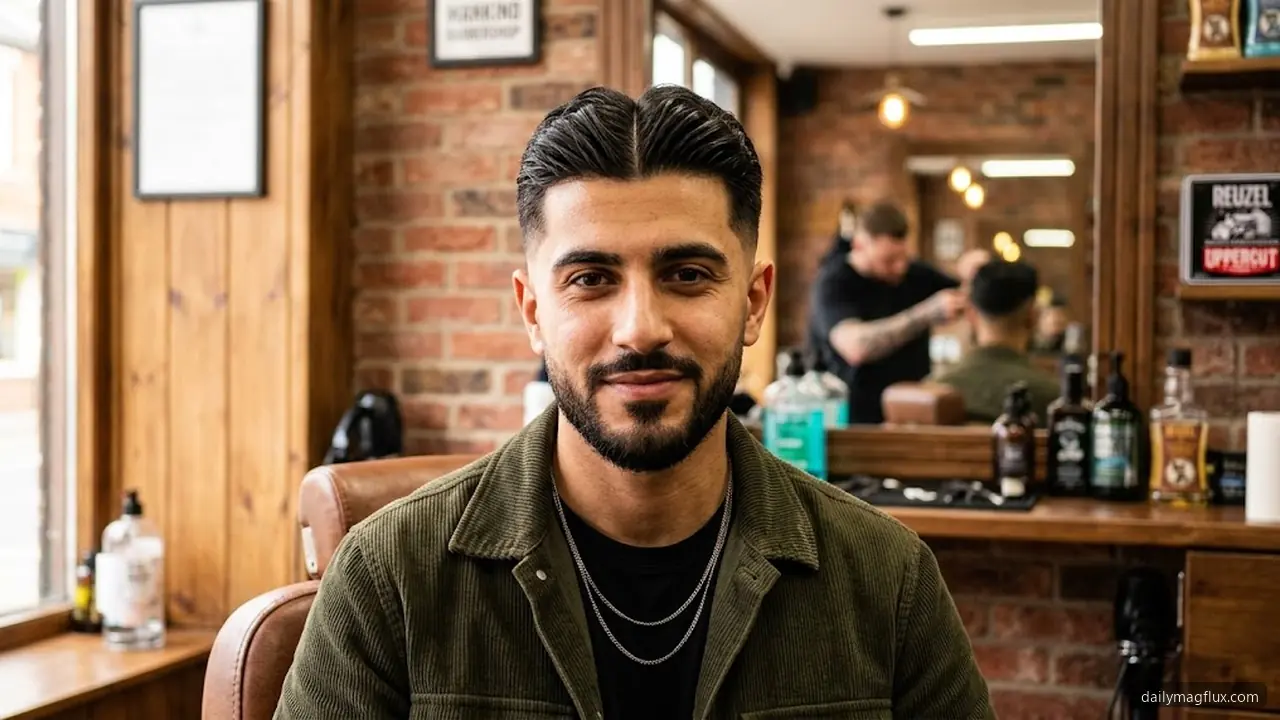
A side part sweeps hair to one side, while a middle part splits it evenly down the crown. The middle version looks more relaxed and grows out evenly on both sides. A side part suits a receding hairline better because it hides the temples. Upkeep is the same for both, at about three weeks per touch-up.
Middle Part vs Slick Back
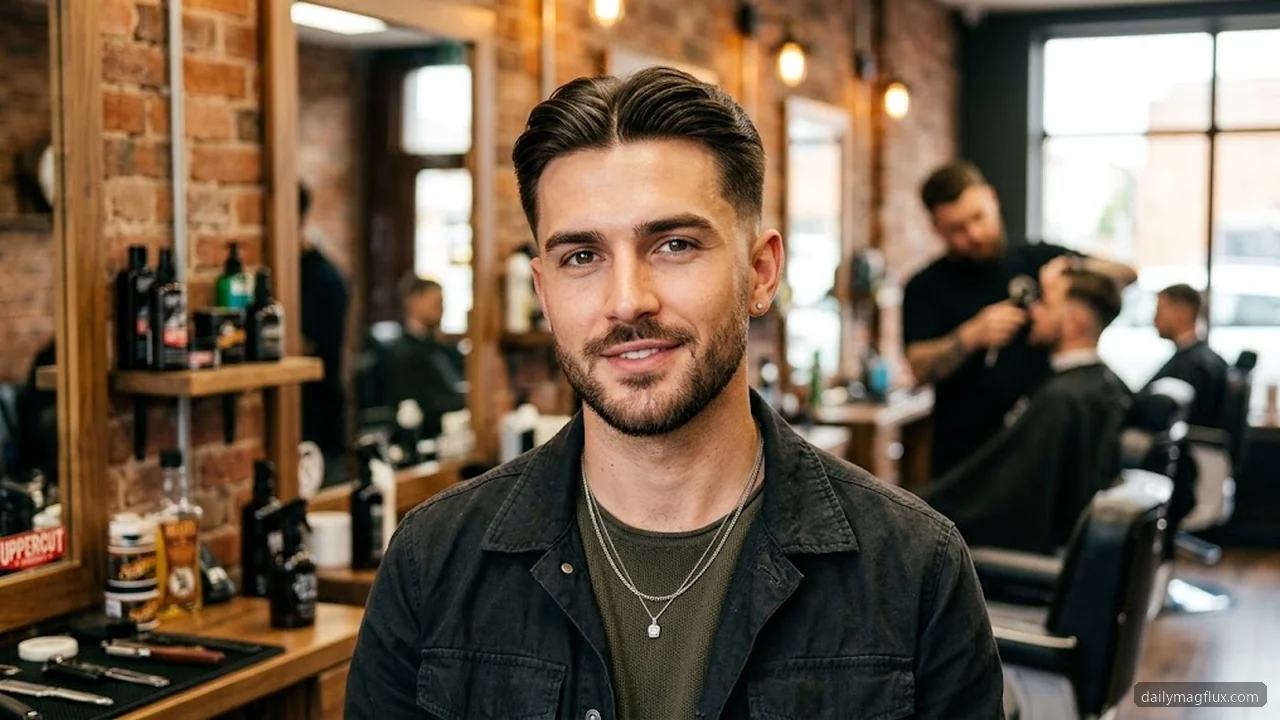
A slick back pushes every strand from the forehead toward the crown with shine. The middle part keeps the same length but sends the hair in two directions instead. Slick back suits thick, straight hair that holds without much product. Pick the slick back for a formal finish, or the part for movement.
Middle Part vs Regular Mid Taper

A regular mid taper stops at the temple and leaves the top to fall wherever it wants. Adding a middle part gives that same cut a fixed line and a neater frame. The parted version needs more styling time each morning, around a minute longer. Choose the plain taper if you like pushing your hair back without a comb.
Frequently Asked Questions
How much hair do I need on top for a middle part?
You need at least three inches on top for the part to hold its shape. Four inches works better, because the extra length lets hair fold over cleanly. If your hair is curly, add an extra inch to cover the shrinkage. Anything shorter than three inches tends to fall flat by midday.
Does a middle part work with curly hair?
Curly hair holds a middle part well once you have enough length. You need five inches on top for 3A to 3B curls to split without pulling flat. Use a curl cream and let the hair dry without touching it. Type 4 coils shrink more, so they need extra length to show the part.
How do I train my hair to hold a middle part?
Train the part by combing it into place every morning while the hair is damp. Hold the comb along the line for ten seconds and let the hair dry that way. After two weeks the roots learn the direction and stay put. A little water or sea salt spray helps the line set faster.
How often do I need a touch-up for a mid taper fade middle part?
A mid taper grows out first at the neckline, so book a touch-up every three weeks. High and skin fades need two weeks, while a low taper can stretch to four. The top only needs a trim every six weeks if the ends stay healthy. If you want the part to stay crisp, keep that three-week rhythm.
Is a middle part or side part more professional?
Both parts read as professional, but the side part looks more traditional in an office. A middle part suits creative fields and looser dress codes. If your hairline is receding at the temples, a side part covers more. Otherwise the middle version looks just as tidy with a soft taper.
What products work best for a middle part?
Start with a matte clay or paste if you want texture and no shine. Use a dime-sized amount of pomade when you need shine and a slick finish. Sea salt spray builds volume on fine or wavy hair before you style. Curly hair does better with a cream that defines the part.
What are the best Mid Taper Fade Middle Part Styles for oval faces?
Oval faces suit the textured middle part with a mid taper and three inches on top. Ask for a #1.5 to #3 blend on the sides for a soft, balanced edge. If your hair is wavy, the same cut looks better with four inches. Both versions keep the oval shape balanced without hiding it.
What guard numbers should I ask for on the sides of a mid taper fade?
Ask for a #1.5 at the bottom blending up to a #3 at the temple for a soft taper. A #1 to #2 range looks tighter and suits thick or dark hair. Skip anything above a #3 on the sides, because it leaves too much weight. Tell your barber the fade should start exactly at your temple line.
Can a mid taper fade middle part work with fine hair?
Fine hair can wear this cut if you build volume at the roots. Ask for a #1 on the sides so the top looks fuller by contrast. Three inches on top is enough when you use a volumizing powder. Without a lift product, the part tends to fall flat within an hour.
Can I grow this cut into a different style?
You can grow this cut into a longer middle part or a low taper fade. Let the top reach six inches and keep trimming only the ends. The sides will need a trim every four weeks while the top catches up. Once the top is long enough, you can switch to a side part.
Conclusion
Book this cut if you want a clean taper with a soft, balanced top. Start with the textured middle part and a #1.5 to #3 blend on the sides. Round faces should tighten the sides, while long faces keep the taper low. Every version needs a touch-up every three weeks.
In the chair, ask for a mid taper at the temple, four inches on top, and a natural neckline. Bring one front and one side photo so your barber matches the taper height. Mid Taper Fade Middle Part Styles only hold their shape with regular trims, so book ahead. Then comb the part every morning so the line stays sharp.

Harrison Jax is a hairstylist and fashion writer with 10+ years in the industry, holding a Certified Cosmetologist license and a Diploma in Fashion Styling from the London College of Style. He’s contributed grooming and trend guides to GQ India and Vogue Blogs, and currently leads DailyMagFlux’s hair and fashion coverage, blending runway insight with practical, everyday styling advice.