

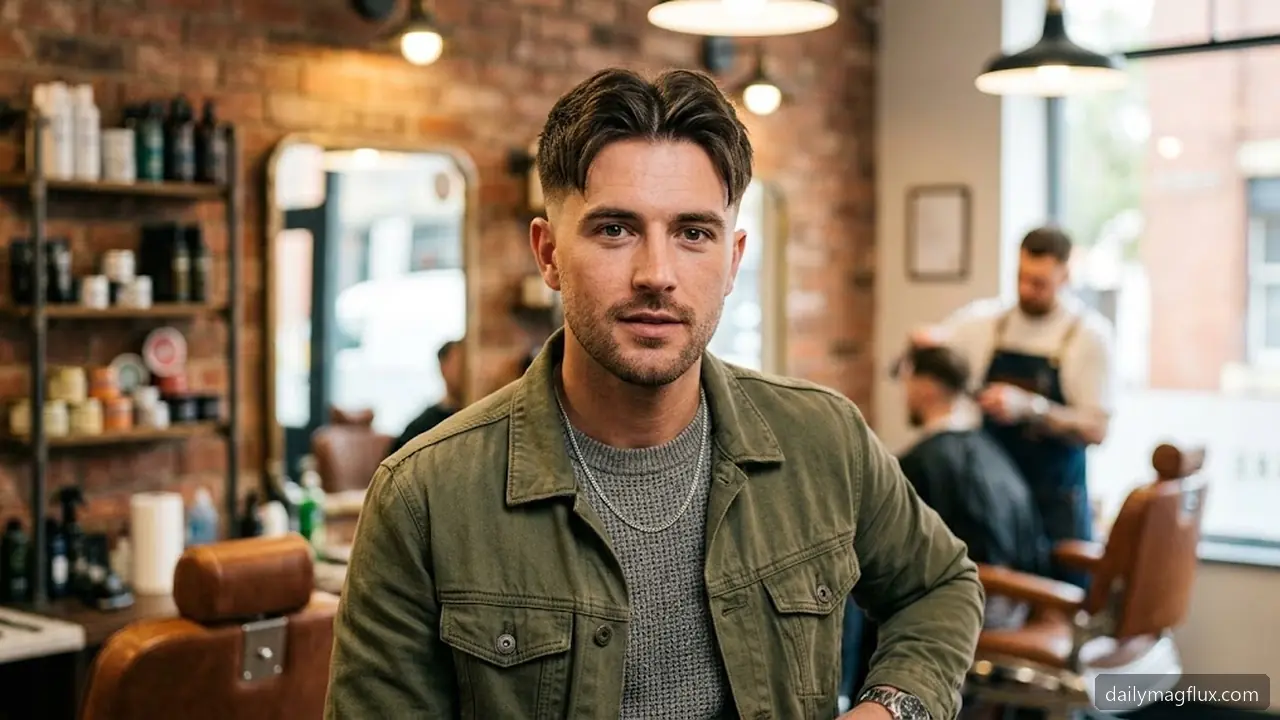
A Low Taper Fade Middle Part keeps your sides short at. The ear and leaves top length to split at the centre. The taper trims only the sideburns and the nape, so the hair above stays long. Top length usually runs two to four inches, which gives the part room to fall. The finish reads tidy at the edges and soft through the crown.
Oval and square faces carry this shape best, while round faces need height. Straight and wavy hair holds the centre split well, but tight coils need a cream. Ask for a #1 at the bottom and a #3 through the blend. Plan on a touch-up every three to four weeks.
Quick Answer
Think of a Low Taper Fade Middle Part as short sides with a soft centre split on top. It suits oval, square and heart faces with straight, wavy or curly hair. Ask for a #1 or #1.5 at the bottom and a #3 through the blend. Book a touch-up every three to four weeks.
What Is This Tapered Middle Part Cut?
Two ideas meet in this cut: a short tapered side and a top that splits down the middle. Every version below keeps the sides close to the head and the top long enough to part. You choose between them by hair type, face shape and styling time. Upkeep matters too, since the sides grow out faster than the top does.
What Is a Low Taper Fade?
A low taper fade is a short cut that starts just above the ear and the neckline. It blends the sideburn and nape into the longer hair above them. The taper keeps some length at the bottom, so it never touches skin. That is what separates it from a fade, which goes much shorter.
Barbers work a low taper with a #1 or #1.5 at the bottom edge. They then blend upward to a #2 or #3 before the hair gets long. The line sits low, so the shape follows the natural hairline instead of fighting it. Most men can wear it at work because the finish stays tidy.
Growth shows first at the nape and around the sideburns, usually within two weeks. A touch-up every three to four weeks keeps the outline looking deliberate. Dark, thick hair shows the blend line more than light or fine hair does. If you want a sharper edge, ask your barber to square the sideburns.
What Is a Middle Part?
A middle part splits the top hair into two halves of equal width. The line runs back from the centre of the hairline toward the crown. Both sides fall forward, which frames the forehead in a balanced way. It needs about three inches of top length to sit properly.
Straight hair parts easily because the strands lie flat against the head. Wavy and curly hair needs a comb and a little product to hold the line. A centre split suits oval, square and oblong faces without much adjustment. Round faces should keep volume low at the sides and higher on top.
The part grows out fastest at the crown, where the hair changes direction. Most men re-wet and re-comb the split every morning before they leave. A cowlick near the hairline can pull the line off centre by an inch. Your barber can cut around it so the part falls where you want.
Why the Middle Part Is Back in Style
The centre split returned with the wider swing back toward longer hair. Men who grew out short crops needed a way to manage the extra length. A middle part gives that length a shape instead of letting it hang flat. It also works with the natural fall of hair from the crown.
Social feeds reward a cut that looks different from the front and the side. The taper keeps the silhouette clean while the top stays soft. That contrast photographs well, which pushed the look into the mainstream. Barbers now cut it weekly, so the request is easy to fill.
It reads tidy in an office and relaxed on a weekend, which few cuts manage. The taper handles the formal part, and the top handles the casual part. You can wear it flat for work and textured for a night out. One cut covers both, so you spend less on switching styles.
Growing out a short cut is the hardest stage, and this style skips it. You keep the sides short while the top gains length month by month. Hair grows about half an inch a month everywhere on the head. The taper hides the awkward stage that a full grow-out brings.
Straight, wavy and curly hair all hold a centre split with the right prep. Curly hair needs a cream, while straight hair needs only a quick comb. That range means most men can wear the style without a texture change. The cut works for teenagers and for men well into their fifties.
Benefits of This Tapered Middle Part
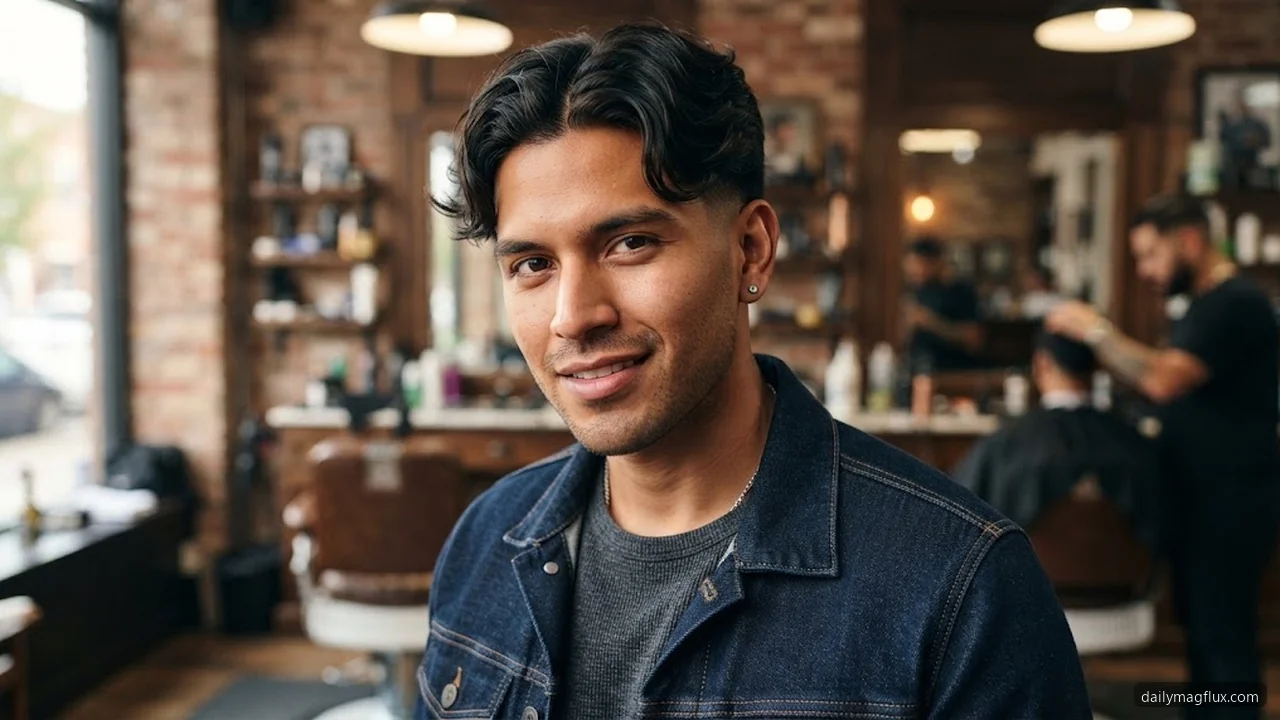
The biggest win is contrast, because short sides make the hair on top look fuller. You also get a cut that grows out gracefully instead of turning shaggy within a month. The taper keeps the neckline and sideburns tidy for the first two weeks after a cut. After that, the overall shape still reads well until your next appointment.
- Face shape range: Oval, square and heart faces wear this cut with very little adjustment.
- Low upkeep: The sides need a touch-up every three to four weeks, not every two.
- Short styling time: Two minutes with a comb and a small amount of product is enough.
- Hot weather comfort: Short tapered sides keep the head cooler than longer hair would.
- Hat friendly: The flat top fits under a cap without losing the centre split.
- Beard pairing: The tapered sides leave a clean line where a beard starts.
- Grow-out plan: You can stop tapering and let the sides catch up with the top.
- Hair type range: Straight, wavy and curly hair all hold the shape with different products.
- Thin hair help: A #2 on the sides instead of skin keeps fine hair looking denser.
- Photo friendly: The line of the part gives photos a clear shape at every angle.
- Barber clarity: Two numbers and one length are enough to explain the cut.
Best Low Taper Fade Middle Part Hairstyles
The styles below cover different lengths, textures and finishes rather than one look. Some lean sharp and groomed, while others stay deliberately soft and undone. Each entry lists the guard numbers, the fade height and who it suits. Pick the one that matches your hair type and the time you will spend. See American Academy of Dermatology hair care guidelines for more.
Guard numbers matter because they decide how short the sides look. Fade height changes the shape, and face shape decides which height helps. A style built for thick hair will fall flat on fine, limp strands. Match the texture first, then adjust the length to suit your face.
Classic Taper with Middle Part
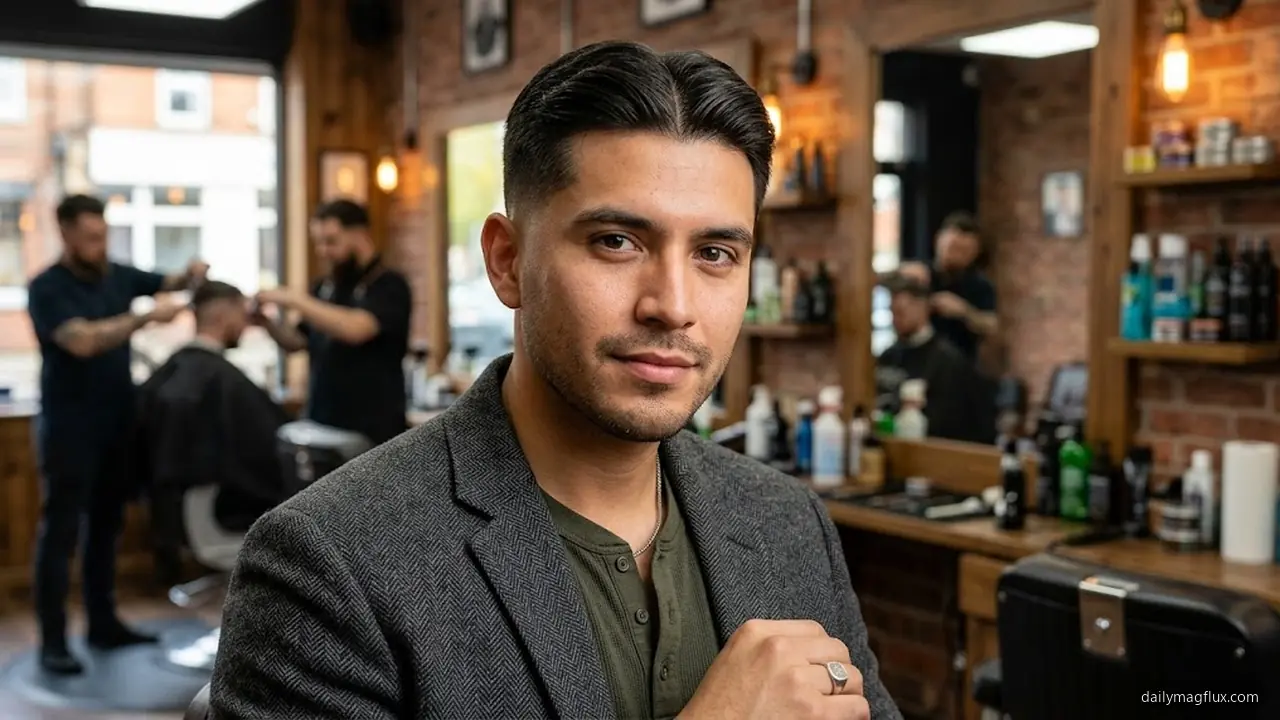
- Guard lengths: A #2 on the sides fading into a #4 just above the ear keeps weight.
- Fade height: The taper starts just above the ear and follows the neckline naturally.
- Face shape fit: Oblong and oval faces gain balance from the fuller sides this cut keeps.
- Styling: A pea-sized amount of matte paste, combed back from the part, holds all day.
Modern Taper with Middle Part

- Guard lengths: Ask for a #1 at the nape that blends up to a #2.5 midway.
- Fade height: A low taper with a crisp line keeps the outline sharp for longer.
- Face shape fit: Diamond faces suit softer sides because the temples need fullness.
- Styling: Six sprays of sea salt spray, scrunched in, give the top a dry finish.
Textured Taper with Middle Part
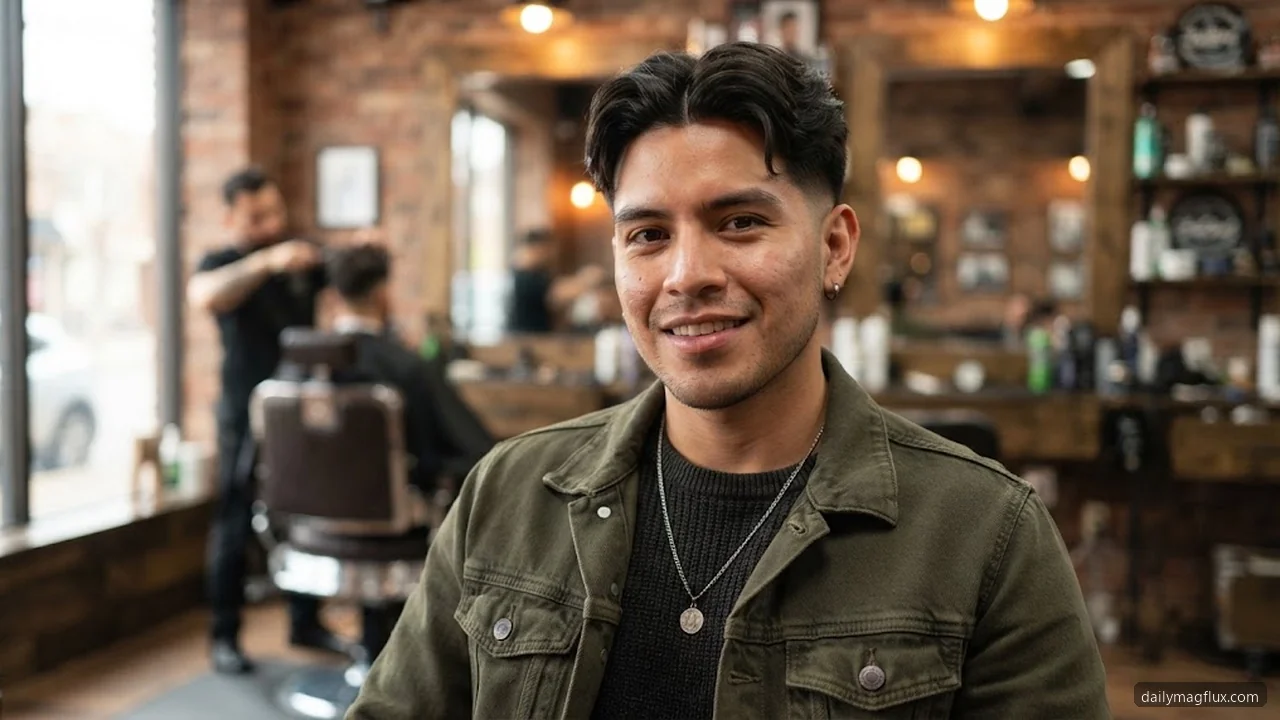
- Guard lengths: A #0.5 at the bottom fading to a #1.5 leaves soft, blended edges.
- Fade height: The low taper sits under the temple and stays soft rather than carved.
- Face shape fit: Square and triangle faces soften their jaw with this much surface texture.
- Styling: Work a dime-sized amount of matte clay through the top, then pinch the ends.
- Guard lengths: A #1 at the bottom and a #2 above the ear keep the sides quiet.
- Fade height: The low taper stays under the temple so the texture carries the eye.
- Face shape fit: Square and heart faces suit texture because it softens a strong jaw.
- Styling: Matte clay pinched through dry ends builds the texture this top depends on.
Messy Taper with Middle Part
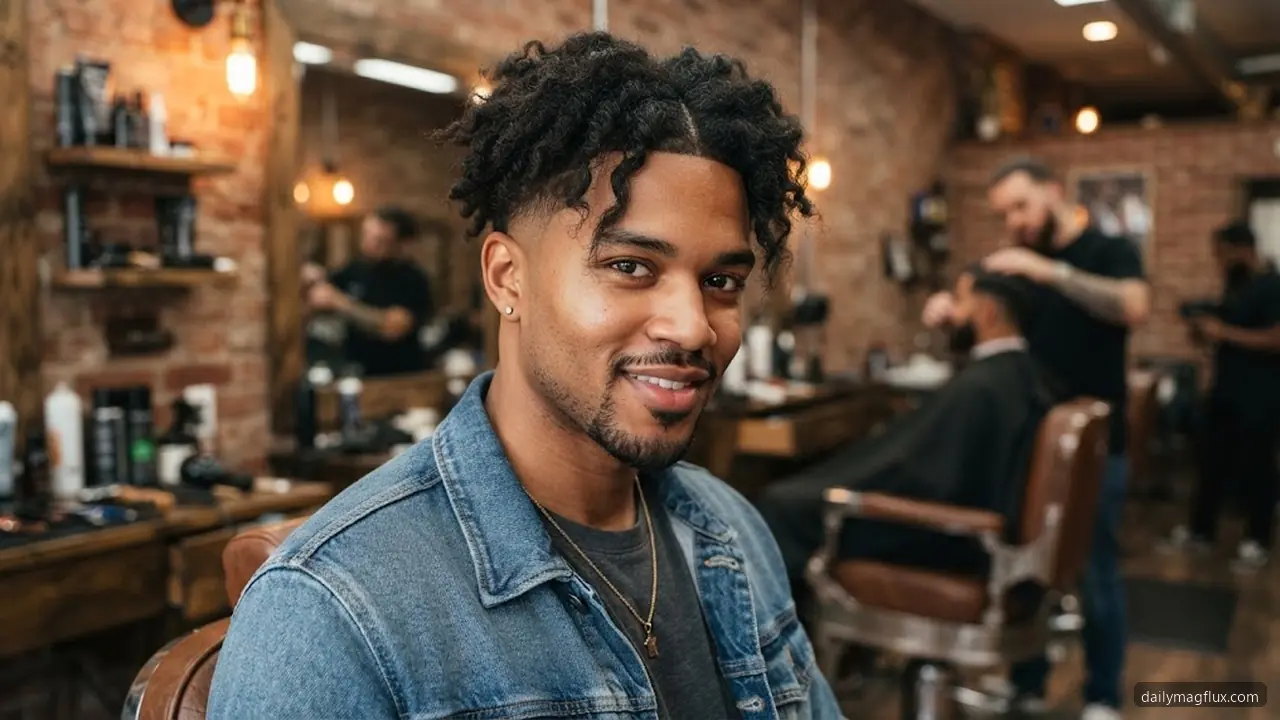
- Guard lengths: A #1 at the bottom and a #2 above the ear keep the shape casual.
- Fade height: The low taper finishes with a natural neckline instead of a hard line.
- Face shape fit: Round and oval faces get height on top without extra width at the sides.
- Styling: A light gel worked through damp hair gives a lived-in look by noon.
Straight Hair Taper with Middle Part
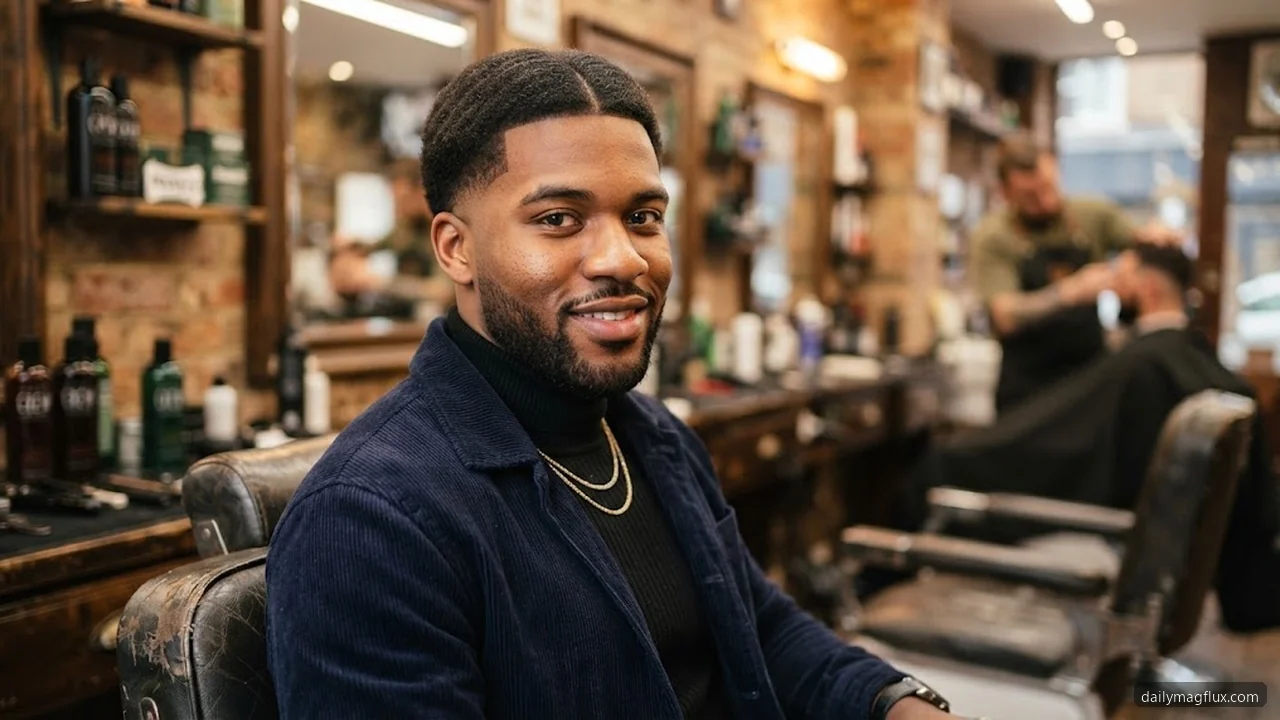
- Guard lengths: Straight hair takes a #2 on the sides and a #4 at the ridge.
- Fade height: Keep the taper low so the straight sides do not look shaved.
- Face shape fit: Oval and heart faces wear the clean line well because straight hair shows detail.
- Styling: A small amount of pomade adds shine and keeps the centre split flat.
Wavy Hair Taper with Middle Part
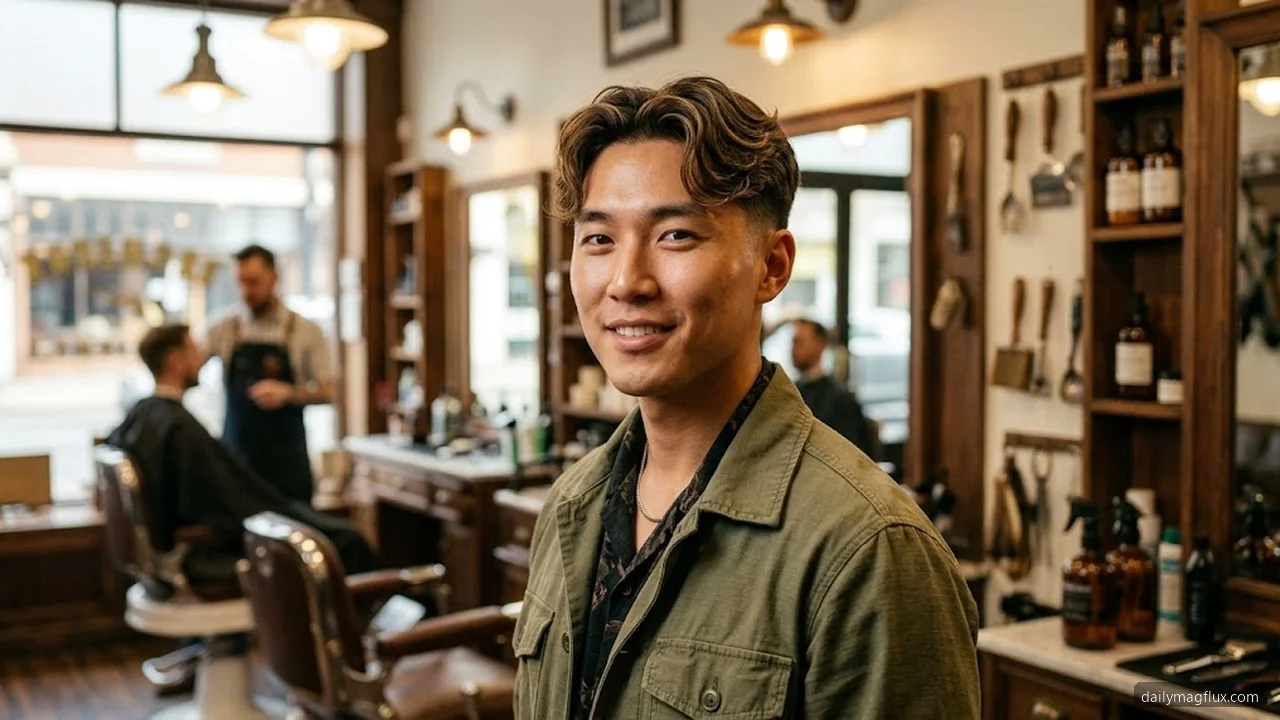
- Guard lengths: A #1.5 on the sides fading into a #3 balances the wavy top.
- Fade height: The low taper starts at the sideburn and stops well below the temple.
- Face shape fit: Diamond and square faces suit waves because the pattern hides tight temples.
- Styling: A small amount of mousse scrunched into damp waves adds hold without crunch.
Curly Hair Taper with Middle Part
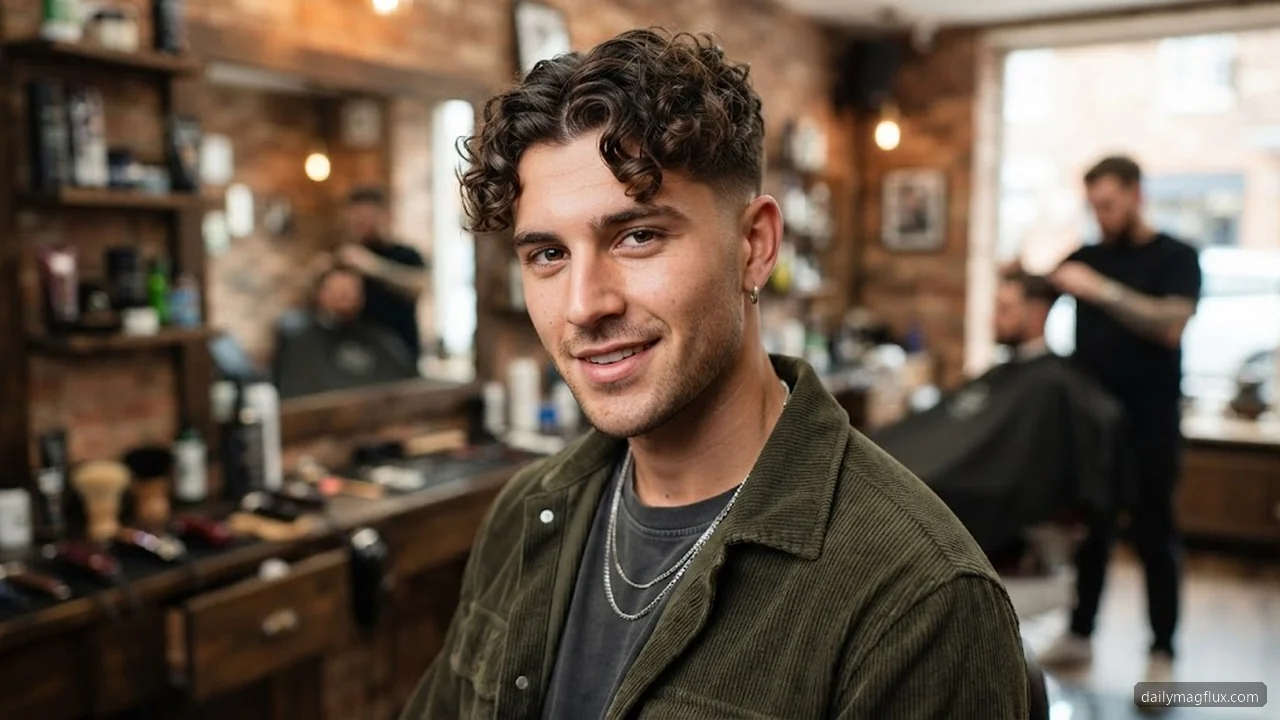
- Guard lengths: Curls need a #1 at the bottom and a #2 through the blend zone.
- Fade height: Keep the taper low so the curl pattern does not lose its weight.
- Face shape fit: Round and diamond faces benefit from the height curls add on top.
- Styling: Rake a pea-sized amount of curl cream through wet coils and let them air dry.
Thick Hair Taper with Middle Part
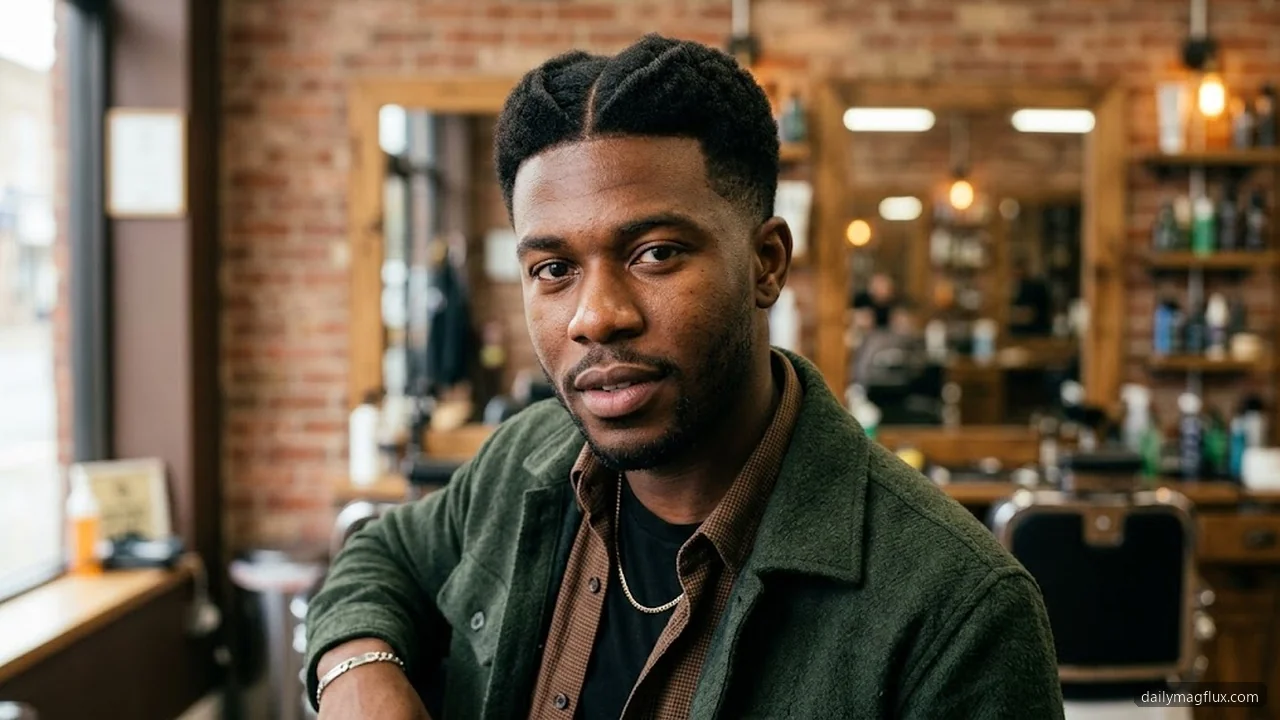
- Guard lengths: Thick hair needs a #0.5 at the bottom to control the blend line.
- Fade height: A low taper keeps bulk off the sides while the top stays heavy.
- Face shape fit: Triangle and oblong faces gain from thick hair because the sides keep weight.
- Styling: A pea-sized amount of matte clay tames thick hair without adding shine.
Thin Hair Taper with Middle Part
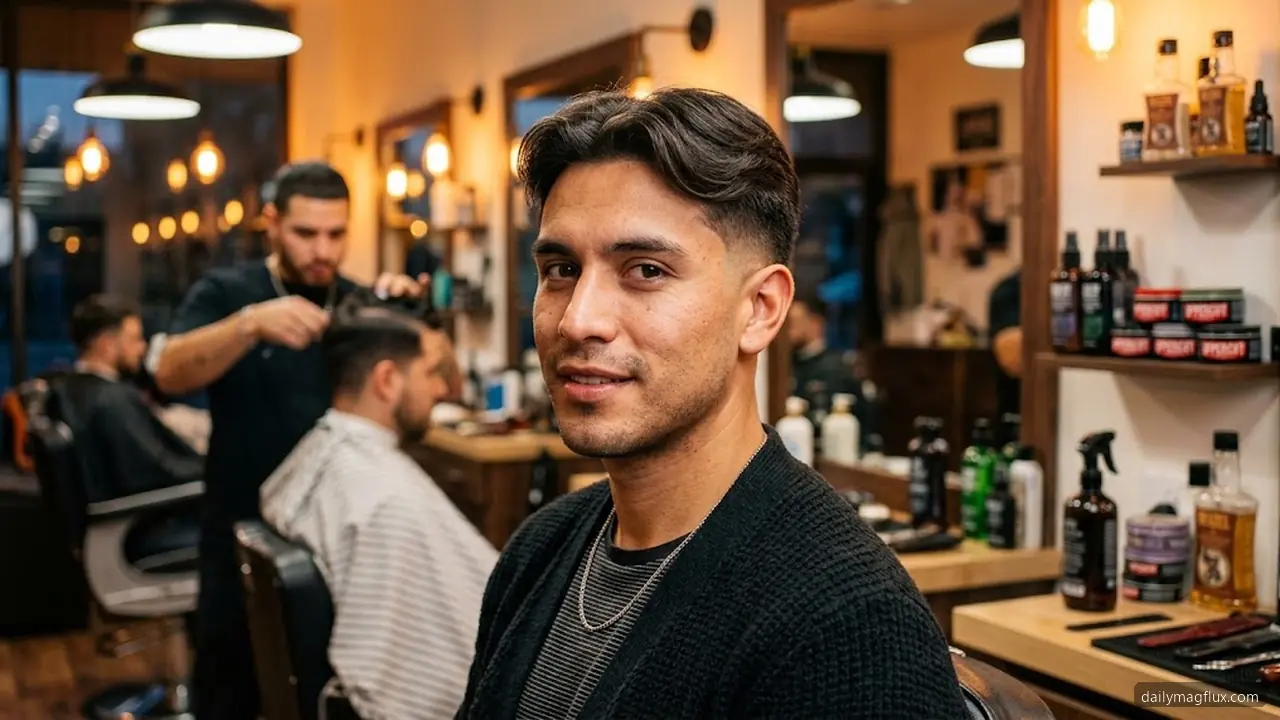
- Guard lengths: Thin hair looks fuller with a #2 at the sides instead of a skin fade.
- Fade height: A low taper suits fine hair because it keeps weight near the nape.
- Face shape fit: Oval and square faces carry fine hair well when the top keeps length.
- Styling: A small amount of light gel on damp roots adds lift without weight.
Asian Hair Taper with Middle Part
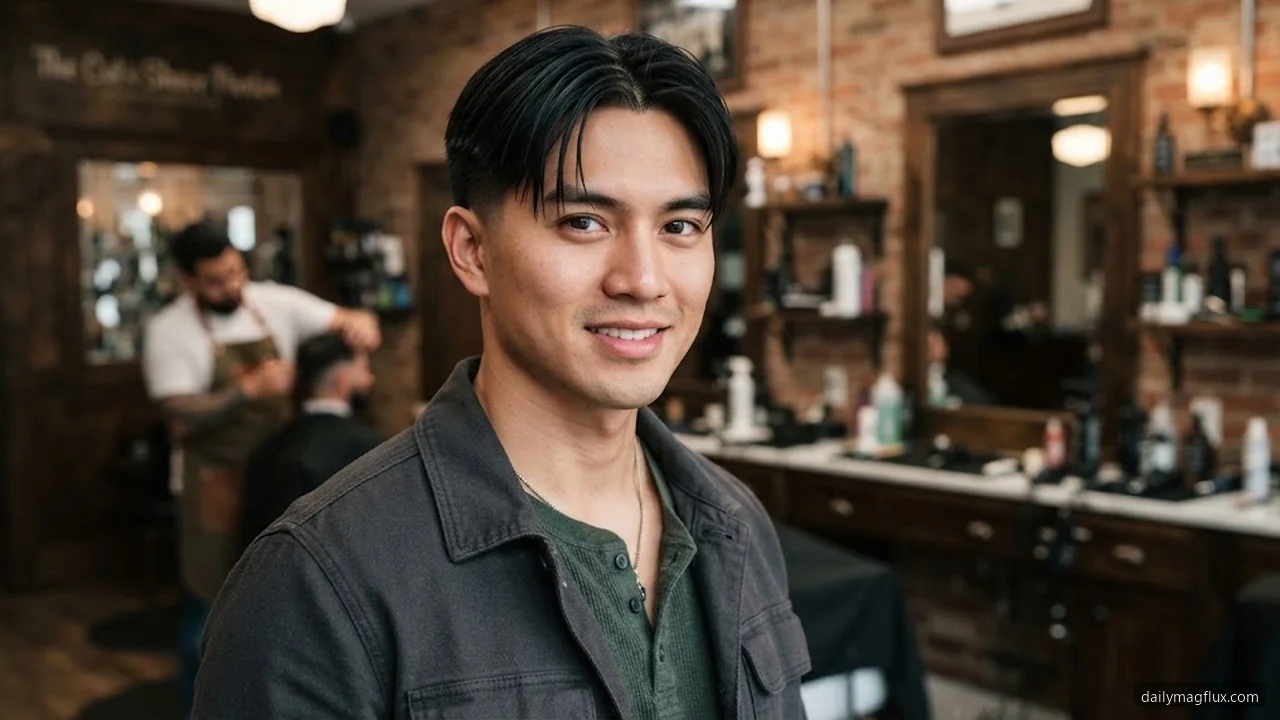
- Guard lengths: Dense straight hair takes a #1 at the bottom and a #3 above.
- Fade height: A low taper works because the sides grow back fast and flat.
- Face shape fit: Round and heart faces suit the height this hair type holds on top.
- Styling: A dime-sized amount of pomade keeps the part flat and the ends tidy.
Blonde Taper with Middle Part
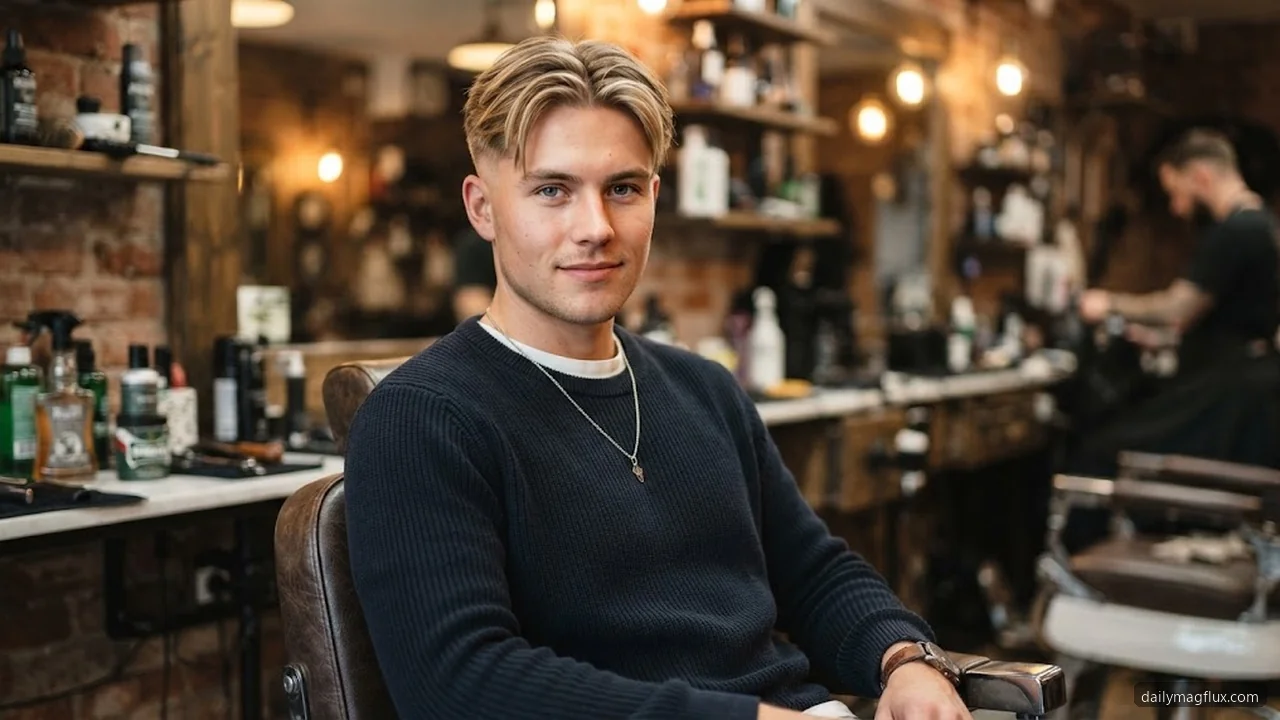
- Guard lengths: Blonde hair hides lines well, so a #1.5 at the bottom blends softer.
- Fade height: Keep the taper low and soft because pale hair hides shadow poorly.
- Face shape fit: Square and oblong faces suit it since light tones soften a strong jaw.
- Styling: A dime-sized amount of matte paste adds grip to fine blonde strands.
Layered Taper with Middle Part
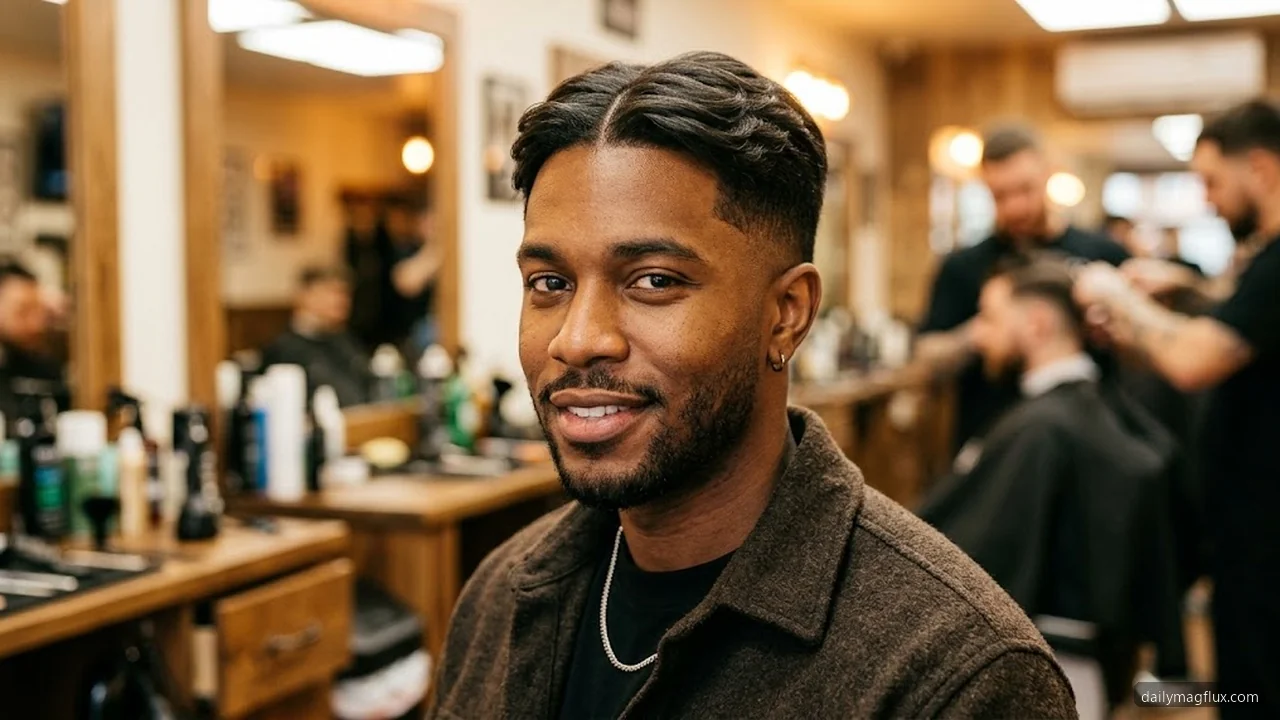
- Guard lengths: A #2 on the sides with a #4 at the ridge supports the layers.
- Fade height: The low taper stays below the temple so the layers move freely.
- Face shape fit: Oblong and diamond faces gain width from layers that sit at the cheekbone.
- Styling: A few sprays of sea salt spray give layers separation without any stickiness.
Long Top Taper with Middle Part
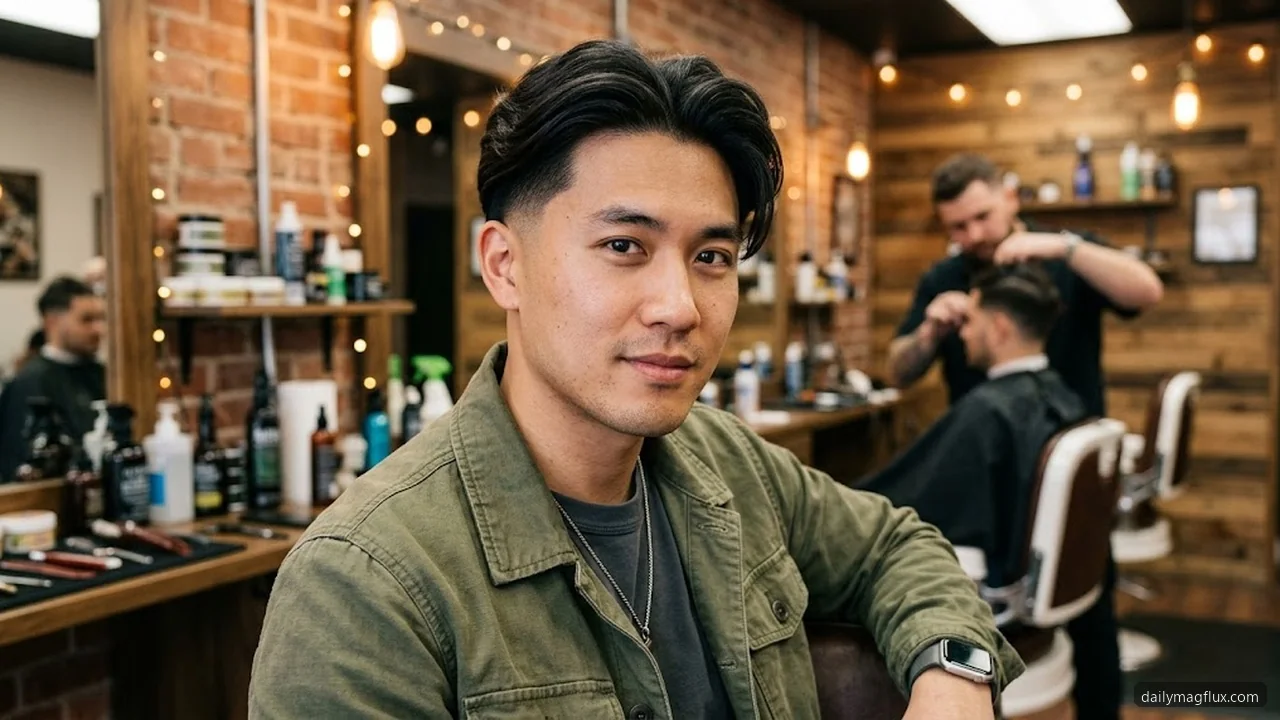
- Guard lengths: A #1 on the sides keeps the contrast strong under four-inch top length.
- Fade height: A low taper is the only fade that leaves the top this heavy.
- Face shape fit: Heart and oblong faces should skip long tops because height lengthens the face.
- Styling: A pea-sized amount of pomade run through damp hair keeps the split clean.
Short Taper with Middle Part
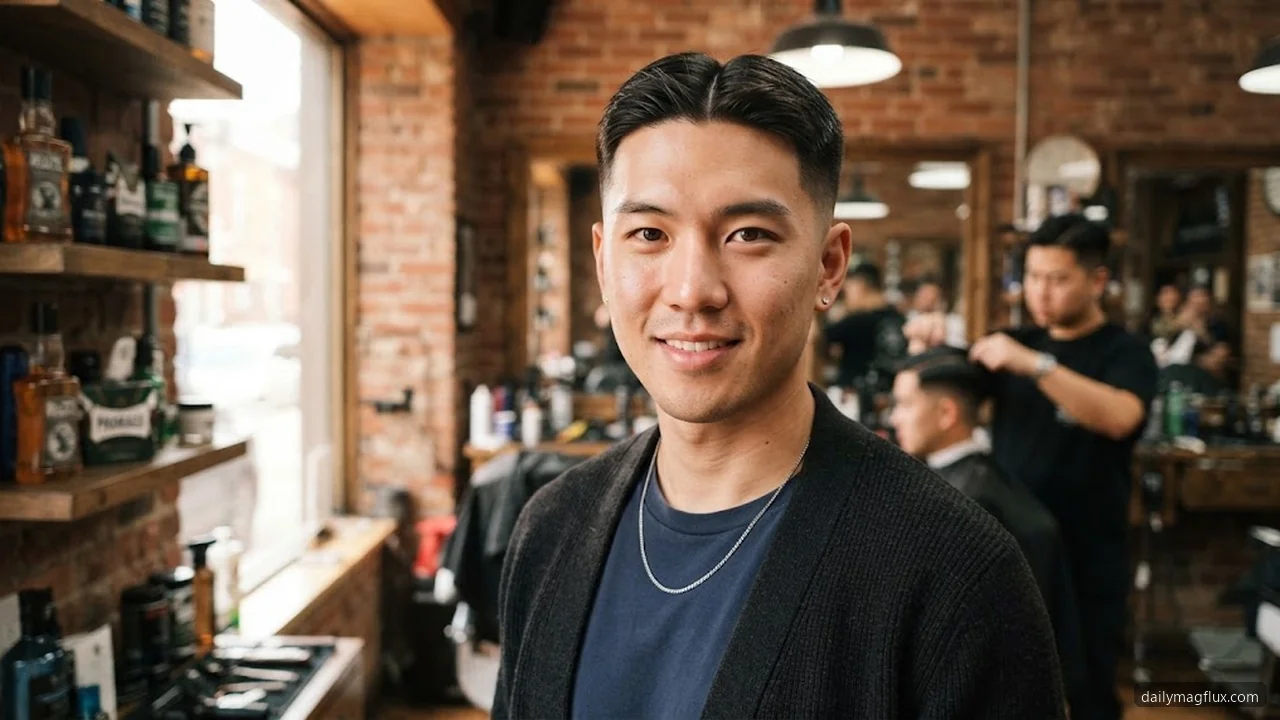
- Guard lengths: A three-inch top with a #1 at the bottom keeps the cut short overall.
- Fade height: A low taper suits short cuts because the sides stay neat between visits.
- Face shape fit: Square faces look sharp with a short top and tight sides.
- Styling: A dime-sized amount of paste is enough to set the part in place.
Middle Part Taper Fade
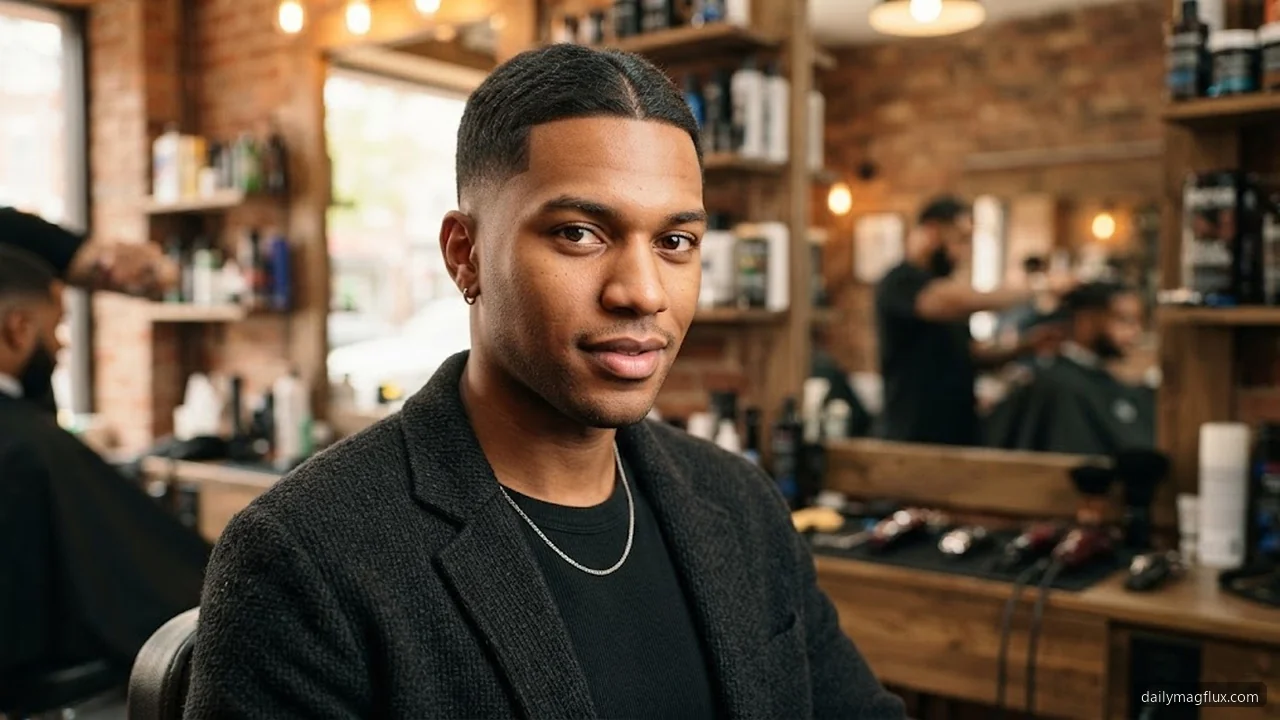
- Guard lengths: Ask for a #1.5 at the nape blending up into a #3.
- Fade height: This taper keeps length at the sideburn instead of shaving it away.
- Face shape fit: Oval and round faces suit it because the top adds height without bulk.
- Styling: A few sprays of sea salt spray build grip before you comb the part.
Fringe Taper with Middle Part
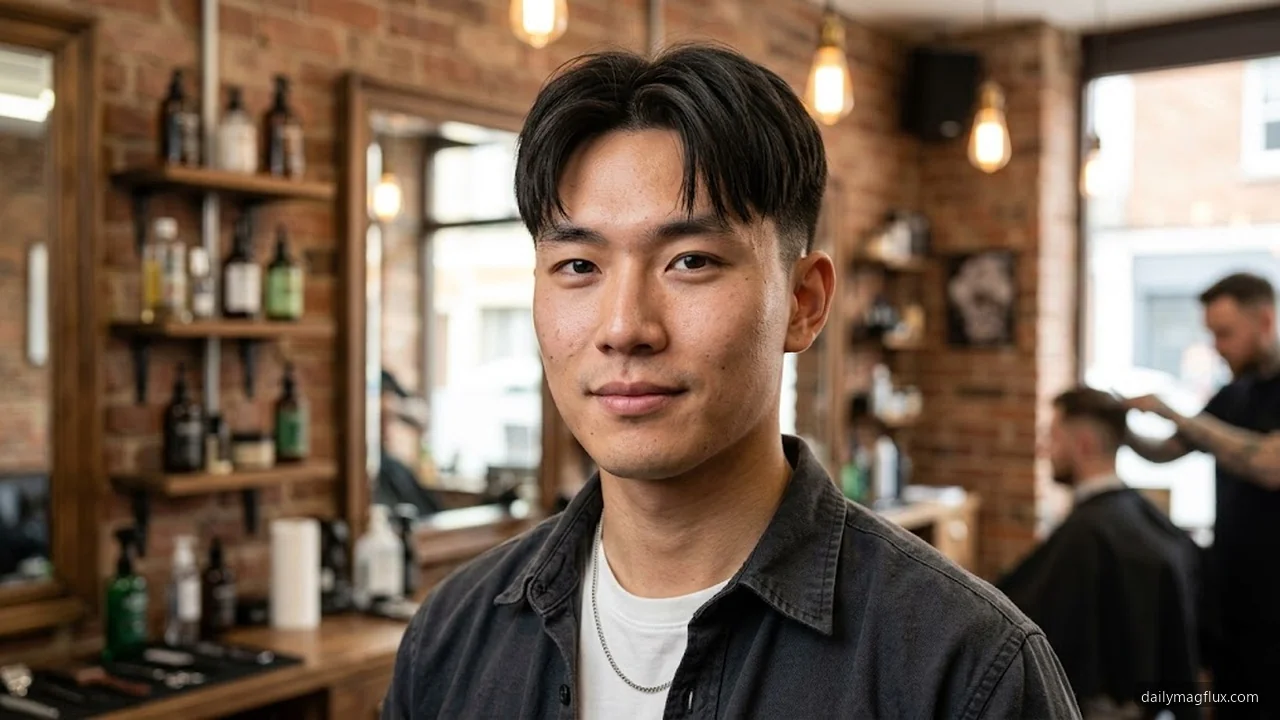
- Guard lengths: A #1 at the bottom and a #2.5 above the ear leave room for fringe.
- Fade height: Keep the taper low and let the fringe fall past the brow.
- Face shape fit: Heart and oblong faces suit fringe because it shortens a long forehead.
- Styling: Work a pea-sized amount of matte clay into dry fringe and sweep it sideways.
Curtain Taper with Middle Part
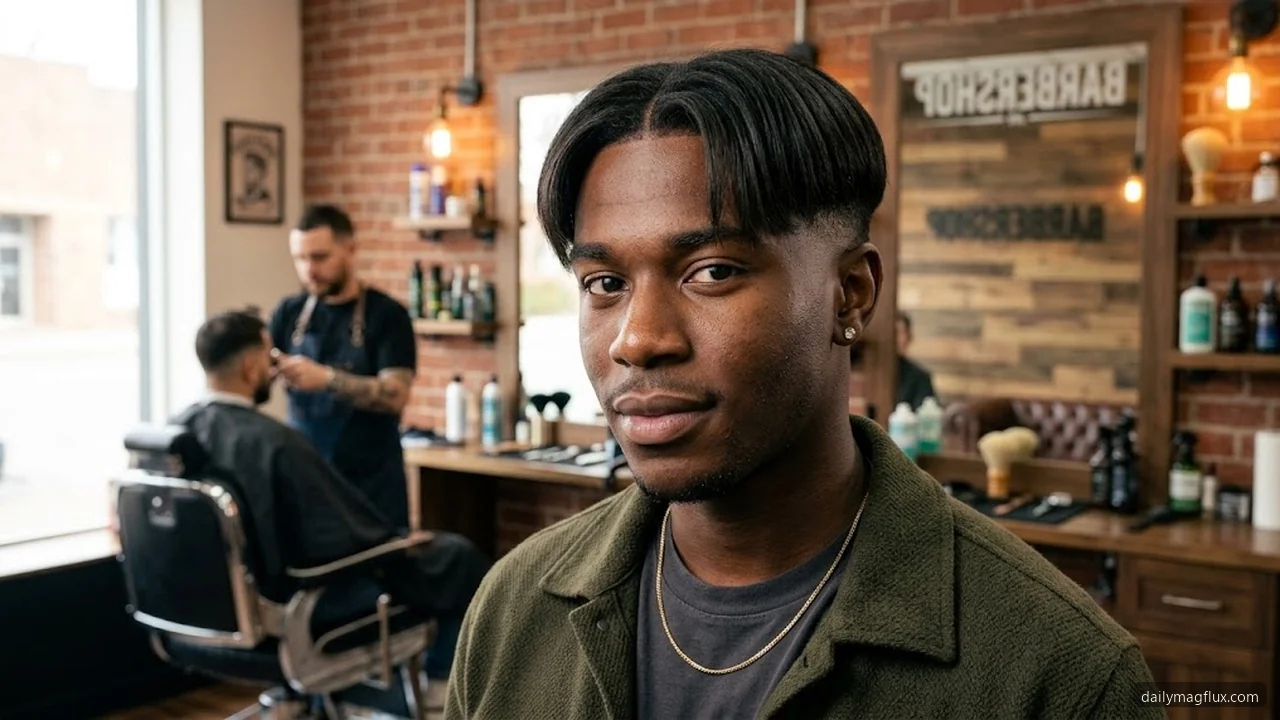
- Guard lengths: A #2 on the sides fading to a #4 supports the curtain volume.
- Fade height: The low taper hides under the curtain, so the sides look longer.
- Face shape fit: Diamond and heart faces suit curtains because the sweep covers the temples.
- Styling: A small amount of mousse on damp roots keeps the curtain lifted all day.
Beard with Taper and Middle Part
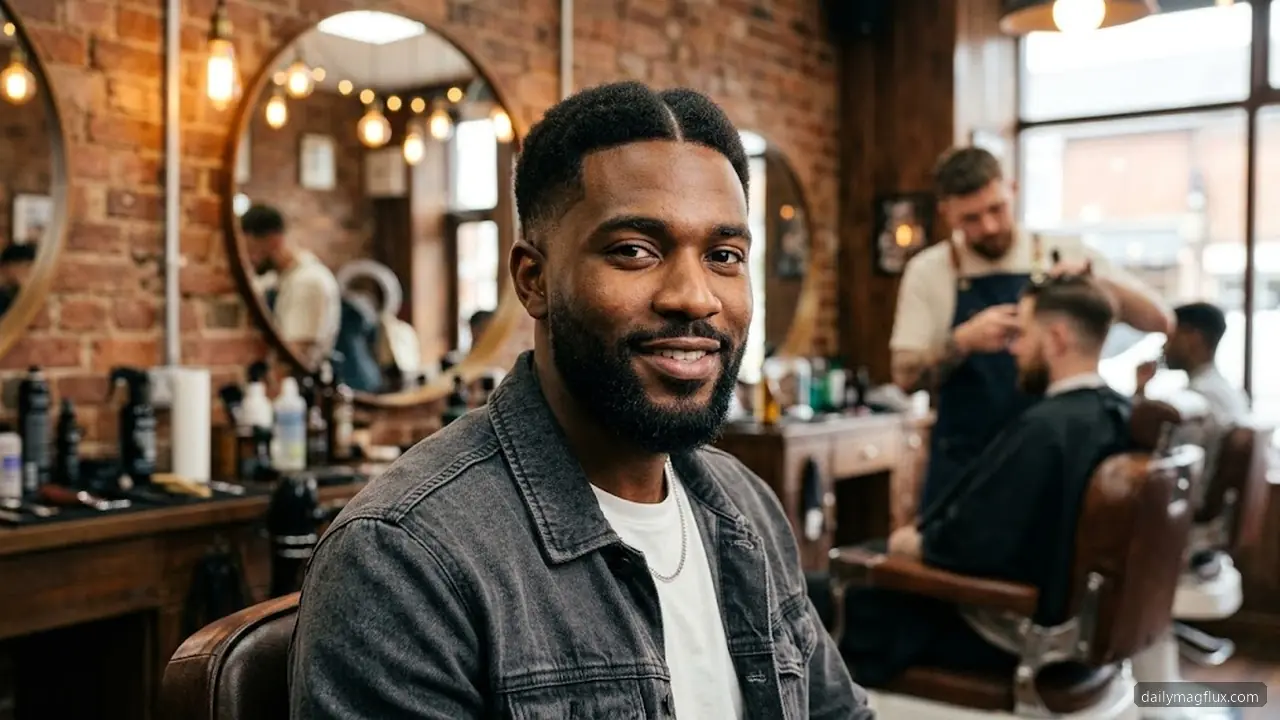
- Guard lengths: A #1 at the sideburn blends into the beard line without leaving a gap.
- Fade height: Keep the taper low so it meets the beard at the jaw corner.
- Face shape fit: Square faces suit a beard because it adds weight below the jaw.
- Styling: A dime-sized amount of beard balm keeps the beard tidy beside the part.
Volume Taper with Middle Part
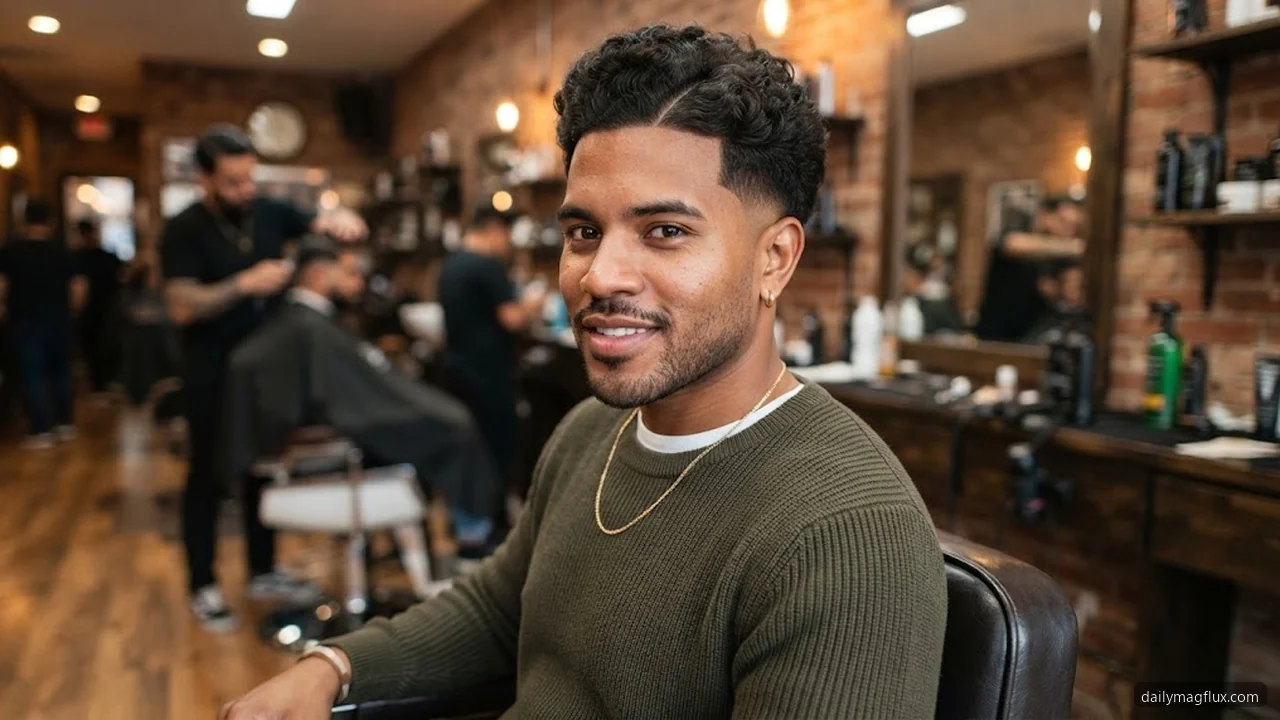
- Guard lengths: A #2 on the sides and a #4 at the ridge support a lifted top.
- Fade height: The low taper sits under the temple so the height reads from the front.
- Face shape fit: Round and diamond faces gain shape when the top carries height.
- Styling: A few sprays of sea salt spray at the roots lift the top before combing.
Professional Taper with Middle Part
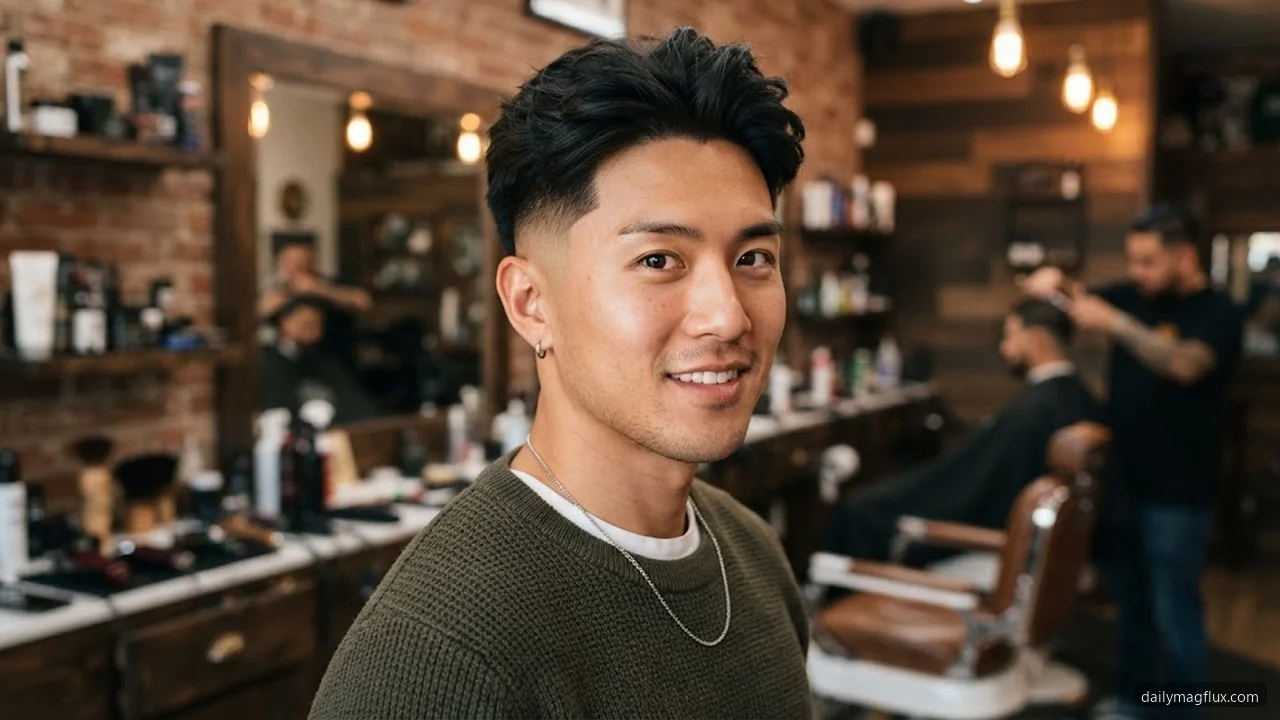
- Guard lengths: A #1.5 at the nape and a #3 above keep the sides office-ready.
- Fade height: The low taper stops below the temple, so no hard line shows.
- Face shape fit: Oval and square faces suit the neat finish this cut gives.
- Styling: A small amount of pomade gives a controlled shine that suits a workplace.
Teen Taper with Middle Part
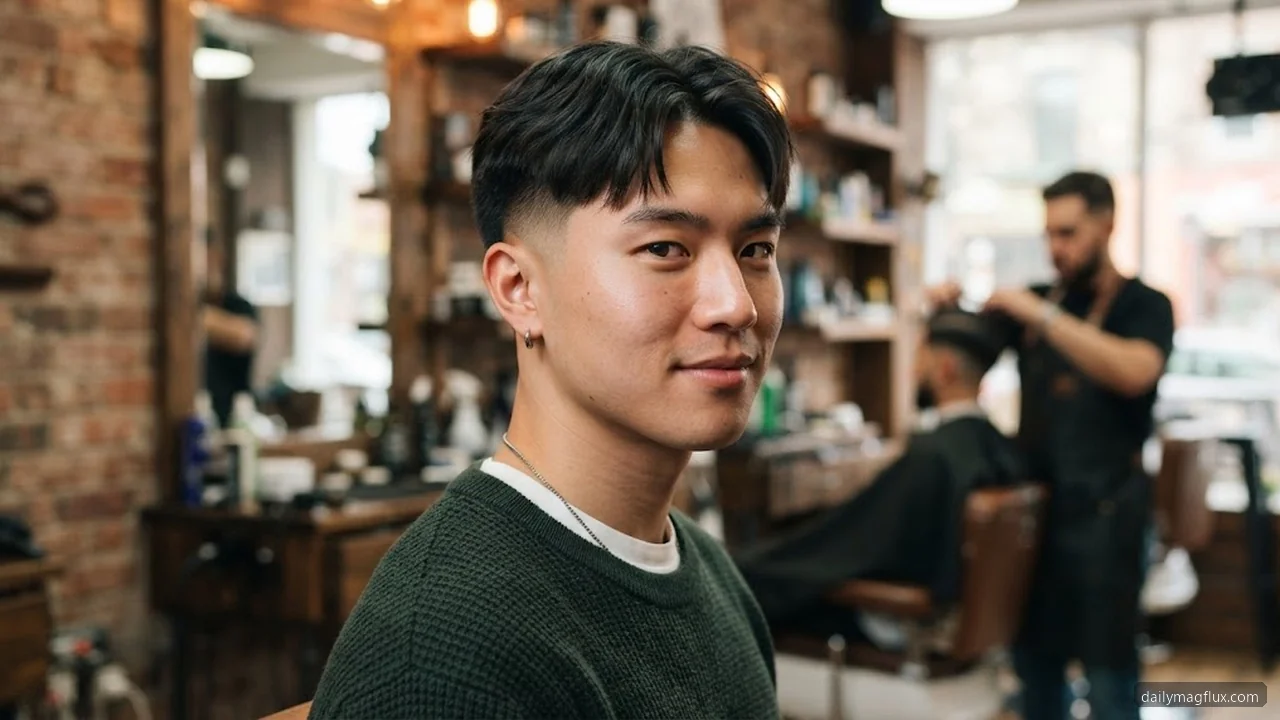
- Guard lengths: A #2 on the sides and a #3 on top keep the cut easy to manage.
- Fade height: The low taper grows out neatly, so one cut lasts a school term.
- Face shape fit: Round and heart faces suit the soft height this cut keeps on top.
- Styling: A pea-sized amount of light gel holds the part without looking stiff.
Natural Taper with Middle Part
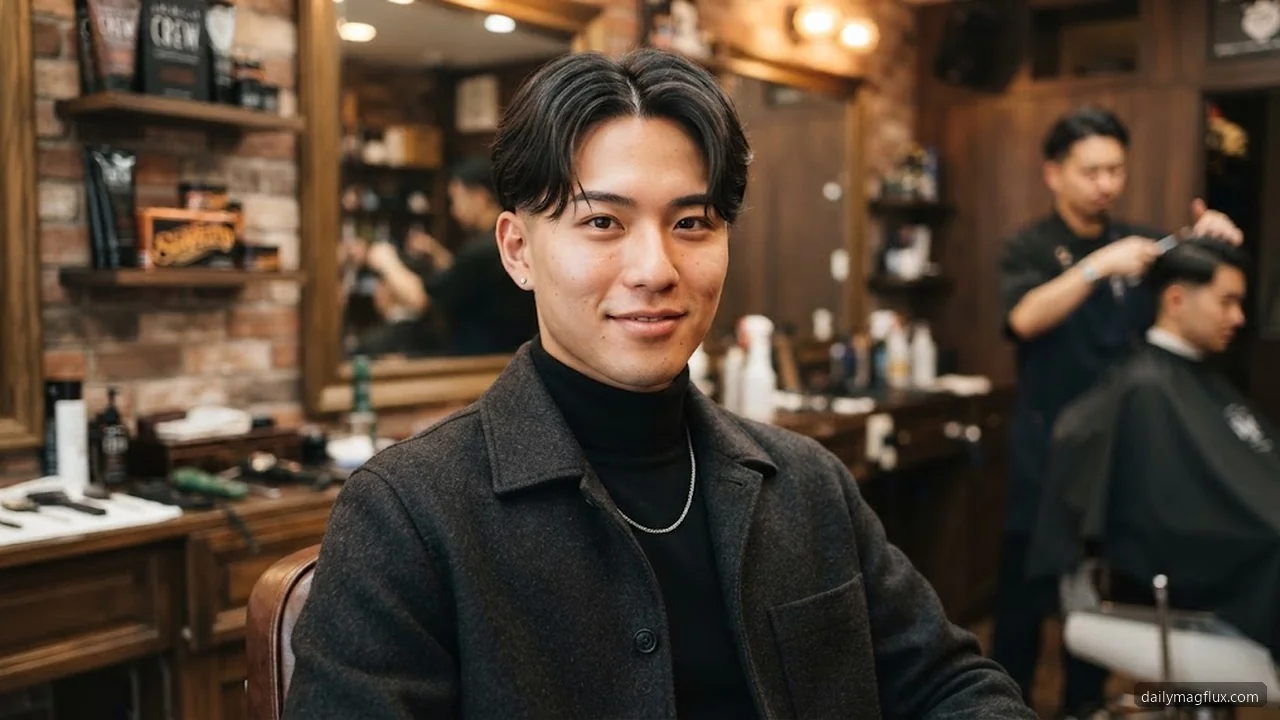
- Guard lengths: A #1 at the bottom fading into a #2 leaves a soft, unlined edge.
- Fade height: The taper follows the natural hairline instead of a straight cut line.
- Face shape fit: Oblong and oval faces suit the soft edges this cut leaves behind.
- Styling: Damp fingers and a wide-tooth comb are enough to set this part.
Clean Taper with Middle Part
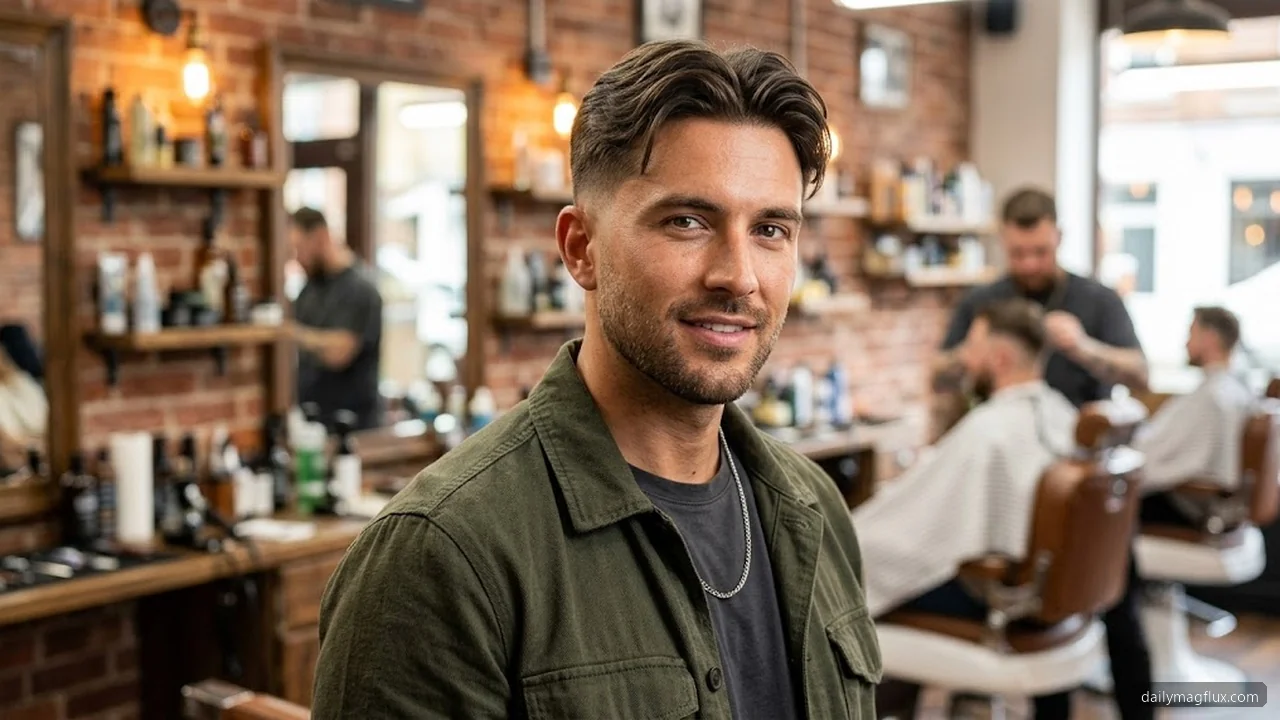
- Guard lengths: A #1.5 at the nape blending into a #3 gives a crisp, even finish.
- Fade height: The low taper ends in a squared neckline instead of a rounded one.
- Face shape fit: Diamond and square faces suit clean lines because they show structure.
- Styling: A dime-sized amount of paste sets the part sharp for a full workday.
Casual Taper with Middle Part
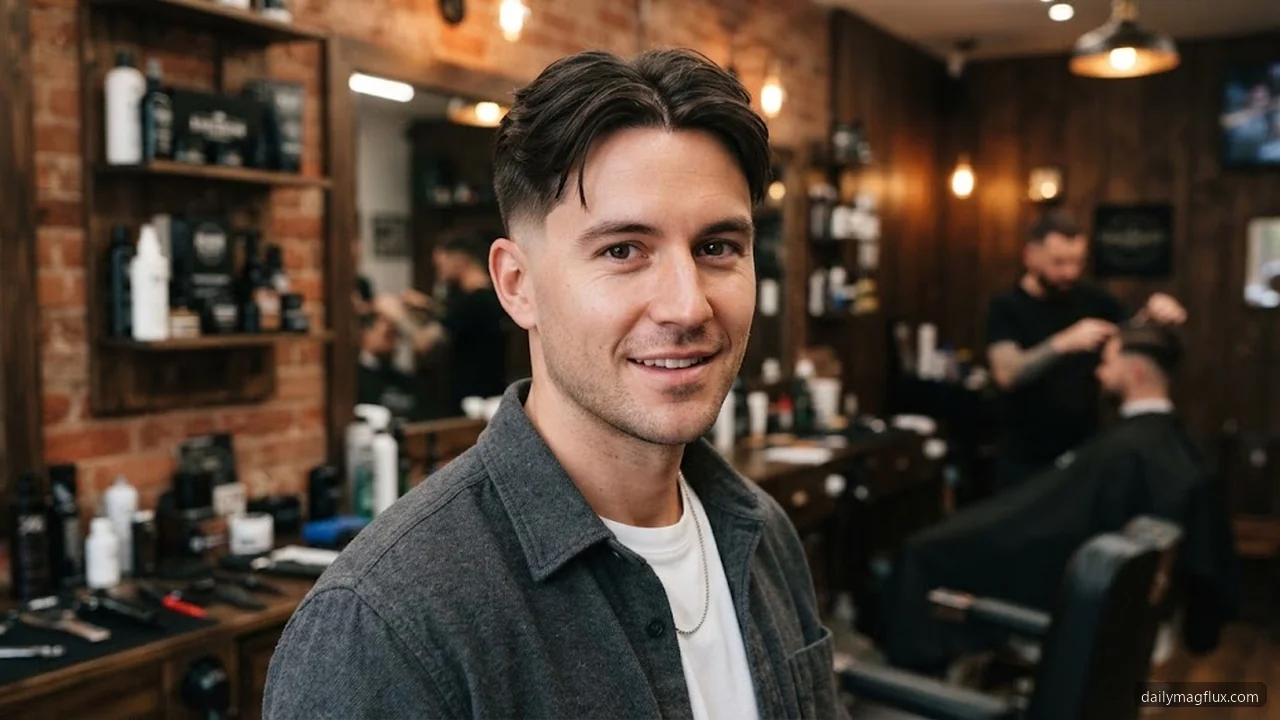
- Guard lengths: A #2 on the sides and a #3 at the ridge keep the cut low-key.
- Fade height: The taper starts at the sideburn and fades out before the ear top.
- Face shape fit: Oblong and triangle faces suit the relaxed shape this cut keeps.
- Styling: Two sprays of sea salt spray and a quick scrunch finish this cut.
Skin Fade Sides with Middle Part
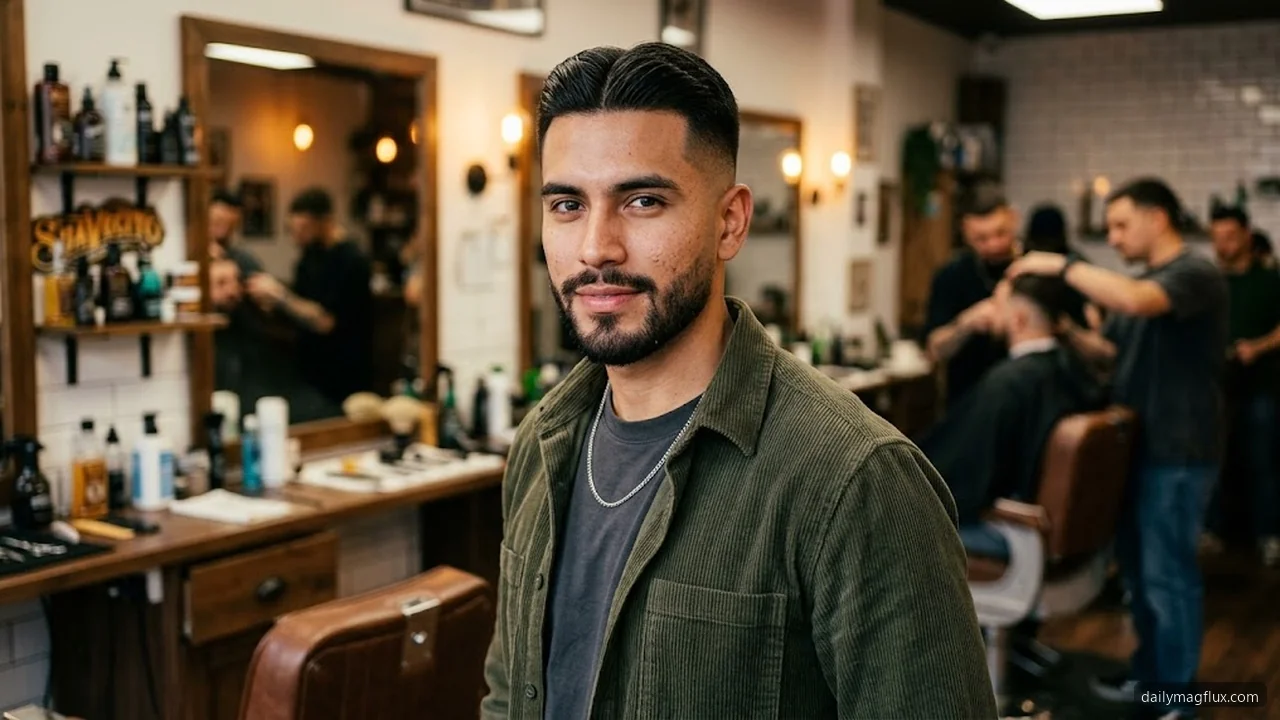
- Guard lengths: The sides go to #0 or a foil shaver while the top keeps three inches.
- Fade height: This is a skin fade, so the sides sit far shorter than a taper leaves them.
- Face shape fit: Round and square faces suit bare sides because tight sides slim the face.
- Styling: A pea-sized amount of matte clay keeps the long top from looking flat.
Drop Fade with Middle Part
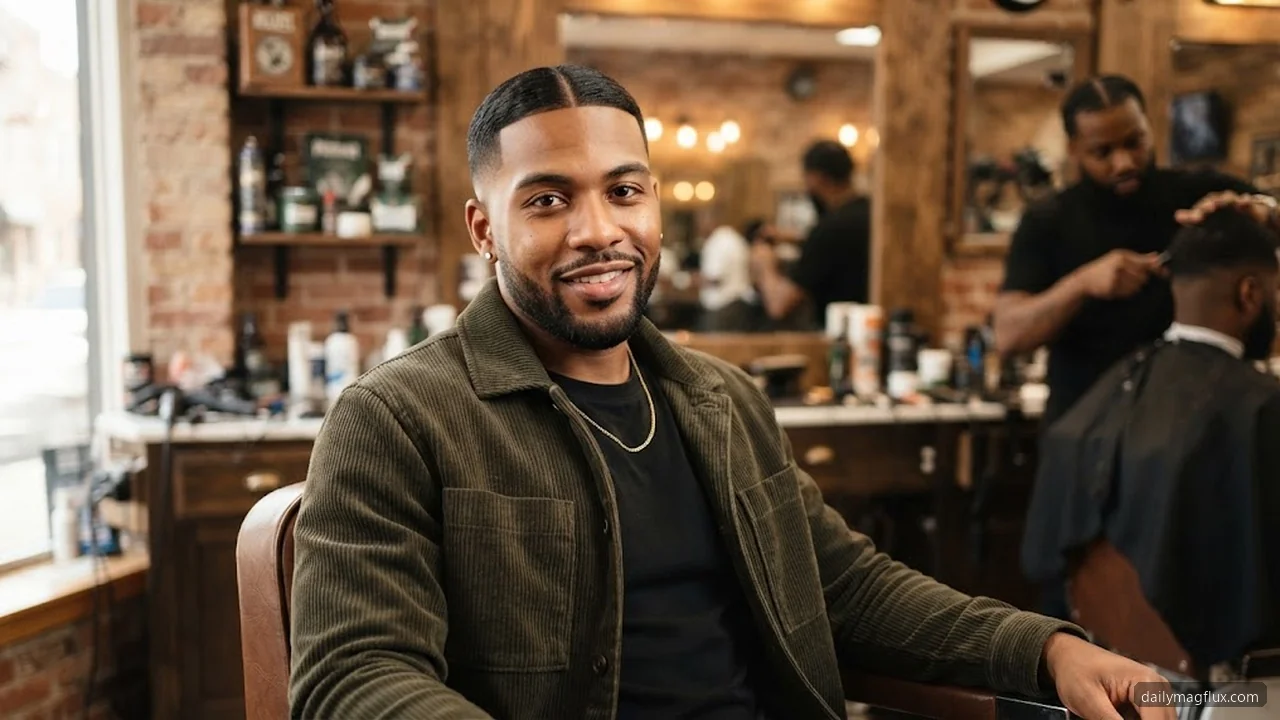
- Guard lengths: A #1 above the ear drops behind it to a #0.5 at the nape.
- Fade height: The drop curves down behind the ear and leaves the back longer.
- Face shape fit: Oblong and triangle faces suit the weight a drop fade keeps behind the ear.
- Styling: A small amount of pomade keeps the longer back looking shaped, not shaggy.
Burst Fade with Middle Part
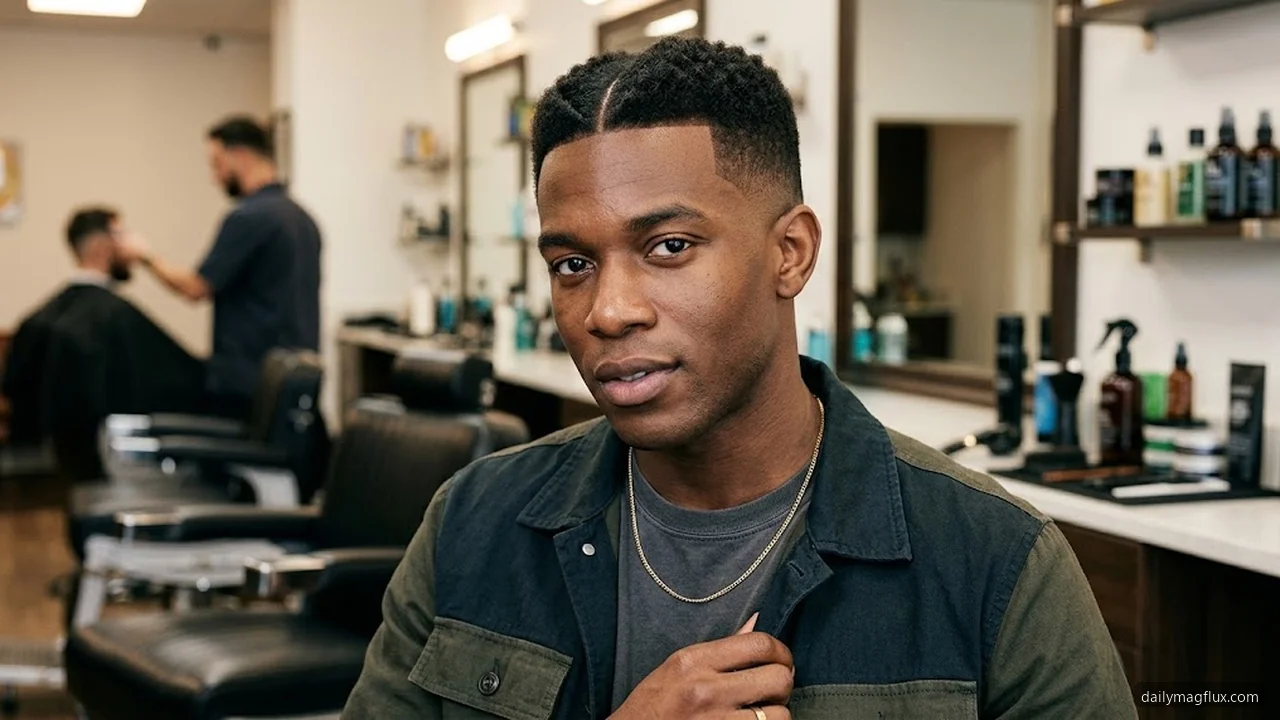
- Guard lengths: A #0.5 arcs around the ear while the back stays at a #3.
- Fade height: The burst shape wraps the ear and leaves the back much longer.
- Face shape fit: Triangle and square faces suit the hair a burst fade leaves around the ear.
- Styling: A dime-sized amount of matte paste keeps the arc crisp and the back smooth.
How to Ask Your Barber for This Cut
A clear request saves you from a cut you did not want. Barbers hear “middle part” and “taper” all day, so the numbers matter more than the name. Say the guard at the bottom, the guard at the top of the blend. The length you want left on top. Add whether you want the neckline squared or natural. See Healthline hair health and wellness resources for more.
- Start with the fade, then the top length, so your barber builds the shape in order.
- Ask for a low taper rather than a fade if you want length at the sideburn.
- Mention any cowlick near your hairline, because it pulls the centre split off balance.
- Say whether you want the neckline squared off or left natural at the nape.
- Bring one photo from the front and one from the side to show the shape.
- Confirm the guard numbers out loud before the clippers touch your head.
Best Face Shapes
Not every face wears a centre split and a short taper equally well. The fade tightens the sides, which changes how wide your face looks. The part adds height and a frame at the forehead. Small changes in fade height fix most shape problems, so the notes matter more than the cut name.
Face Shape Compatibility
Fade height is your main tool for balancing a face. A low taper keeps weight near the ear, which widens the lower face a little. Raising the fade to the temple slims the sides and lengthens the face. Your barber can shift that line without changing the top.
| Face Shape | Why It Works | Barber Adjustment |
|---|---|---|
| Oval | Balanced length and width keep the tight sides and centre split in proportion. | Keep the taper low and the top near three inches. |
| Round | Height on top stretches the face while short sides stop extra width. | Raise the fade to the temple and take the sides to a #1. |
| Square | A broad forehead and strong jaw carry a sharp taper line well. | Leave texture on top and soften the corner of the fade. |
| Oblong | A long face gains nothing from tall top volume, so keep the crown flat. | Keep three inches on top and leave the sides fuller at a #3. |
| Heart | A wide forehead and narrow chin suit a swept fringe at medium length. | Skip tall volume and let the part fall forward. |
| Diamond | Wide cheekbones look best with fullness left at the forehead and temples. | Keep the taper below the temple and skip very tight sides. |
Oval Face
Oval faces carry a centre split without much help, because the length and width already match. Keep the taper low and the top near three inches, which suits almost any hair type. Skip a high fade, since the tighter sides add nothing your face needs. A soft neckline looks better than a squared one here.
Round Face
Round faces need height on top and tighter sides, so the fade should sit higher than usual. Ask for a mid taper that starts at the temple, which slims the sides without going bare. Keep the top at three inches or more and wear it lifted at the roots. Skip any volume at the sides, because it widens a face that is already wide.
Square Face
A strong jaw and broad forehead carry the sharp lines of a taper well. Texture on top softens the angles, so ask for a matte finish rather than a slick one. A low taper keeps the sides neat without squaring the head further. Most lengths work here, including a short top at two inches.
Diamond Face
Wide cheekbones with a narrow forehead and chin need fullness at the top corners. Keep the taper low and leave the sides a little longer than a skin fade would. Very tight temples make the cheekbones look wider, so skip them entirely. A medium top with a soft sweep at the forehead balances the shape.
Heart Face
A wide forehead and a narrow chin suit a fringe or a side sweep better than tall volume. Let the part fall forward and keep the top at medium length. A low taper at the sides keeps the width up top from taking over. Skip a high fade, which would expose more forehead.
Oblong Face
A face that is clearly longer than it is wide should skip tall height on top. Keep the crown flat and leave some fullness at the sides instead. A fringe or a low part with a slight sweep shortens the face visually. Ask for a #3 on the sides so they never look pinched.
Best Hair Types
Texture decides how much work this cut needs each morning. Straight hair falls into the part on its own, while curls need a cream to hold the line. Density matters too, because fine hair looks thinner with tight sides. Choose by texture first, then by how much time you want to spend styling each morning.
Straight Hair
Straight hair splits cleanly down the centre and holds the line all day. It can show clipper marks, so the blend has to be cut carefully. A #2 on the sides and a #4 at the ridge keep the transition soft. Use pomade if you want shine, or a matte paste for a drier finish.
Wavy Hair

Waves add movement, so the part looks softer and less rigid than it does on straight hair. A #1.5 on the sides and a #3 above the ear balance the extra volume. Sea salt spray gives waves grip without weighing them down. Comb the part while the hair is damp, then leave it alone.
Curly Hair
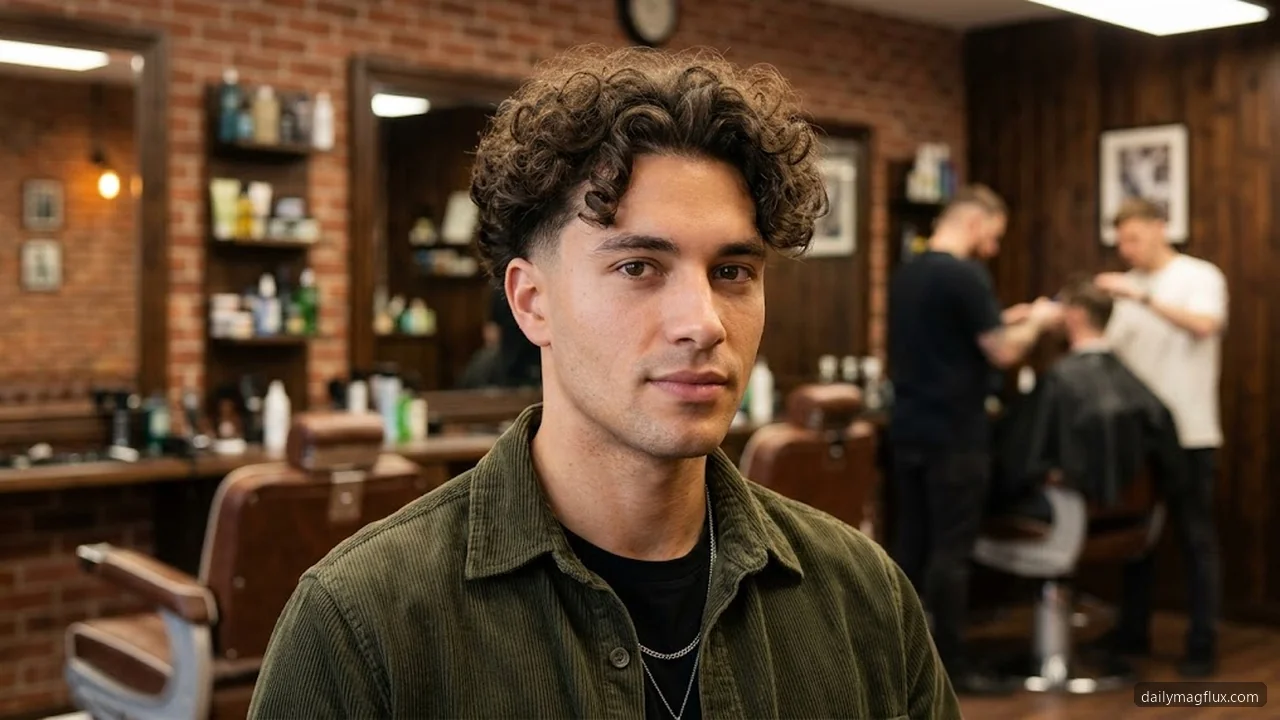
Curls shrink as they dry, so cut the top longer than you think you need. Type 3 and type 4 hair holds a centre split with a curl cream and a wide-tooth comb. Keep the taper low, because tight sides shrink the curls into a hard edge. Air dry whenever you can, since heat pulls the pattern out.
Thick Hair
Dense hair holds a strong shape but shows every blend line, especially in dark shades. Ask for a #0.5 at the bottom so the transition has room to fade out. Thinning shears inside the top remove bulk without changing the length. A matte clay keeps thick hair in place without making it look heavy.
Thin Hair
Fine hair looks thinner when the sides are cut to skin, so keep them at a #2 instead. Leave the top at three inches and add lift at the roots with light gel. A centre split works well because it spreads fine hair across the forehead. Skip heavy pomades, which clump thin strands together and show the scalp.
Medium Length Hair
At four to six inches, the top needs regular trimming to keep the part clean. The sides can stay at a #3 taper, since the length above hides the blend. A small amount of sea salt spray gives medium hair the movement it needs. Book a trim every six to eight weeks to keep the shape.
Pros and Cons
You gain a cut that works in most settings and asks for very little morning effort. The sides hold their shape for three to four weeks before the taper grows soft. What you lose is the ease of a wash-and-go style, because the part needs setting. Growing the top long takes patience, since regular trims keep the length in check.
| Pros | Cons |
|---|---|
| Short sides stay cool in warm weather and fit under a hat. | The taper grows fuzzy at the nape within three weeks. |
| Works on straight, wavy and curly hair with the right product. | Curly hair needs daily cream or the split collapses by noon. |
| One cut suits office days and weekends without a restyle. | A centre split shows a receding hairline more than a side part does. |
| The top grows out gracefully instead of turning shaggy. | The top needs a trim every six to eight weeks to keep its shape. |
| Two guard numbers explain the whole cut to your barber. | Blend lines show clearly on dark, thick hair types. |
How to Style a Tapered Middle Part
Styling this cut takes about two minutes once you know the order. Product choice matters more than technique, because the wrong cream flattens the top. You work from damp roots to dry ends, then set the part last. The steps below cover what to buy and how to use it.
Best Styling Products

- Matte clay: A pea-sized amount gives texture and hold with no shine at all.
- Matte paste: A dime-sized amount suits fine hair because it adds grip without weight.
- Pomade: A small amount gives shine and slick control for a sharp, office-ready line.
- Sea salt spray: Four or five sprays at the roots build grit and lift the top.
- Curl cream: A pea-sized amount defines curls and controls frizz along the part line.
- Light gel: A small amount on damp hair holds the split without any crunch.
- Mousse: Two pumps worked into damp roots give wavy hair hold and body.
Step-by-Step Styling Guide
- Start with towel-dried hair, because the part sets best when the roots are damp.
- Comb the hair straight back from the hairline to find your natural centre line.
- Follow that line from the forehead to the crown and check it in a mirror.
- Work product through the top with your fingers, spreading it evenly on both sides.
- Blow dry on low heat while pressing each side down toward the temples.
- Set the split with the tail of a comb, then let the hair cool in place.
- Pinch the ends between your fingers to break up any clumped sections.
How to Maintain a Tapered Middle Part
Your taper holds its shape for about three weeks before the nape grows fuzzy. Book a touch-up every three to four weeks if you want the outline to stay sharp. Between visits, your barber can clean the neckline without touching the top length.
The top grows about half an inch a month, which sets your trim schedule. A trim every six to eight weeks keeps the part from turning heavy at the sides. Wash your hair two or three times a week so natural oils do not build up.
A weekly clean of your comb keeps old product from clogging the teeth. Rinse the comb under warm water and pick out any trapped hair. Dry it fully before use so the part line stays even.
How This Cut Compares With Curtains
A curtain part splits the hair into two panels that sweep away from the face. This cut keeps the sides tapered short, while curtains usually stay longer at the ear. Curtains suit heart and diamond faces because the panels cover the temples. Pick curtains for a softer frame, and this taper for a tidier neckline.
How This Cut Compares With a Side Part
A side part shifts the split left or right of centre, which adds asymmetry. The centre split stays balanced, so it suits square and oval faces more evenly. A side part hides a receding hairline better than a middle part does. Choose the side if your hairline has thinned, and the centre if it has not.
How This Cut Compares With Fluffy Hair
Fluffy hair is a blown-out shape with volume at the crown and soft ends. This cut keeps the top flatter by comparison, so it reads neater in an office. Fluffy hair suits round faces, while heart faces should skip its height. Pick fluffy if you want movement, and this taper if you want control.
Reference Photos to Bring Your Barber
Shoot your own head from four angles before you book your appointment. A front shot shows where the part sits on your hairline. A side shot shows the fade height and where the blend ends. A back shot shows the neckline, which many men forget to photograph.
Save photos that match your hair type, not just the shape you like. A straight-haired photo will mislead you if your hair is type 3 curls. Note the top length in inches, because that number drives the whole cut. Show two photos so your barber sees the range you accept.
Common Mistakes to Avoid
- Cutting the top too short with clippers, because a middle part needs three inches to fall.
- Asking for a skin fade when you wanted a taper, which leaves no length at the sideburn.
- Skipping the cowlick talk, since an uncut cowlick pulls the split off centre.
- Choosing a high fade on a long face, which makes the face look longer.
- Leaving the neckline squared when you wear a beard, because the lines then clash.
- Using heavy pomade on fine hair, which clumps strands and shows the scalp.
- Letting the sides grow for six weeks, so the taper loses its shape.
- Combing the part on dry hair, which leaves the line uneven and frizzy.
- Copying a photo of a different curl pattern, because the cut will not sit the same.
Clipper Guard Numbers and Lengths for the Low Taper Middle Part
| Guard | Length | Where to Use |
|---|---|---|
| #0 | 1/32″ to 1/16″ | Only at the very bottom if you want skin on a fade. |
| #0.5 | 1/16″ | The lowest point of a tight taper on thick, dark hair. |
| #1 | 1/8″ | The bottom of a standard low taper at the nape. |
| #1.5 | 3/16″ | A softer taper for light or fine hair that hides lines. |
| #2 | 1/4″ | The sideburn blend and the top of the taper zone. |
| #3 | 3/8″ | The ridge where the taper meets the longer top hair. |
How to Grow Out a Tapered Middle Part
- Stop tapering the sides and let them grow for eight to ten weeks.
- Keep trimming the top every six weeks so the shape stays tidy.
- Ask for a soft neckline instead of a squared one during the grow-out.
- Use a small amount of paste to keep the longer sides from sticking out.
- Book a full restyle once the sides reach about two inches of length.
Frequently Asked Questions
What is a low taper fade middle part?
It is a cut with short tapered sides and a top that splits at the centre. The taper touches only the sideburns and nape, so length stays above the ear. The top usually runs two to four inches and is cut with scissors. Ask for a #1 at the bottom blending to a #3.
How often should I re-taper the sides?
Every three to four weeks keeps the outline looking deliberate. The nape and sideburns grow out first, and they show within two weeks. Dark, thick hair shows the blend line sooner than light hair does. Keep to three to four weeks even if you like a softer edge.
Can I style a low taper fade middle part without product?
Yes, if your hair holds a shape on its own after you wet it. Comb the part while the hair is damp, then let it dry in place. Straight and wavy hair types usually manage this without any product. Curly hair needs cream, or the split will collapse by midday.
Does a low taper fade middle part work with curly hair?
Types 2 and 3 hold the split well with a curl cream. Type 4 coils need a wide-tooth comb and more cream for the line. Keep the taper low, because tight sides shrink curls into a hard edge. Cut the top longer than your target length, since curls shrink as they dry.
What is the difference between a low taper fade and a drop fade?
The taper and the drop differ in shape, not just in height. A low taper follows the hairline just above the ear and neckline. A drop fade curves down behind the ear rather than leaving the back longer. Pick the drop for a curved line and the taper for a straight one.
How do I fix a middle part that won’t stay?
Wet the hair at the crown and comb the line back before styling. Dry the part with a blow dryer on low while pressing the hair flat. A cowlick near the hairline can pull the line off centre by an inch. If it still drifts, ask your barber to cut around it.
Conclusion
Book this cut if you want short sides with a soft centre split. Start with the classic taper at a #2 and a #4 for a safe first visit. Round faces should raise the fade to the temple for extra length. Thin hair does better with a #2 on the sides than skin.
Say the guard numbers out loud before your barber starts cutting. Ask for a low taper and three inches left on top. The Low Taper Fade Middle Part needs a touch-up every three to four weeks. Book the next appointment before you leave the shop.

Harrison Jax is a hairstylist and fashion writer with 10+ years in the industry, holding a Certified Cosmetologist license and a Diploma in Fashion Styling from the London College of Style. He’s contributed grooming and trend guides to GQ India and Vogue Blogs, and currently leads DailyMagFlux’s hair and fashion coverage, blending runway insight with practical, everyday styling advice.