


A Mid Taper Fade with Design Ideas pairs a soft taper with a shaved pattern above the ear. It keeps length at the sideburns and nape rather than shaving them bald. Most guys leave three inches on top for a natural, brushed finish. The design adds a crisp line, shape or symbol that draws the eye.
A mid taper fade with a design suits oval, square and heart-shaped faces best. Round faces often need a taller top, while diamond faces suit width at the temples. Ask for a #1 guard at the bottom blended into a #3 near the top. Book a touch-up every two weeks to keep the pattern sharp.
Quick Answer
A Mid Taper Fade with Design Ideas is a taper fade with a shaved pattern. It suits oval, square and heart faces with straight, wavy or curly hair. Ask for a #1 guard at the bottom blending into a #3, with three inches on top. Book a touch-up every three to four weeks to keep the lines crisp.
What Is a Mid Taper Fade with Design?
A mid taper fade with a design starts at the temple line and shortens the sides. It differs from a full fade because the taper keeps some length at the nape. The design is a shaved line, curve, symbol or hard part cut into the faded area. Guys ask for it because it adds personality without changing the basic cut.
Why Mid Taper Fade with Design Is So Popular in 2026
The look spread quickly because it works on almost every hair type and face shape. Barbers can cut the taper in fifteen minutes and add the design in five more. Short sides keep you cool in summer while the top still holds some length.
Clipper work looks clean because the taper blends gradually instead of leaving a hard line. A single line or curve takes seconds to add and grows out within two weeks. That short lifespan makes the design a low-risk choice for any first-timer.
Pros and Cons
A mid taper fade with a design gives you a sharp, modern finish without shaving your whole head. It works with straight, wavy and curly hair because the taper stays soft at the edges. The pattern grows out fast, so you need a barber visit every two weeks. Visible lines also show more on dark, thick hair than on light or fine hair.
| Pros | Cons |
|---|---|
| Adds personal detail to a classic taper | Needs a touch-up every three to four weeks |
| Grows out fast, so mistakes are temporary | Sharp lines fade quickly on dark, thick hair |
| Works on straight, wavy and curly hair | Overdone patterns look busy in an office |
| Keeps the neckline natural and soft | Curly hair can hide thin lines |
| Cheap add-on at most barbershops | A bad line is hard to fix without shaving lower |
Best Mid Taper Fade with Design Ideas
The designs below range from a single subtle line to bold shaved shapes. Pick one based on your hair type, face shape and how much upkeep you want. A simple line suits a conservative workplace while a full pattern stands out at weekends. Most options start with a mid taper, but guard blends and heights vary. See American Academy of Dermatology hair care guidelines for more.
Classic Line Designs

A single razor line runs from the temple toward the ear on one side. It sits inside the faded area, so the taper still looks soft from the front. Ask for a #1 guard at the bottom blended up to a #3 near the temple.
Two thin parallel lines give the fade a graphic edge without covering much skin. They work best on straight or wavy hair because curls break the lines apart. Keep the top at two inches and use a light pomade for a clean finish.
A curved line follows the natural shape of the head above the ear. It suits oval and diamond faces because the curve softens a tight temple fade. Ask for the taper to start at the temple with a #2 guard at the top of the blend.
A line along the neckline traces the natural hairline instead of pushing it square. It keeps the back looking tidy while the taper stays soft and gradual. This is the safest first design for teenagers and men in strict workplaces.
A stepped line drops in two short stages behind the ear for extra detail. It suits thick hair because the steps stay visible longer on dense growth. Book a touch-up every two to three weeks to keep the steps sharp.
Symbol & Shape Designs

A small star shaved above the ear gives the fade a clean focal point. It suits square and oval faces because the shape balances a strong jawline. Keep the taper at mid height with a #1 guard and three inches on top. Use a light gel to keep the hair around the star flat and defined.
A lightning bolt runs diagonally across the faded side for a sporty look. It works best on straight or wavy hair that holds a crisp edge. Ask your barber to keep the bolt thin so it grows out evenly. A dab of matte clay keeps the bolt sharp without adding any shine.
A small arrow points forward along the temple line for a subtle directional detail. It suits heart-shaped and oval faces because the point draws the eye upward. Use a #2 guard at the top of the taper and keep the sides at #1.
A triangle or diamond shape sits higher on the side for a bolder graphic look. It suits round faces because the angles add structure to soft features. Keep the top at three inches and the sides tight so the shape stays the focus.
A single letter or first cut into the side works well for a personal touch. It suits thick, dark hair because fine or light hair hides the shape. Book a touch-up every two weeks since letters lose their edges quickly.
Bold Statement Designs
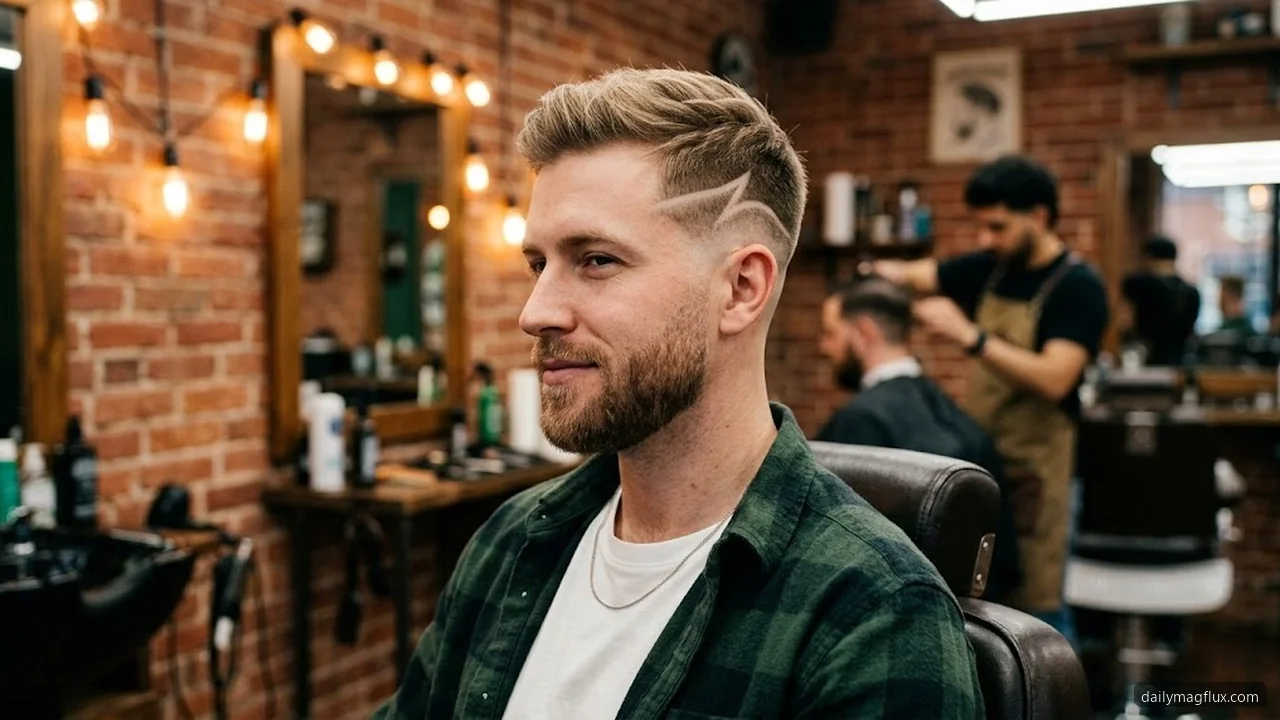
A full pattern covers the whole faded side with lines, curves and shapes. It suits square and oval faces because the bold detail balances strong features. Keep the top at three inches and the mid taper for maximum contrast. Use a pea-sized amount of matte clay to keep the top textured but not shiny.
Curved bands sweep from the temple back toward the crown in wide arcs. They suit diamond faces because the arcs add width at the temples. Ask for a mid fade with a #1 guard at the bottom and #3 at the top. Book a touch-up every two weeks because wide bands blur out very quickly.
A spider-web design spreads from the temple across the whole faded panel. It suits thick, dark hair because thin or light hair loses the fine lines. Keep the top short at two inches so the web stays the main feature. This look grows out in ten days, so plan regular barber visits.
Placement Variations
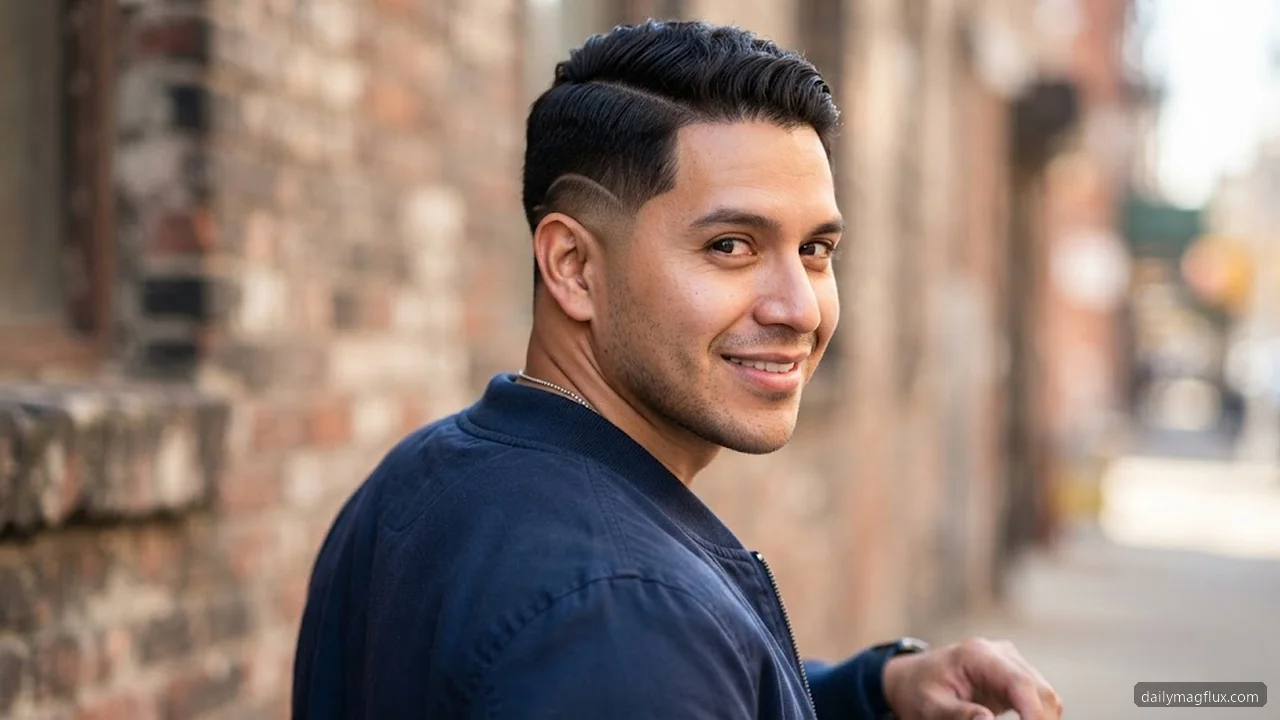
A design placed just above the ear stays visible when your hair is short. It suits oval and square faces because the eye stays at the widest point. Ask for a #1 guard at the bottom and a #2 near the design.
A design along the temple line runs from the hairline back toward the ear. It suits heart-shaped and round faces by adding a strong diagonal line. Keep the fade mid height and leave three inches on top for balance.
A design at the nape shows when you turn your head or wear a shorter top. It suits long and rectangular faces because it fills the space at the back. Ask for a low taper with a #0.5 guard at the bottom for a clean base.
A hard part is a shaved line that separates the top hair from the faded side. It suits most face shapes because the line creates an instant side sweep. Use a dime of pomade to keep the part flat and the top smooth.
Hard Part Line Design
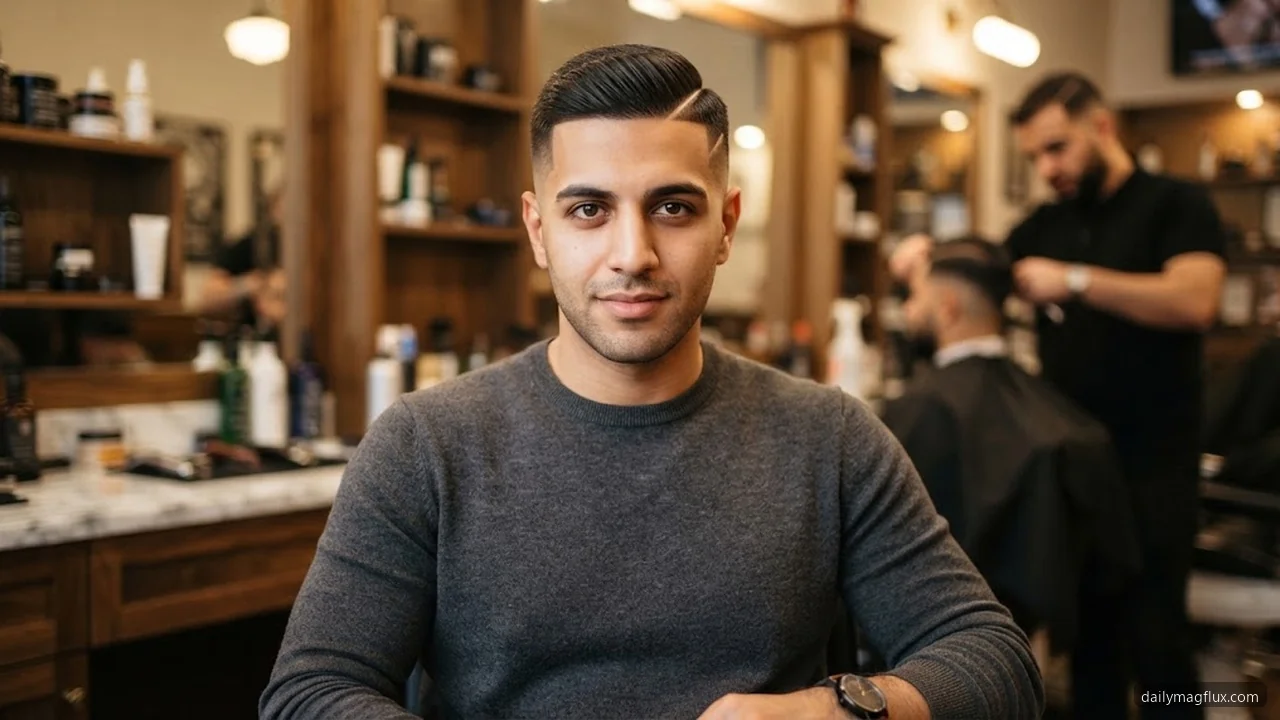
A hard part line is shaved straight back from the forehead on one side. It gives the mid taper a sharp edge and makes the top easy to comb. Ask for a #1 guard on the sides and three inches left on top. Use a light pomade and book a touch-up every three to four weeks.
Curved Drop Fade Design
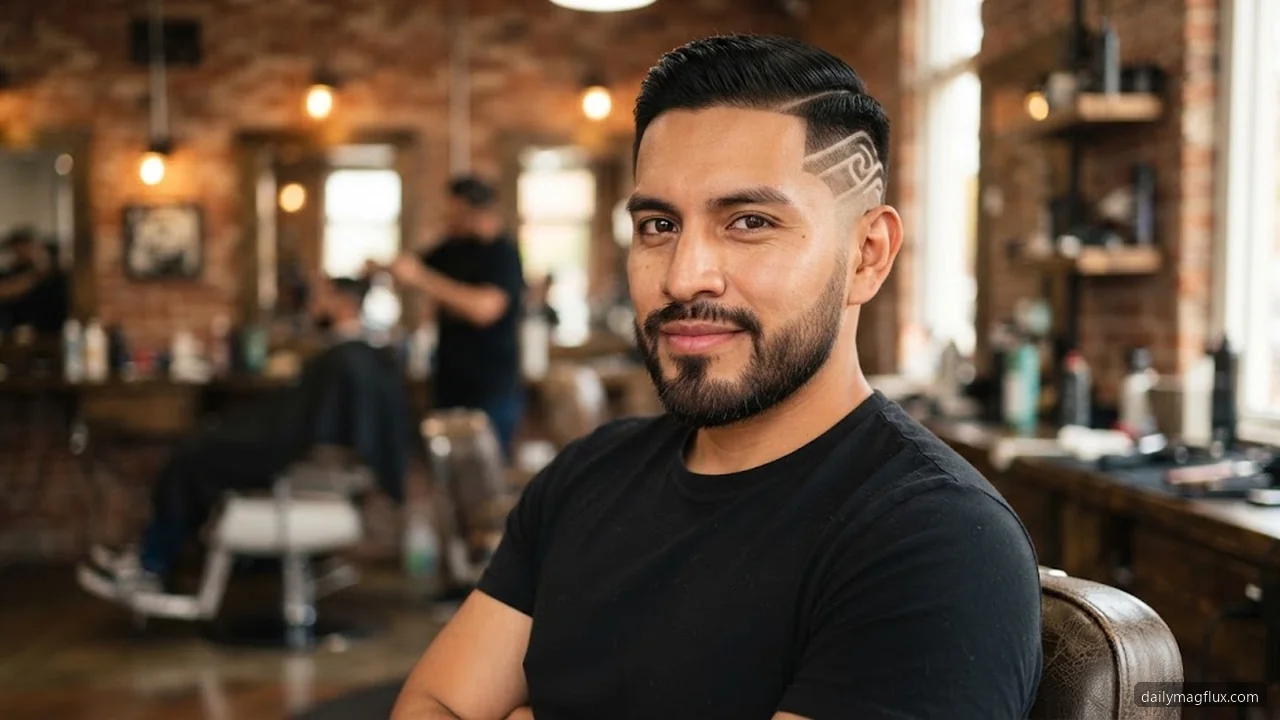
A drop fade curves down behind the ear and leaves the back slightly longer. A design drawn along the curve follows that shape for a natural flow. It suits round and square faces because the curve follows the ear naturally. Keep the sides at a #1 guard and the top at two inches.
Curly Sponge Twist Design

A sponge twist design uses a curl sponge to lift coils around a shaved shape. It suits 4A to 4C coils because the sponge adds definition and visible texture. Ask for a mid taper with a #0.5 guard at the bottom and a #2 higher up. Use curl cream and book a touch-up every three weeks to keep edges neat.
How to Choose the Right Design for Your Hair Type
Your curl pattern and strand thickness decide which designs stay visible for long. Straight hair shows a crisp line while coils hide thin details inside the texture. The sections below match each hair type with a design that holds its shape. Choose the one that fits your growth pattern and the time you have for styling. See Healthline hair health and wellness resources for more.
Straight Hair
Straight hair holds a sharp line best because the cut edge stays clean for days. Ask for a single line or double line and keep the top at three inches. Use a dime of matte paste to add texture so the top does not look flat.
Curly Hair

Curly hair hides thin lines, so choose a wider shape or a bold symbol. It suits 3A to 3C curls because the pattern adds natural volume at the sides. Use curl cream and a light gel to define the top without making it crunchy.
Wavy Hair

Wavy hair shows a line well because the surface stays mostly smooth. It suits 2A to 2C waves and most face shapes with a mid fade. Ask for a curved line that follows the temple and keep two inches on top.
Coily and Afro-Textured Hair

Coily hair from 4A to 4C needs a design with thick lines that stay visible. A sponge twist or wide arrow works better than a fine star or letter. Use curl cream for definition and book a touch-up every two to three weeks.
Fine Hair
Fine hair hides lines but loses them fast because growth looks longer. Keep the design small and simple so the sides do not look patchy. Ask for a #1 guard at the bottom and a #2 higher up for a soft blend.
Best Mid Taper Fade Designs by Face Shape
| Face Shape | Best Design | Why It Works |
|---|---|---|
| Oval | Single line | Balanced features let any pattern sit well |
| Round | Geometric triangle | Angles add structure to full cheeks |
| Square | Star shape | Curves soften a strong, angular jaw |
| Heart | Small arrow | Draws the eye down toward a narrow chin |
| Long | Nape line | Fills the back without adding height |
| Diamond | Curved bands | Adds width at narrow temples |
| Rectangular | Side line | Breaks vertical length with a diagonal |
Oval Face
Oval faces carry almost any design because the natural proportions stay balanced. A single line or small symbol keeps the focus on your features rather than the pattern. Ask for a mid fade with a #1 guard at the bottom and three inches on top.
Round Face
Round faces need height on top and tight sides to avoid adding width. A geometric triangle placed high on the side adds the angles you want. Keep the top at three inches and use matte clay for lift without shine.
Square Face
Square faces suit soft curves because a strong jaw already gives plenty of edge. A star or curved line softens the angles without hiding the jawline. Ask for a #1 guard at the bottom and a #3 near the temple.
Heart-Shaped Face
Heart-shaped faces have a wide forehead and a narrow chin that needs balance. A small arrow or side sweep draws the eye down toward the jaw. Keep the top at two inches and skip very tall volume above the forehead.
Long Face
Long faces should skip tall height and keep some fullness at the sides. A nape line or low design fills the back without stretching the face further. Ask for a low taper with a #1 guard and leave a fringe on top.
Diamond Face
Diamond faces have wide cheekbones with a much narrower forehead and chin. Curved bands add width at the temples and keep the tight fade from pinching. Keep the sides at a #2 guard rather than a #0 to avoid thin temples.
Rectangular Face
Oblong faces are clearly longer than wide and need fullness at the sides. A diagonal side line breaks the vertical length and adds visual width. Keep the top at two inches and use a #1 guard on the sides.
Best Mid Taper Fade Designs by Age Group
Age changes how much upkeep you want and how bold a design should look. A teenager can wear a full spider web while a lawyer needs one thin line. Growth speed stays the same at any age, so the real choice is time. The sections below match each group with a pattern that fits daily life.
Teenagers
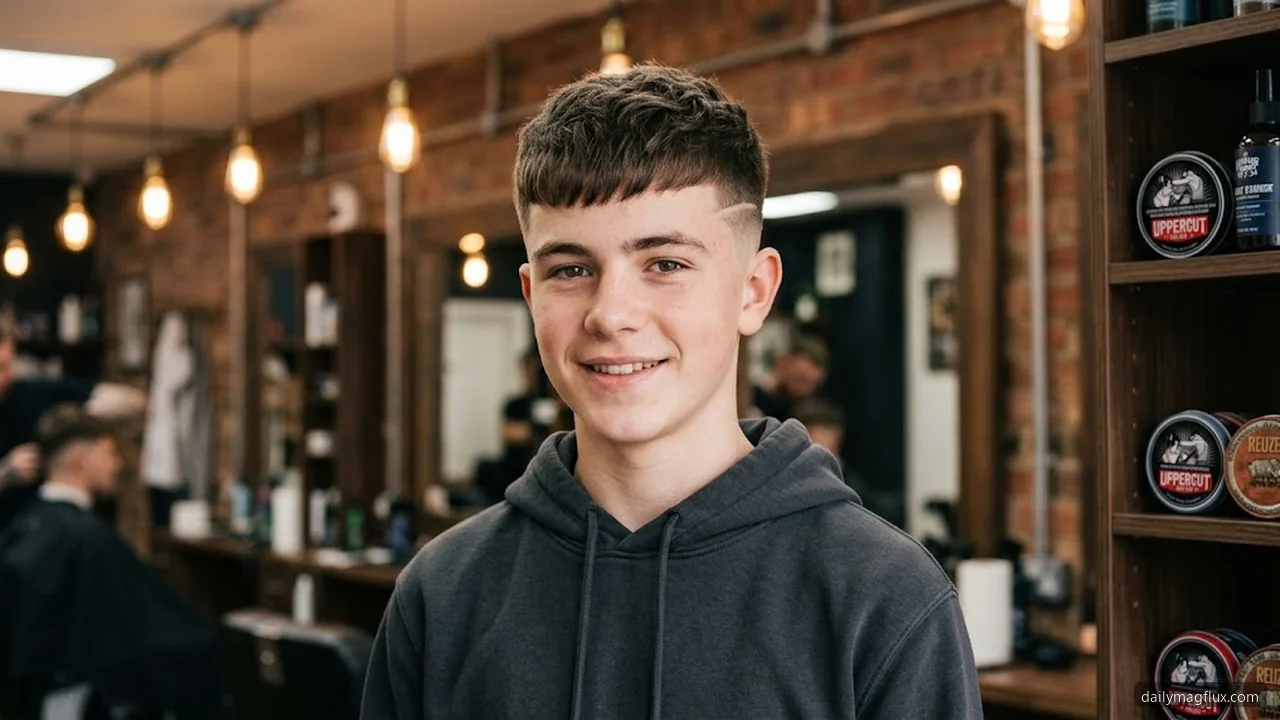
Teenagers usually want a design that stands out at school without breaking dress codes. A small star or a single line sits high enough to stay hidden under a cap. Keep the top at two inches and ask for a #1 guard at the bottom. Matte clay keeps the top textured between washes without leaving any shine.
Young Men

Guys in their twenties often pick bold statement designs like curved bands or a web. A mid taper with a #0.5 guard at the bottom gives the pattern more skin to sit on. Leave three inches on top and style it with a few sprays of sea salt spray. Book a fresh cut every two to three weeks to keep the lines bold.
Professional Men

A single thin line or a hard part reads as sharp rather than loud in an office. Ask for a mid taper with a #1 guard blending to a #3 near the temple. Keep the top at three inches and comb it back with a light pomade. Touch up every three to four weeks so the edges never look ragged.
How to Ask Your Barber for a Mid Taper Fade with Design
Tell your barber: “Mid taper fade. #1 at the bottom blending to a #3 near the temple.”. Then ask for three inches left on top and a natural neckline. Say whether you want the design on the left or right side before the clippers start.
Bring two photos: one of the taper height and one of the design shape. A side photo shows your barber how far up the fade should go. A front photo shows where the line sits against your hairline. Ask for the design to follow your natural growth pattern instead of fighting it.
Watch for a barber who starts the taper too high or pushes your neckline square. Both mistakes take weeks to grow out and cannot be fixed the same day. Ask for the design to be cut dry so you can see the shape clearly. Confirm the price before the design starts, since some shops charge extra.
Mid Taper Fade with Design — Video Guide
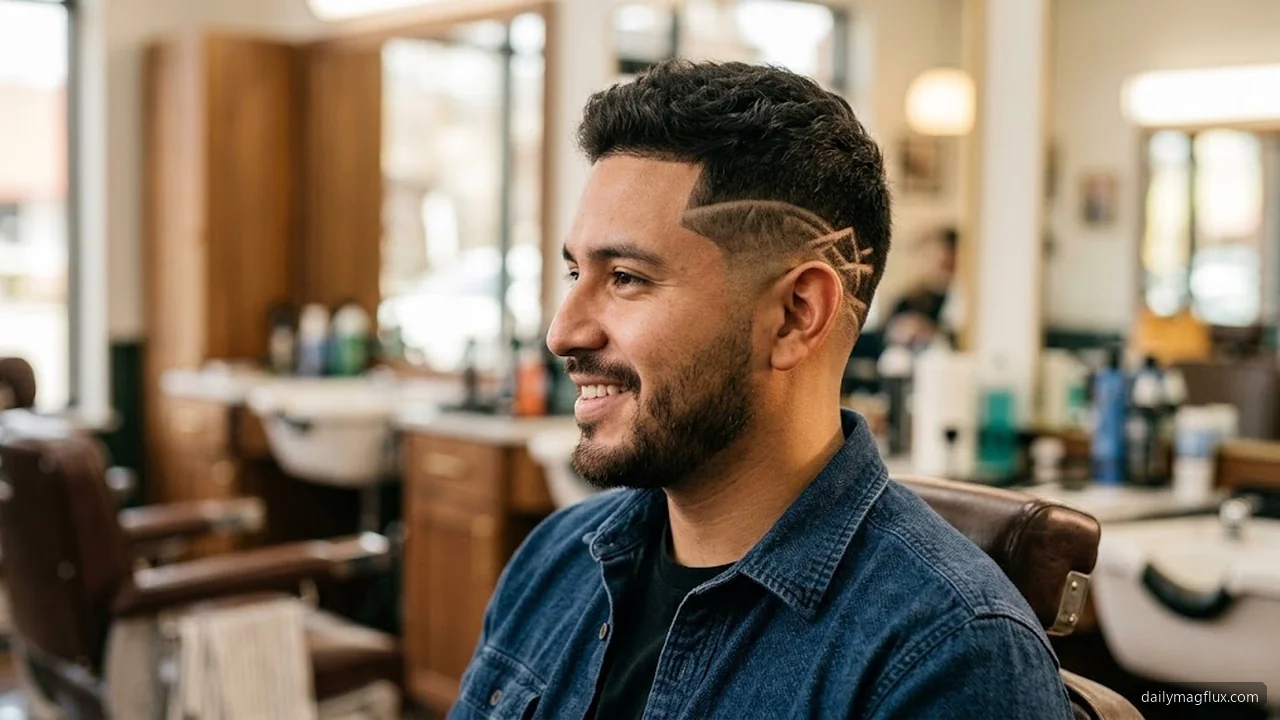
Filming your own cut helps you repeat the result at the next visit. Record the front, side and back before you leave the chair. Zoom in on the design so the depth of each line stays clear. Save the clip and show it to your barber instead of describing the shape from memory.
Common Mid Taper Fade Design Mistakes to Avoid
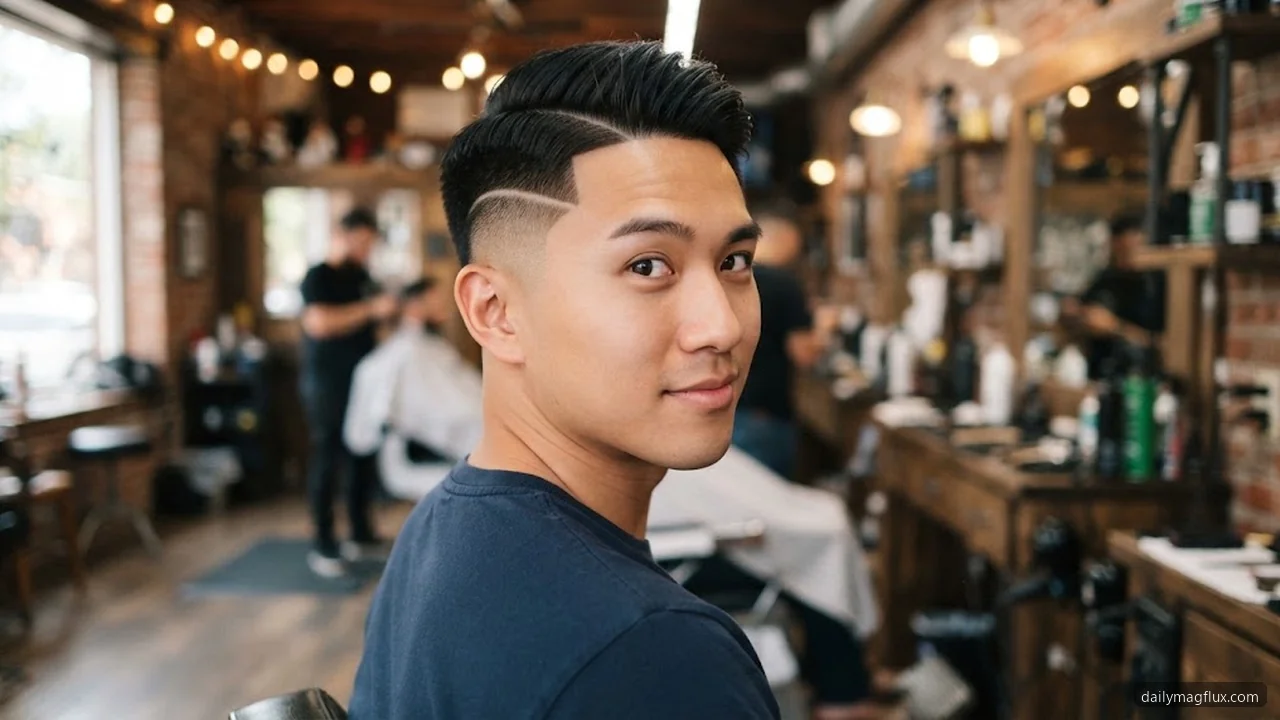
The most common mistake is going too wide with the design on the first visit. A line that looks thin in a photo often doubles in width under the clippers. Start small and add a second line later if you want more. Ask your barber to sketch the shape in pencil before cutting.
- Picking a design wider than your thumb, because thin lines grow out far more evenly.
- Letting a friend cut the line at home, since uneven depth leaves a groove for weeks.
- Shaving the pattern too low near the neckline, where collars rub it away in days.
- Asking for a fine star on light, fine hair, because the points disappear against pale skin.
- Skipping the hard part when you want one, since a combed line never survives a wash.
- Booking a design right before a wedding, when fresh lines look sharpest after three days.
How to Maintain a Mid Taper Fade with Design
Maintenance on this cut comes down to two things: the taper edges and the shaved lines. Both grow out at the same half inch a month, so they age together. The next sections cover how often to book and what you can fix at home. Keeping a small kit saves you money between visits.
Touch-Up Frequency
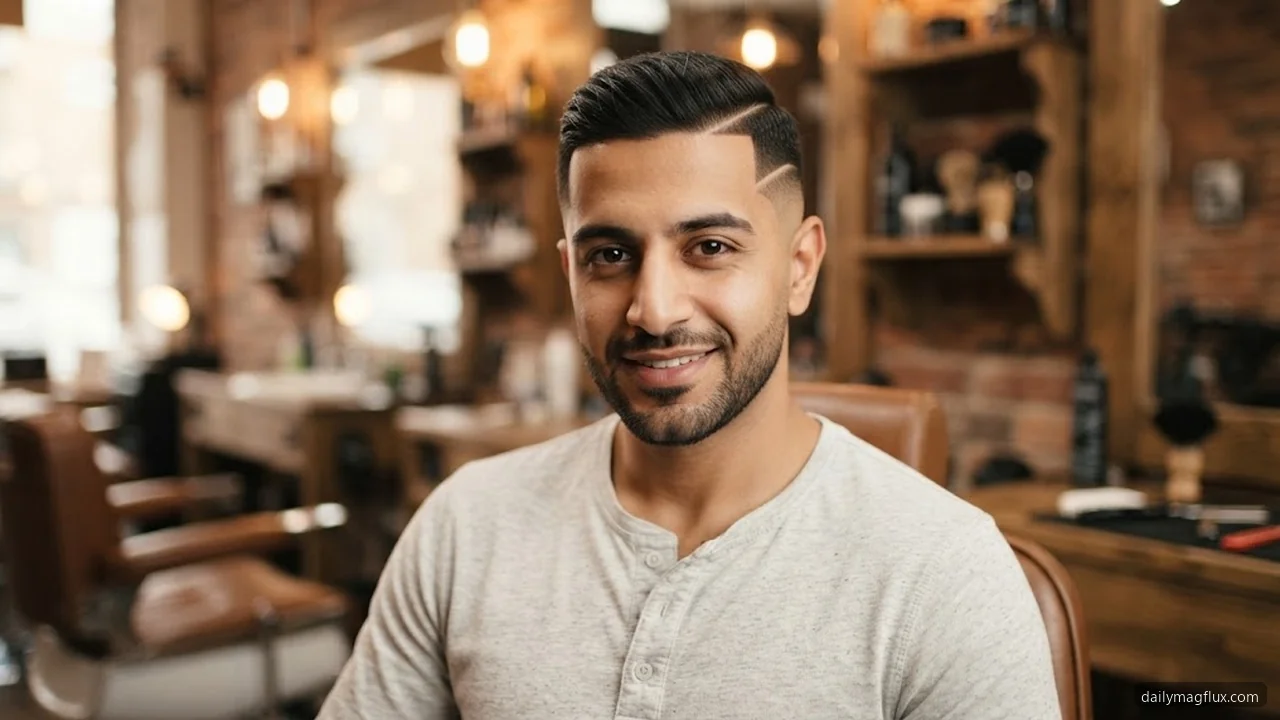
Most tapers need a fresh cut every three to four weeks, and a design fades sooner. Expect sharp lines for about two weeks before the shaved edges blur. Fine details like a star or letter last closer to ten days. Book your next visit two weeks after the first if you want the pattern crisp.
At-Home Touch-Ups
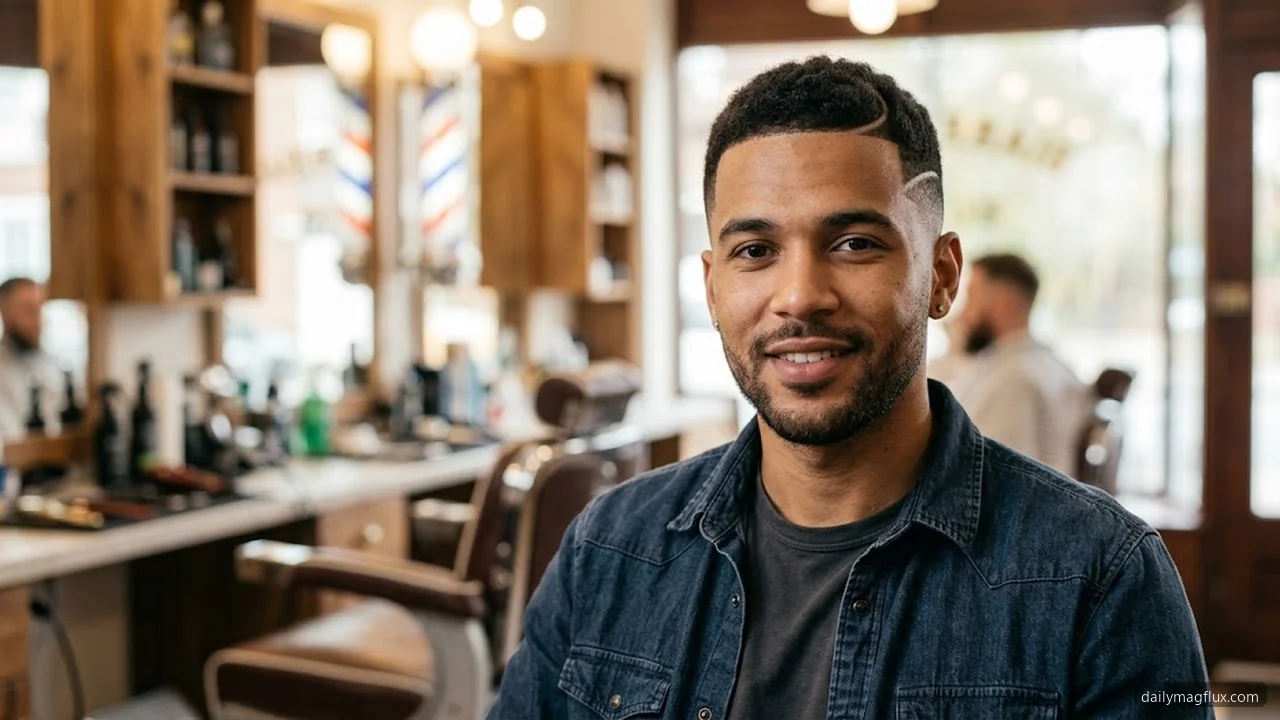
You can clean up the area around the design with a trimmer and a #1 guard. Run the trimmer with the grain along the sides, not against it. Never cut into the shaved lines themselves, because you will deepen the grooves. Five minutes a week keeps the taper tidy without risking a mistake.
Mid Taper Fade with Design vs Other Styles
Comparing options helps you decide how much time and money you want to spend. Some cuts skip the pattern entirely, while others use a numbered guard routine instead. The sections below lay out each alternative and who it fits. Read them before you book so your choice is deliberate.
Design vs Plain Mid Taper

A plain mid taper has no shaved lines, so the sides look soft and quiet from every angle. Adding a design gives the same cut a focal point that draws the eye above the ear. Pick the plain version if you work in a strict office or want zero attention. Choose the patterned one if you like a detail that costs a few extra dollars.
Design vs the 3-2-1 Guard Technique
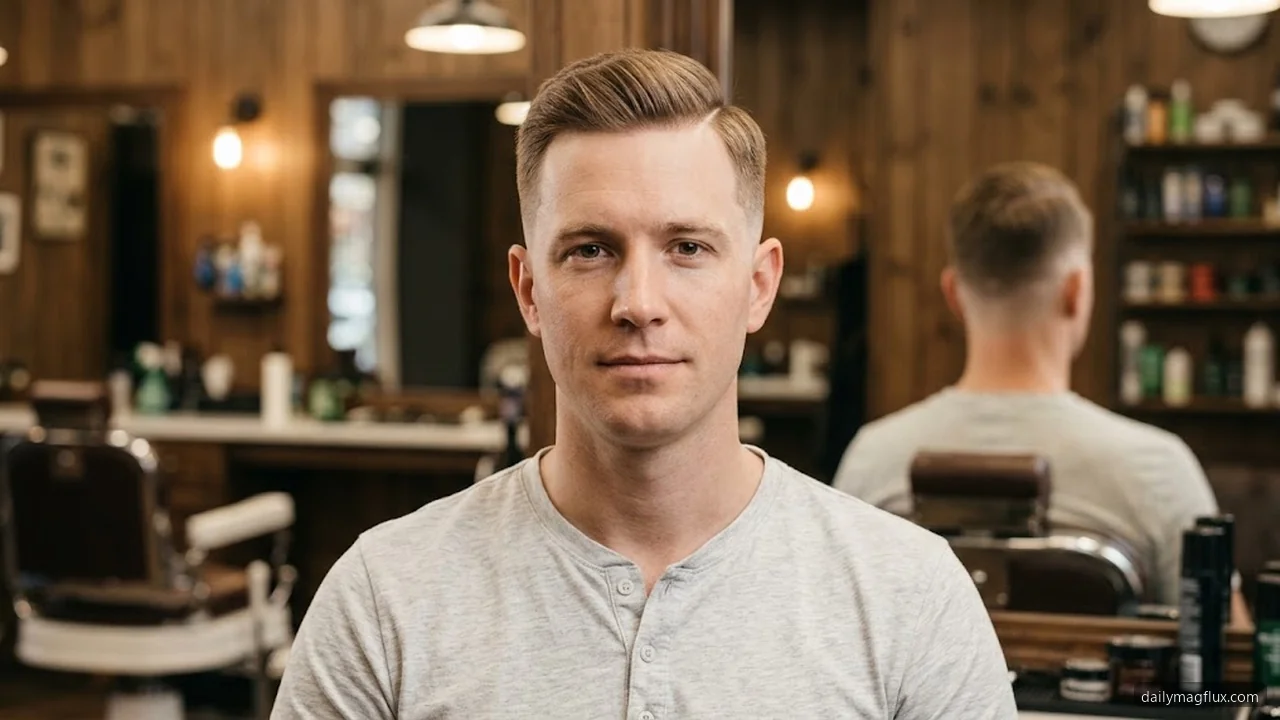
The 3-2-1 method fades the sides in three numbered steps instead of one smooth blend. You get a #3 at the top of the sides. A #2 in the middle and a #1 at the bottom. That stepped look has visible lines of its own, which can clash with a shaved design. Pick the numbered method alone if you want structure without any pattern.
Frequently Asked Questions
How long does a design last before it grows out?
Sharp lines stay visible for about two weeks before the edges start to blur. Fine details like a star or a letter fade closer to ten days. Hair grows half an inch a month, so no cut holds a pattern longer. Book a touch-up every two weeks if you want the design crisp.
Does a design work with curly or afro-textured hair?
Yes, but the pattern needs to be wider than it would be on straight hair. Thin lines vanish inside 3A to 4C coils within days of the cut. Choose a sponge twist, a broad arrow or thick bands instead. Use curl cream so the coils stay defined around the shaved shape.
What’s the easiest design for a first-timer?
A single thin line above the ear is the safest starting point. It takes your barber a minute to cut and grows out evenly. Straight and wavy hair show that line best because the surface stays smooth. Ask for a #1 guard at the bottom so the taper stays soft.
Can a design be added to an existing mid taper without a full recut?
Yes, if your sides are still short enough to take a fresh line. Barbers usually refresh the taper first so the new pattern blends. If the sides have grown past a #3, you need the full cut again. Ask for the design on the side with the most even growth.
Does hair color affect how visible a design is?
Dark, thick hair shows shaved lines most clearly against the skin. Light or fine hair hides the same pattern because the contrast is lower. Grey hair sits in the middle, since the tone softens the shaved edge. If you want a bold look on light hair, ask for wider lines.
Where should I place a design if I want it to stay subtle?
Keep it just above the ear on the side you part away from. That spot stays covered by longer top hair when it falls. A low placement also hides the pattern under a cap or helmet. Avoid the front temple if you want the design unnoticed at work.
What is a mid taper fade with design ideas for 2026?
For 2026, the strongest looks mix a soft taper with one bold shape. Single lines and hard parts stay popular because they suit offices and schools. Curved bands and sponge twists lead the bolder end for textured hair. Ask your barber which shapes suit your growth pattern before you commit.
How much does a mid taper fade with design cost?
Expect a typical range of $25 to $45 for the cut in most shops. The design usually adds $5 to $10 to the price of the cut. City barbers and specialist shops charge at the higher end of that range. Ask about the total before the clippers start, so there are no surprises.
What guard numbers should I ask for a mid taper fade with design?
Start with a #1 at the bottom and blend up to a #3 near the temple. Ask for a #0.5 at the very bottom if you want a tighter finish. Use a #2 at the top of the blend for a softer transition. Mention the guard numbers from your last cut if you liked that blend.
Should I pair a design with a beard trim?
A beard trim balances the face when the top stays short and the sides are tight. Ask for the neckline to sit just above the Adam’s apple for a clean line. Keep the beard length close to the top hair so the shape looks deliberate. Book both services in one visit to save time.
Conclusion
Book this cut if you want a short taper with one detail that stands out. Start with a single line or a hard part if it is your first time. Guys with 4A to 4C coils should choose a wide shape instead. The Mid Taper Fade with Design Ideas here give you a clear place to start.
Tell your barber the guard numbers and the side you want the pattern on. Bring one photo of the taper height and one of the shape. Book your next visit two weeks later if the lines matter to you. Otherwise a three to four week gap keeps the cut tidy.

Harrison Jax is a hairstylist and fashion writer with 10+ years in the industry, holding a Certified Cosmetologist license and a Diploma in Fashion Styling from the London College of Style. He’s contributed grooming and trend guides to GQ India and Vogue Blogs, and currently leads DailyMagFlux’s hair and fashion coverage, blending runway insight with practical, everyday styling advice.